
This is a good place to listen to country,
Take a minute to sit down,
Close your eyes and breathe deeply,
Enjoy this moment.
Listen to the birds.
Can you hear the water trickling?
Concentrate on the wind.
Can you hear it? Feel it?
Kuniya is a strong woman.
This place has a strong feeling.
Listen to the Country. Kuniya Walk Uluru

What a difference a day makes. A week. A month. A year. These are crazy times and things are changing rapidly.
A year ago, I was in Germany, attending a run and a concert… Now, all large public gatherings in Australia have been banned. No Canberra half. The Sydney’s Writer Festival postponed.
A month ago I spent a wonderful time with my sister visiting from abroad… International travels all over the world are now strongly discouraged. A friend from T.O. had to cancel her plans to visit.
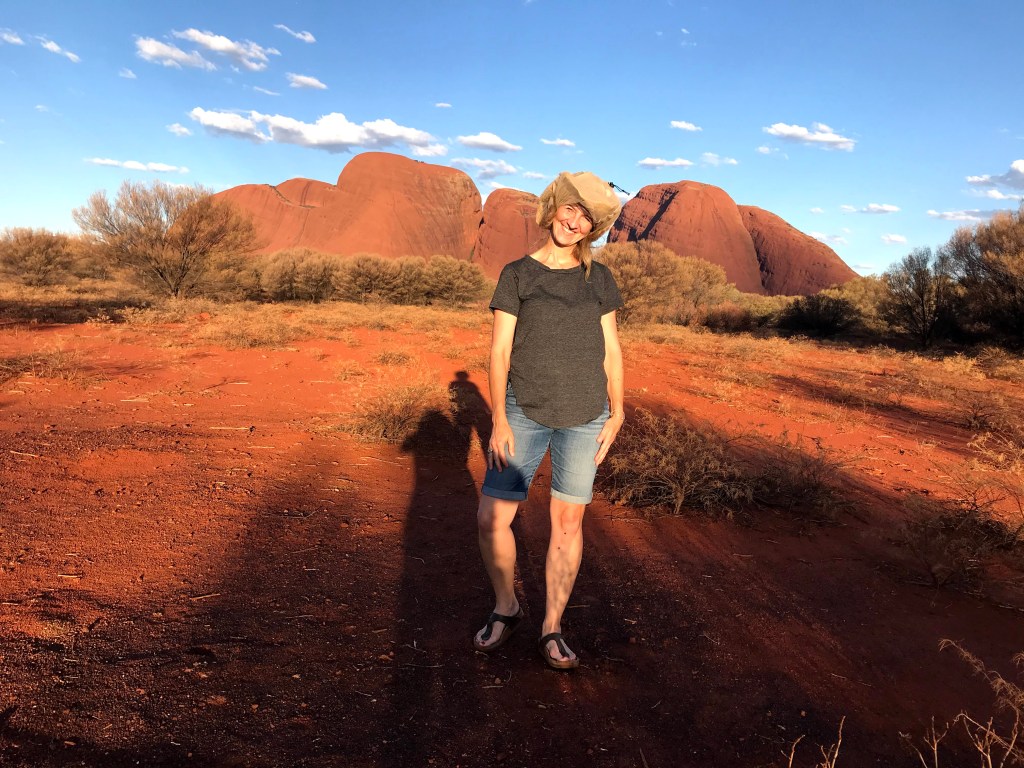
A week ago I travelled over 2000 km to the centre of this vast country to see Uluru, and experience its magic… Since then, school closures, borders closing, international flight cancellations, panic buying/hoarding, rationing…
Sitting on this gigantic island called Australia, looking at the world is a bit like peeking through the looking glass. What’s to come? What lies ahead of us? Ahead in time zones, but behind by a few weeks in terms of Corona, we can see fairly clearly what our future holds.
My school is getting ready to close and move teaching online (giving the the term “slow learning” a whole new meaning when thinking about the state of the Australian internet), food rationings at the local supermarket (basic items only sold in limited quantities to individuals, but no worries, I got a plan!), travel restrictions (good thing Tasmania might seem international, but isn’t), race cancellations (suits my still injured knee)…Enough said. Back to the future. My mind wanders to happier times…

It’s a stormy day in Sydney today. Autumn is coming. Even in paradise. Windy, chilly (only 17 degrees!!!), heavy raindrops pounding on the metal roof of my little blue house. Candles burning, classical music playing. The perfect setting for a story by the fire (of my little scented candle).
Uluru’s creation stories have stayed with me throughout the week. Like the story of Kuniya, the python mother, and Liru, the poisonous man snake. A story about a woman’s intuition and the force a mother might use to protect her children.
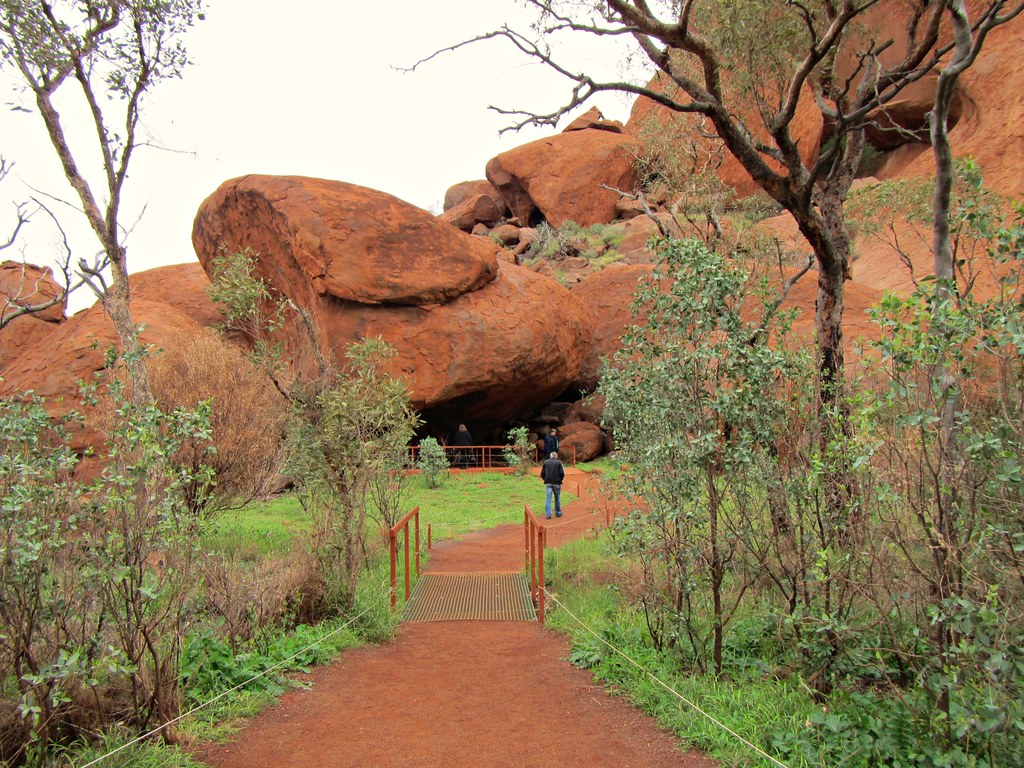
There are three words in the language of the Uluru people, the Anangu, our guide wanted us to remember: Palya! (Hello! Goodbye!), Tjukurpa (creation) and Tjukatija (physical signs of creation around us). There are plenty of signs at Uluru that tell the story of Kuniya revenging the death of her nephew and protecting her children from the evil Liru snakes.
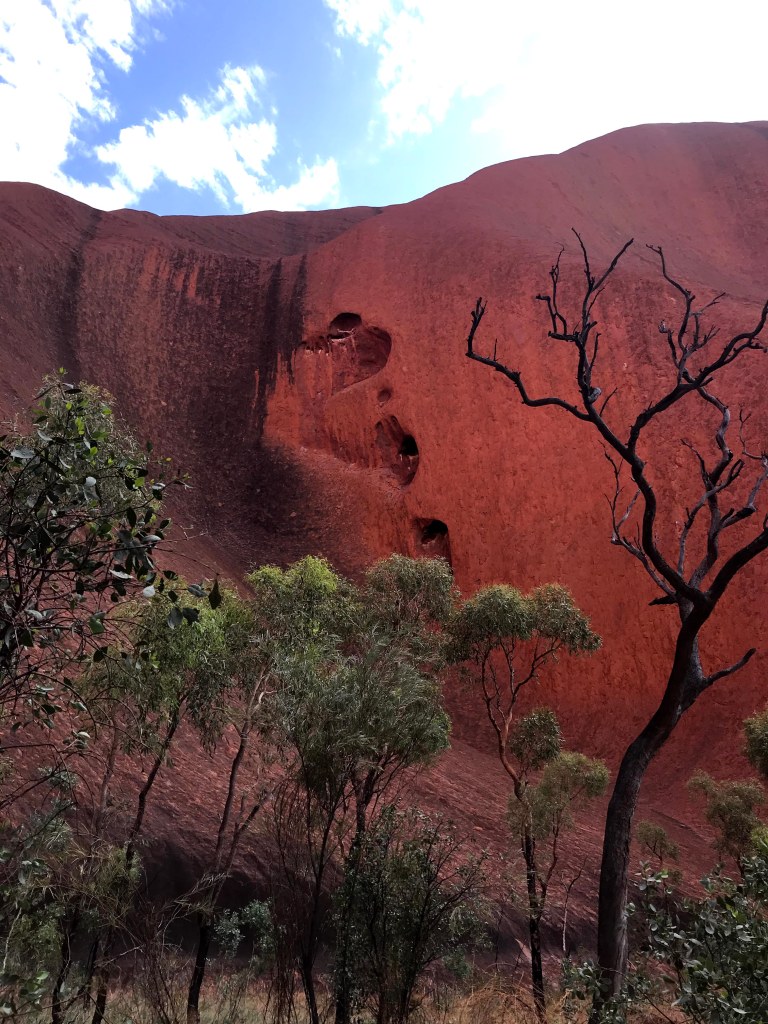
The trail she left behind when slithering down the rock, the heart shaped holes left behind when kneeling down, the head of the mother snake herself on top a cave telling stories in pictures.

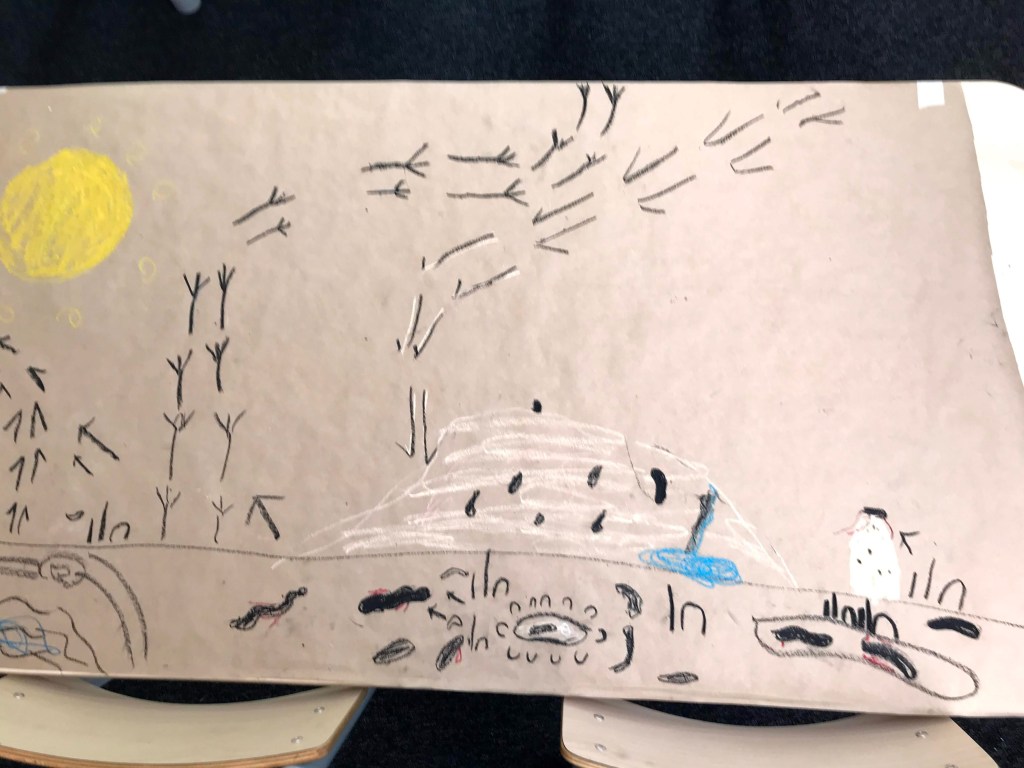
I took the story and the signs back with me to my classroom and let my students explore the magic of aboriginal creation stories of this country. The children told amazing stories in pictures and words like the Arangu ancestors would have done. A true teaching moment.
The Anangu only count to three: Kutju – one. Kutjara – two. Mankurpa – three. After that it is Tjuta – Many. Five is many. Five children – that’s many! Who wouldn’t agree with that. The lesson of the Kunija and Liru story is that women should look after their children and have the right to defend them, if necessary.
Spending a year away from my family and my own children always is connected with a certain sense of guilt. A woman should look after her children. During times of uncertainty, of threat, I am experiencing the urge to be with my children and to protect them (as much as you can protect someone that is a head taller than you!). There is something unnerving about being at the other end of the earth during a global crisis.
Yet it is what it is. The Kuniya story also tells us that you have to honour your responsibilities. Kuniya is a strong woman, this place has a strong feeling.
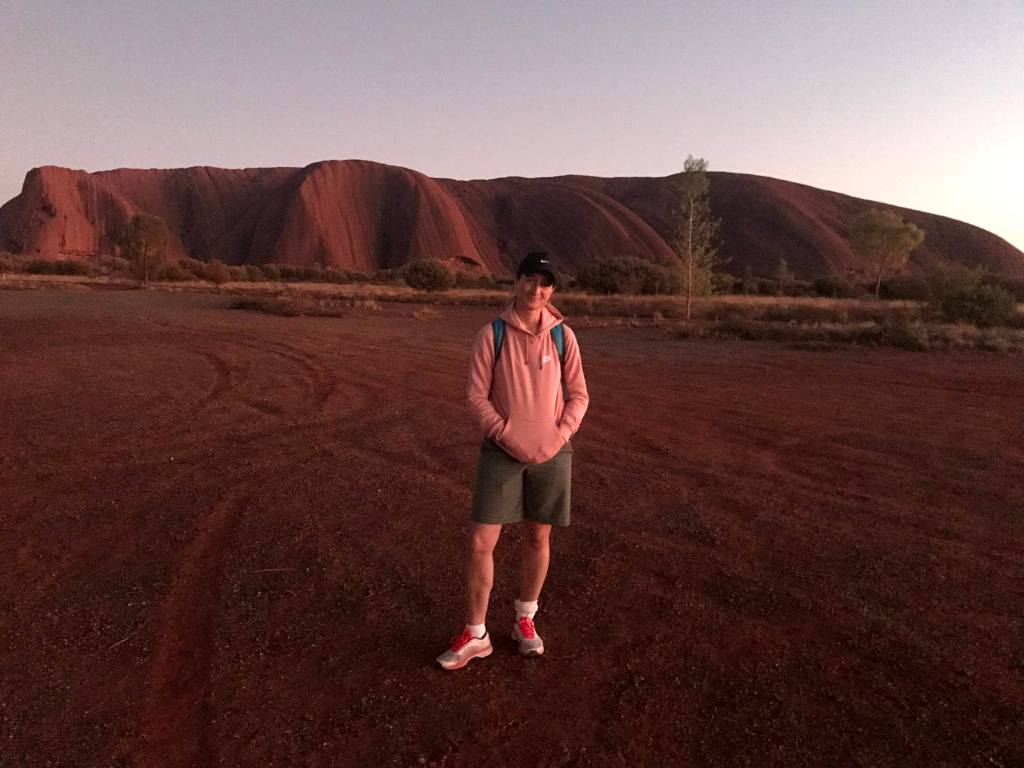
The Uluru and the neighbouring sacred sight Kata Tjuta (Many Heads) have many stories to tell. Dream stories that are very true. To visit Uluru is like being invited to someone’s home. You are welcome to come in, to come into the living room, the kitchen, maybe even take some pictures of these rooms if you like. The bedroom, however, is closed and would not go in there to take pictures. Off limits.
The aboriginals consider Uluru their home. It is sacred to them, so they ask for our respect. There are sacred sites that you are not allowed to photograph – a request often ignored by tourists. The Anangu people have long asked to not climb this sacred rock. It took until last year to finally be heard. And though no climbers have been allowed since October 26, 2019, Uluru remains scarred by our ignorant behaviour. The water in the Mutitjulu Waterhole, where our story of Kuniya and Liru takes place, remains contaminated by trash thrown out by tourists that had made it to the top. Garbage, diapers, batteries, human waste… Animals that used to live around the area, have disappeared – kangaroos, emus, wallabies, camels. A faint grey line on the bright red rock where climbers used to mount, reminds us of our deep disrespect of the people’s wishes.
Uluru has much to teach us. Especially in crazy times like these. About family and loyalty. About looking out for each other. About storytelling and the power of words. About going back to the basics. About slowing down and listening.”This is a good place to listen to the country. Take a minute to sit down. Close your eyes and breathe deeply. Enjoy this moment.”
- Note: I am no expert! My research was compiled during and following my time at Uluru and through the internet. I tried my best to get the facts correct.
 Thoughts From the Upside Down
Amazing
LikeLike