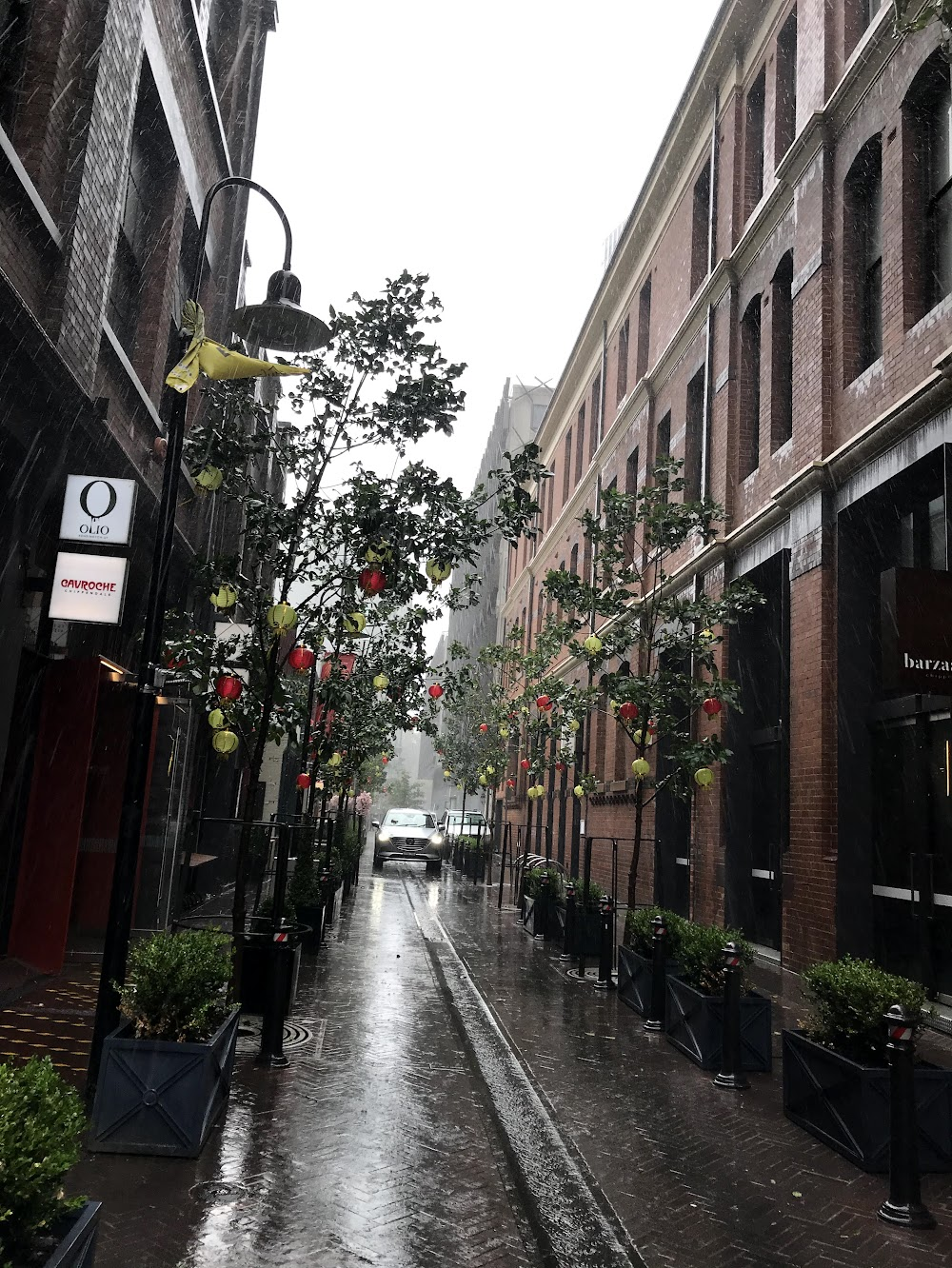
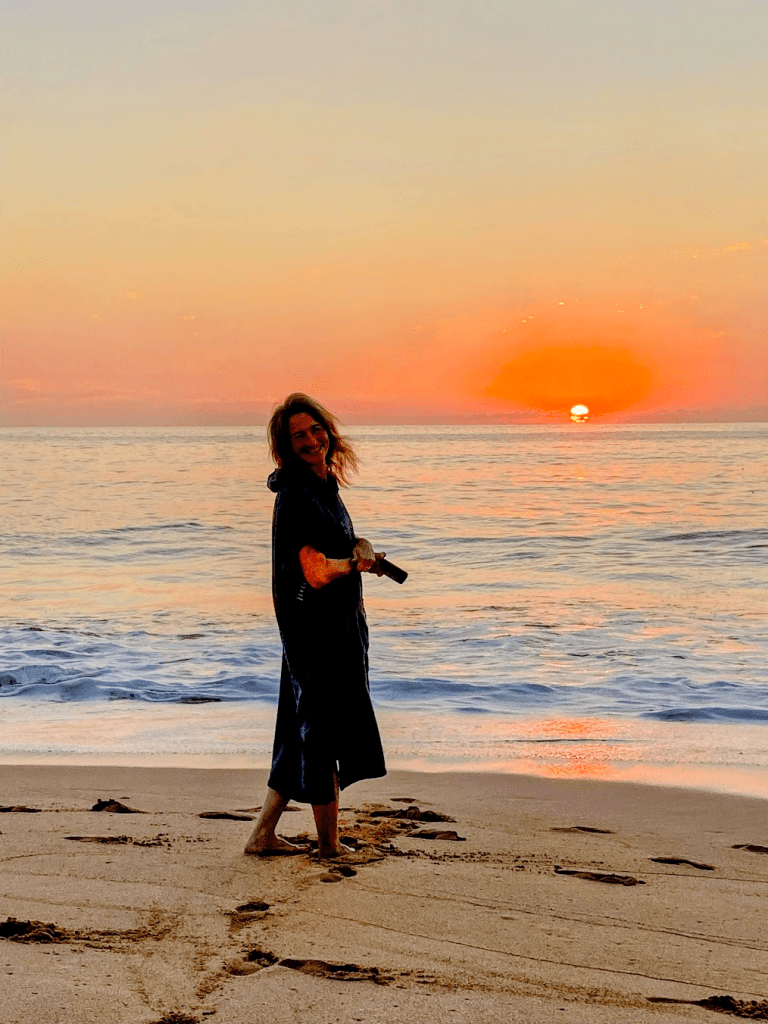
Gisi in Sydney

Darling that’s just how it goes
It’s one door open, one door closed
It’s nothing tragic in the end

So go ahead, and say goodbye
Cause there’s an empire in my mind
And I can build it all again

It’s the crying that reminds us, we’re alive
It’s the cracks that let the light in, sometimes
I can see the diamonds in the dust
There’s beauty in the ruins of us

Ruins. Ashley Parks (from Emily in Paris)

Ok. I admit it. I’m addicted. We all have that one thing we can’t get enough of even though we know it’s not good for us. Wine, chocolate, avocado toast (though I’m almost over it). You name it. For me, it’s binge-watching Netflix shows. I used to go out or read. Now I just fall into bed and stare at my laptop. Pretty sad.

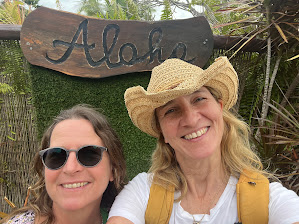
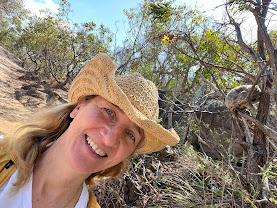
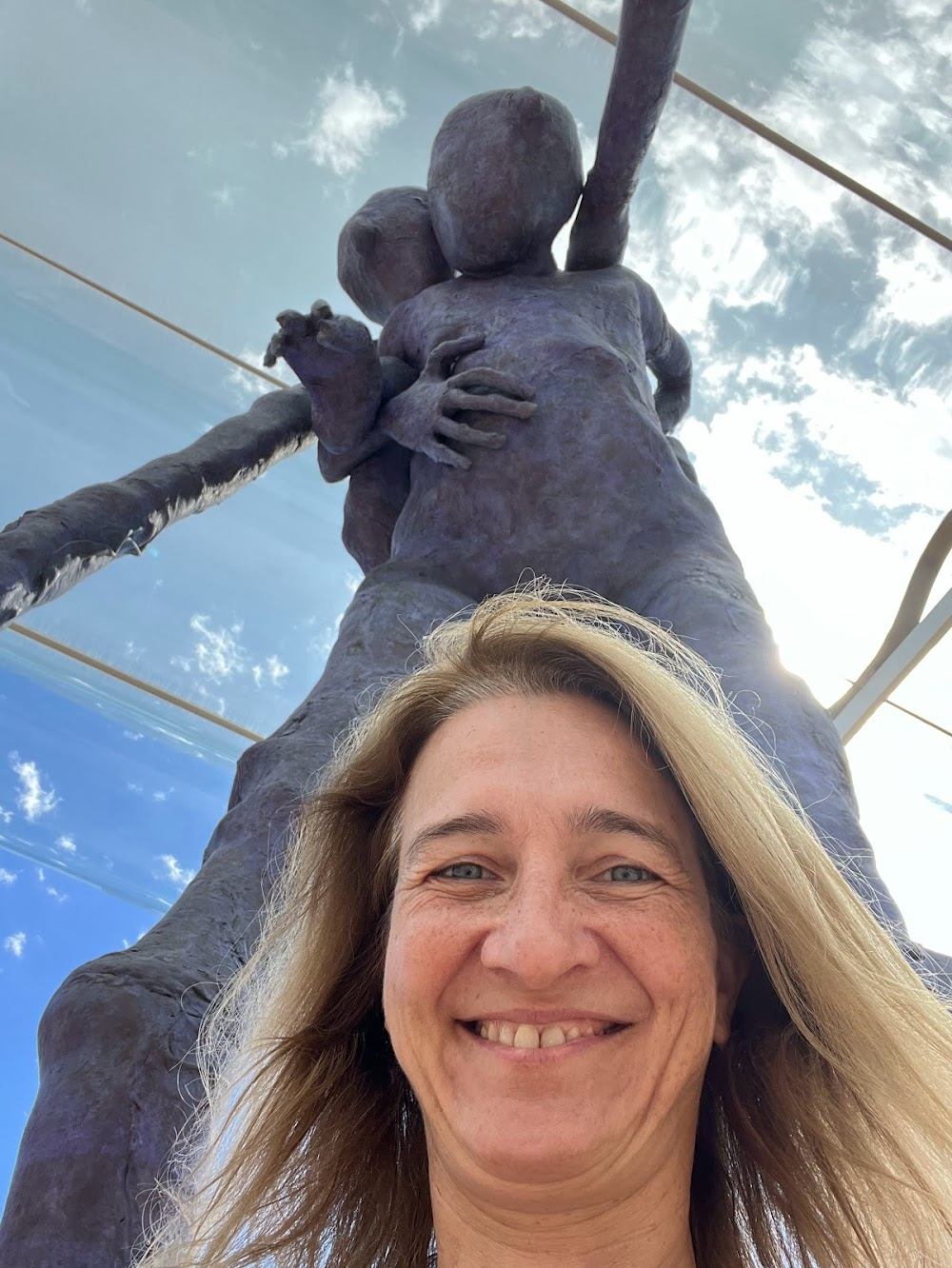
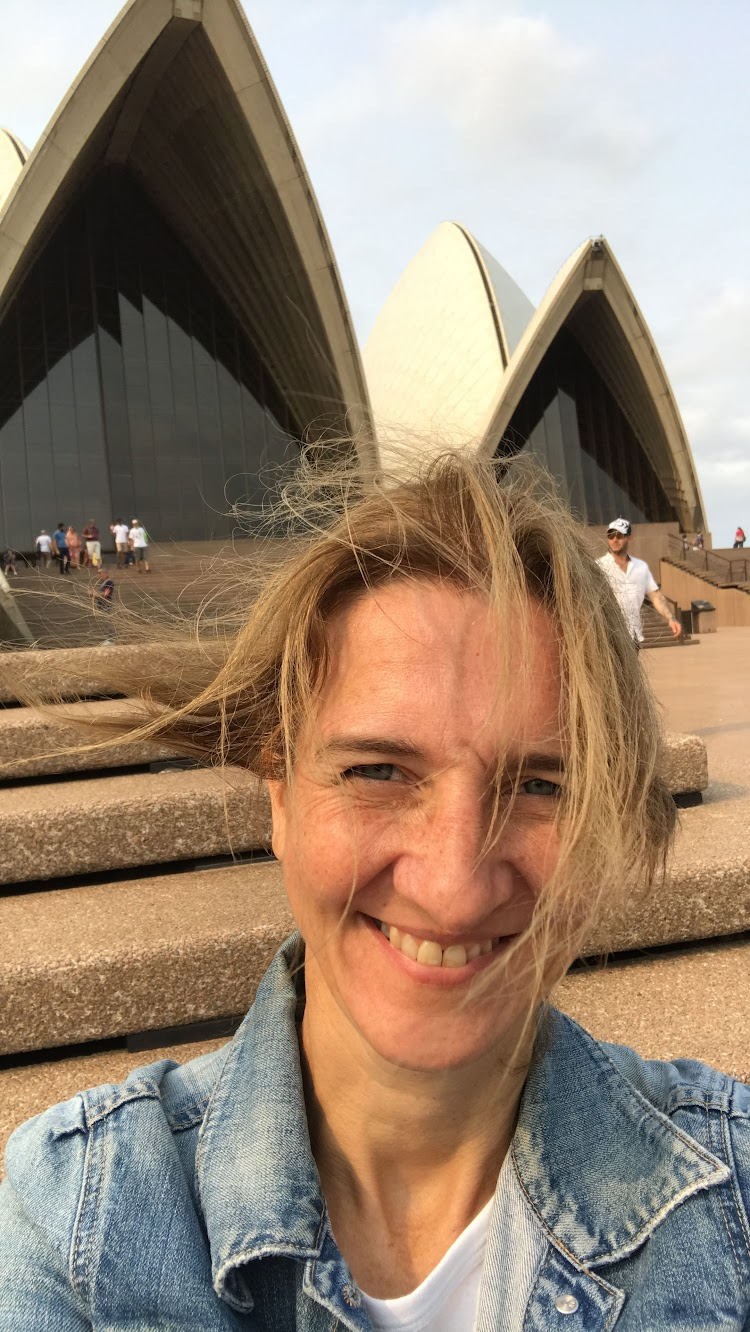
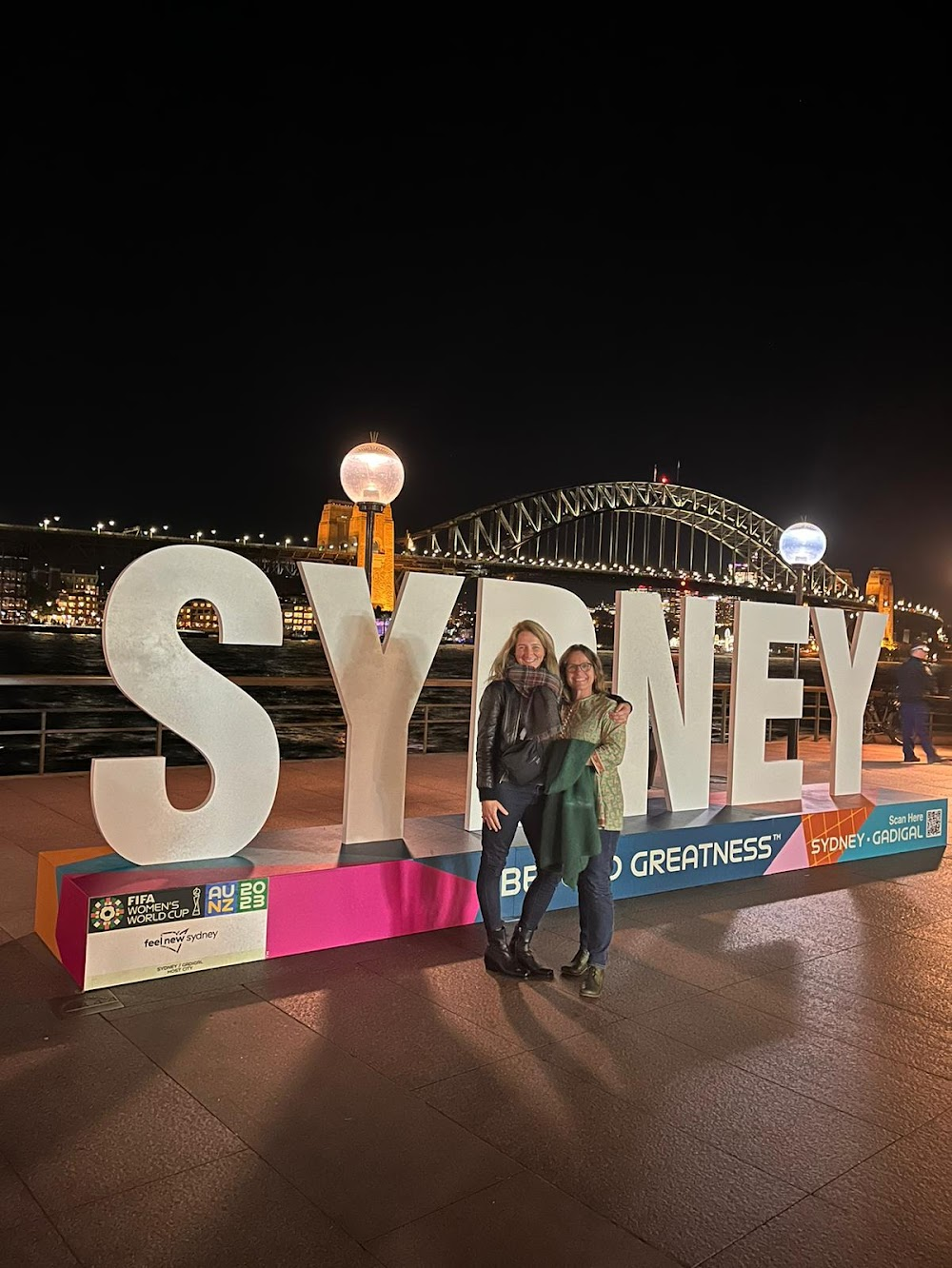
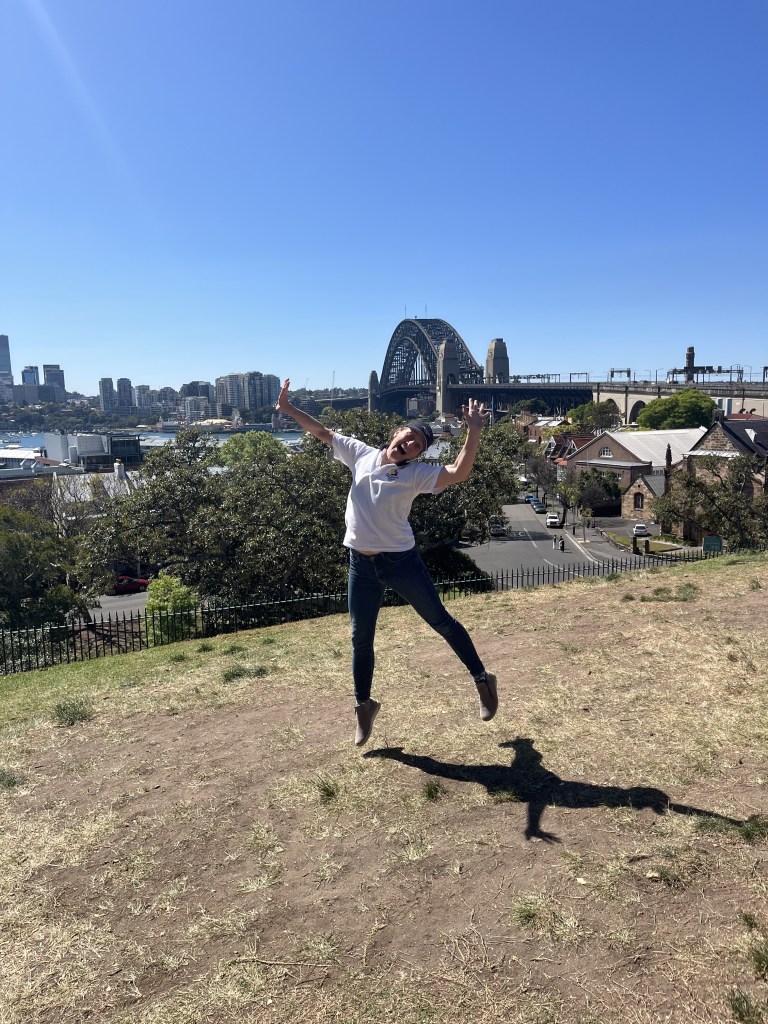
And if that wasn’t bad enough, it’s not just any Netflix show. I am addicted to watching Emily in Paris, for goodness sake! There, I said it. The story of an American college graduate in her late twenties with a Master’s degree in communication who’s from Chicago and moves to Paris for an unexpected job opportunity. Yes, the stereotypical story of the American touristy experience in Paris with all its clichés and made-for-Instagram moments. With the main character wearing so many new outfits every day, I wonder how she can afford her daily baguette et vin. Why am I wearing the same old pair of jeans every day and still only eating avocado toast (I told you I was a bit addicted to it)? The show where the star snaps the perfect selfie wherever she goes. I wish I could say the same about my selfie shots of Gisi in Sydney.

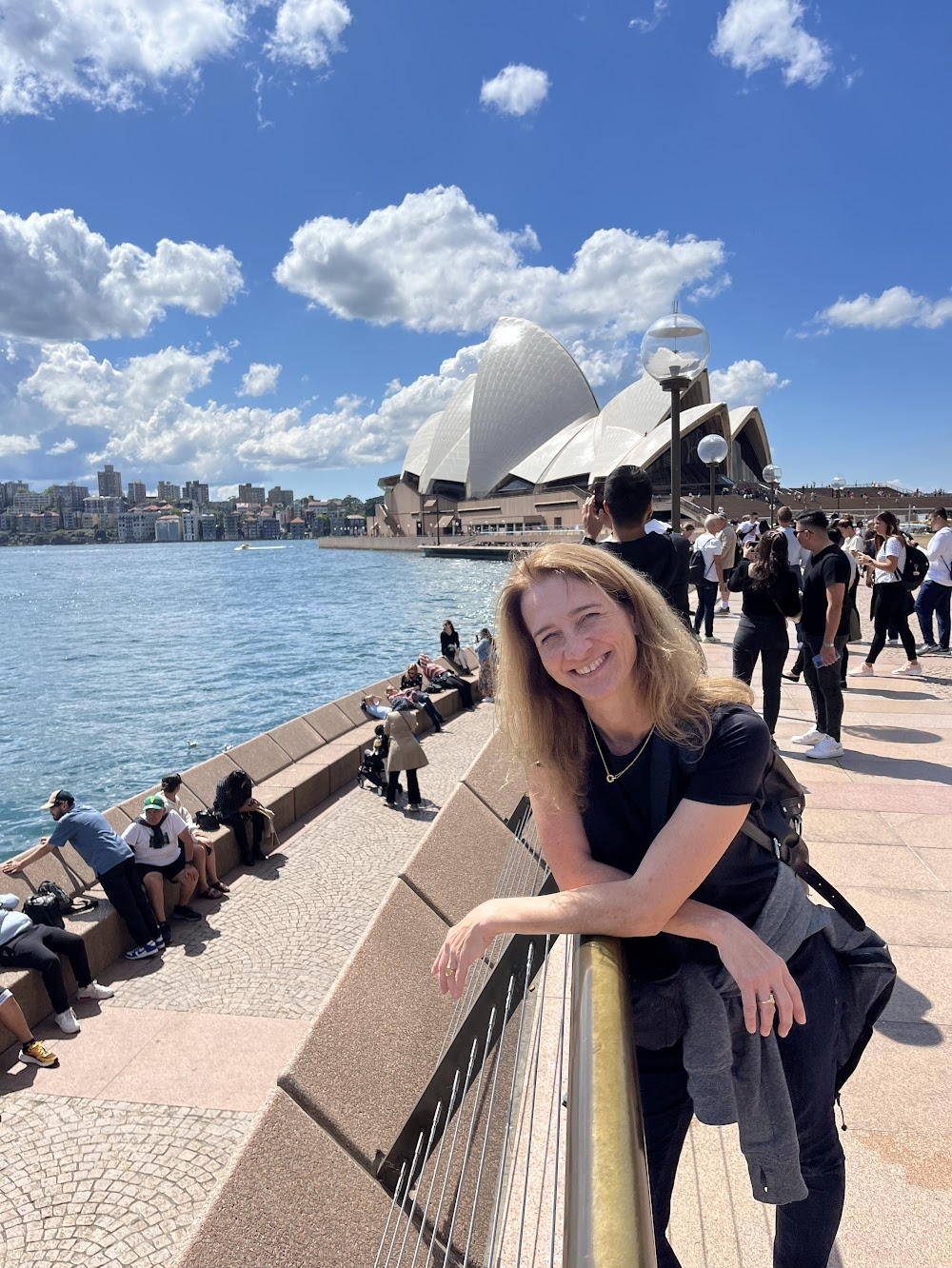
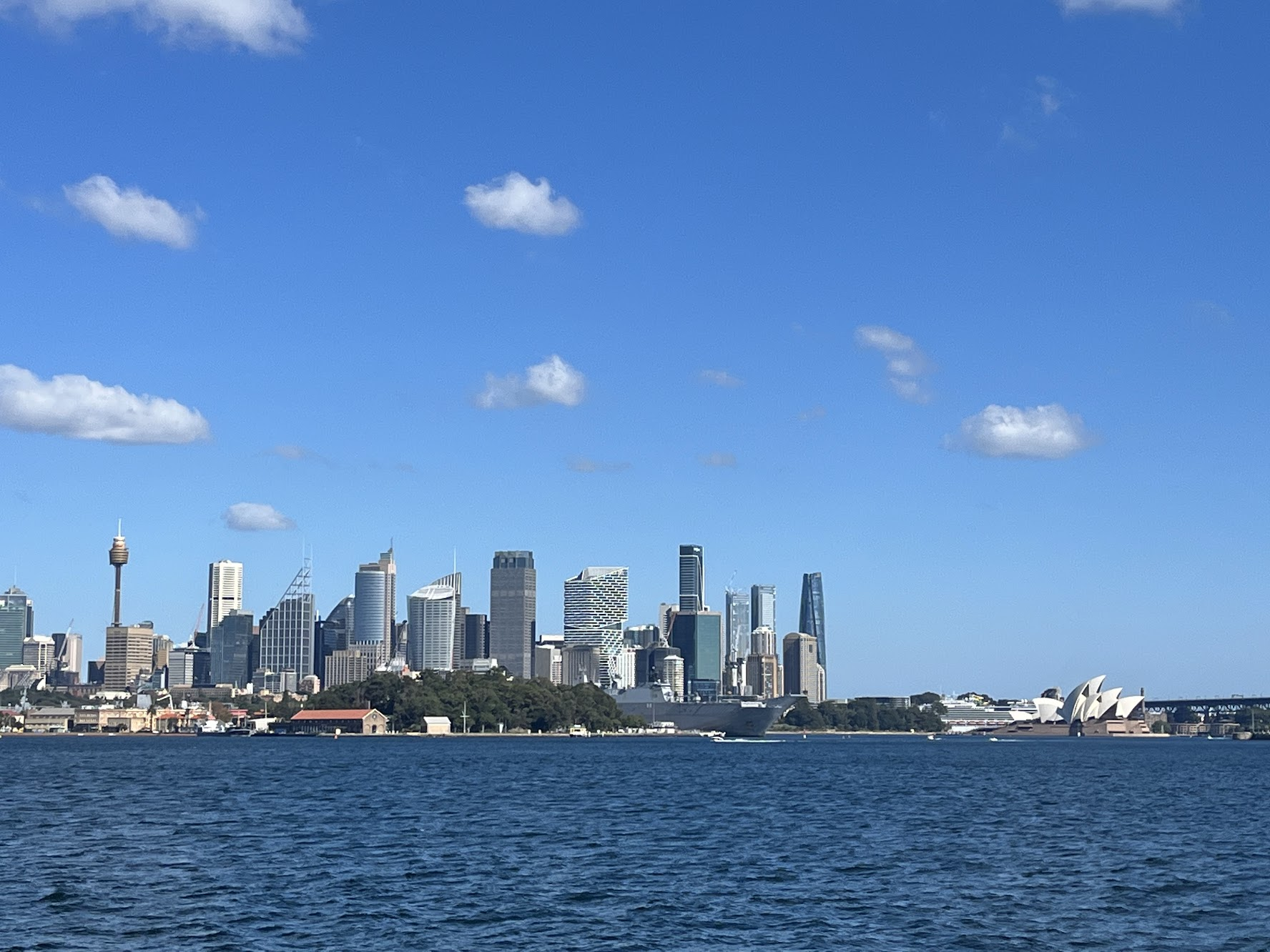
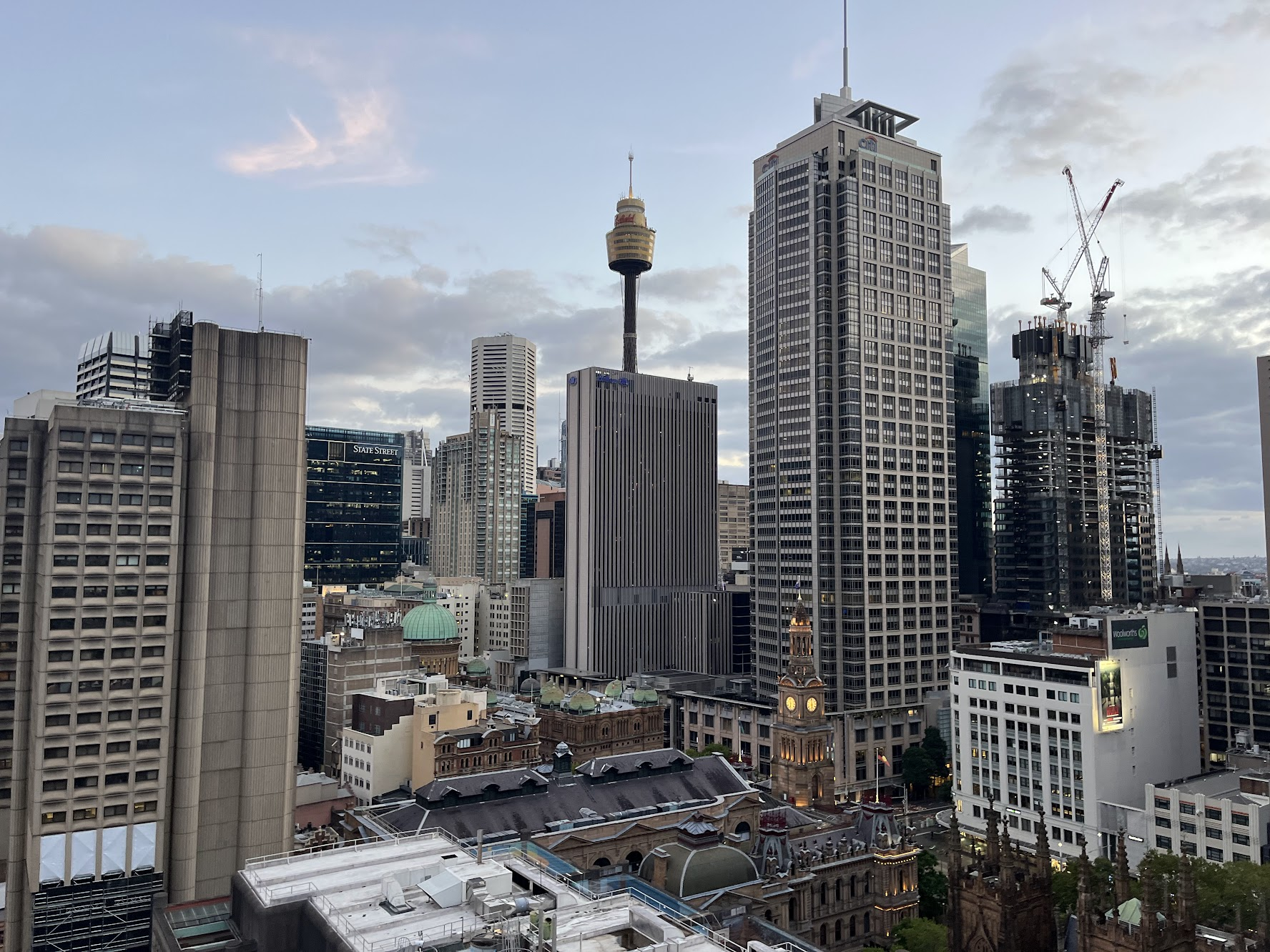
When pondering whether to continue writing this blog, one of my most loyal readers (one of the 50! ), asked me if I could write something about Sydney, the city. And I thought, sure – why not! If Emily can do Paris, I sure can come up with a little write-up of this beautiful city, though my impressions might end up being just as touristy and cliché as the ones provided by dear Em. With a similar lack of diversity and limited exploration of different neighbourhoods as shown in the series. After all, Sydney is not just The Opera House or the Sydney Harbour Bridge. But it’s a start.

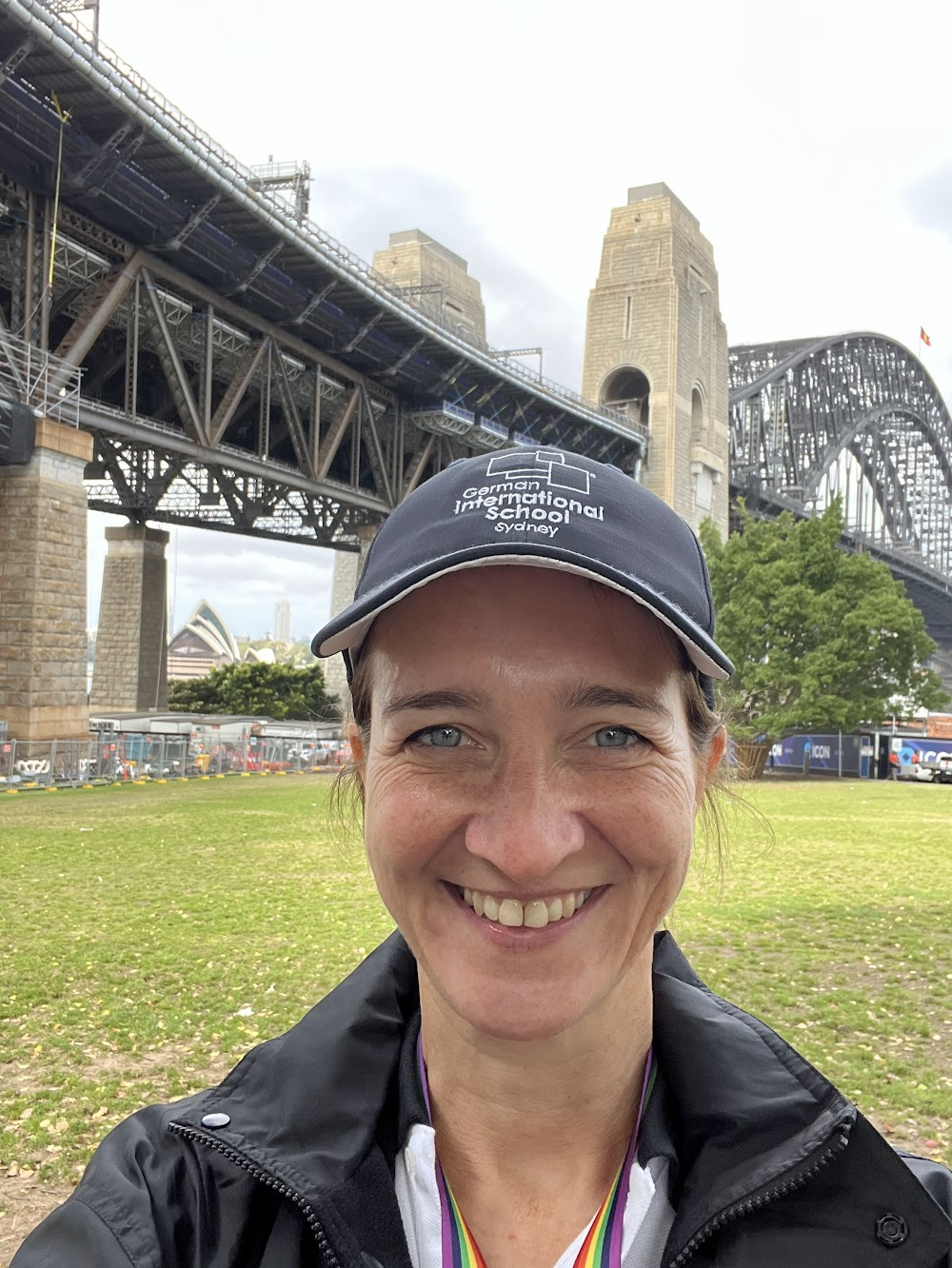
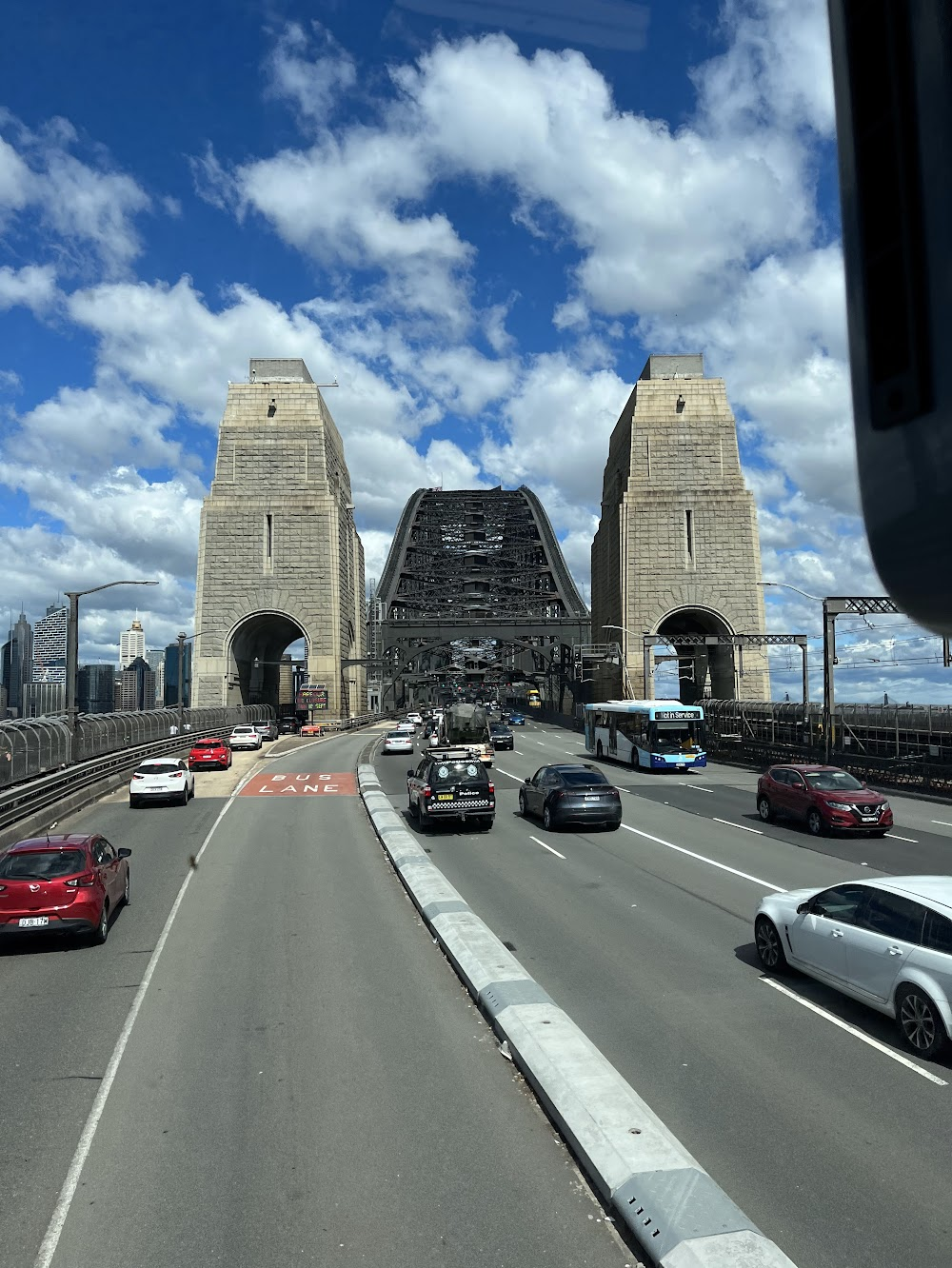
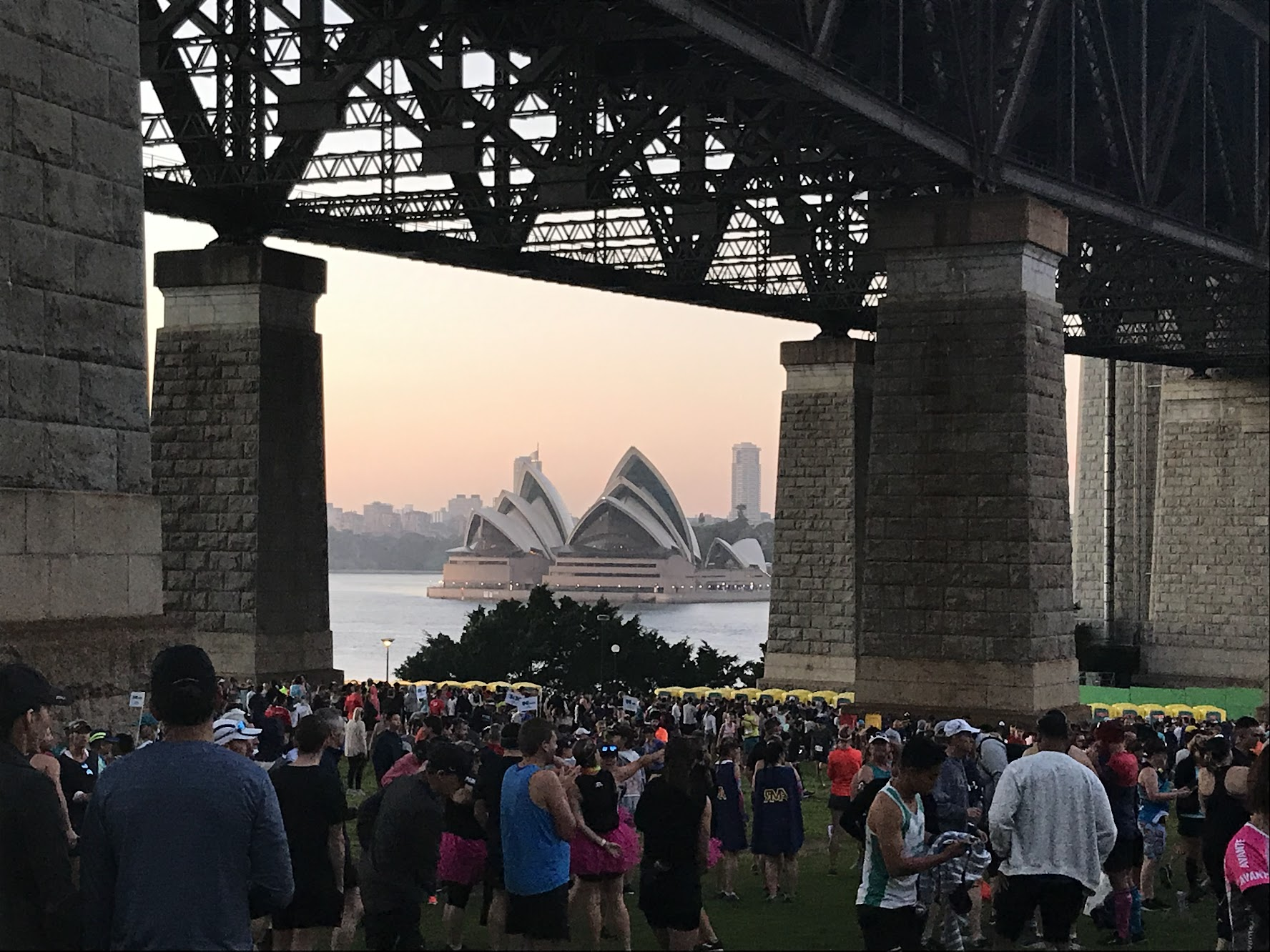
So why not start with the Sydney Harbour Bridge? I have crossed it by bus, car, and on foot. I’ve run it, walked it, and taken a boat underneath it. I see it every time I return from an overseas trip, and I have to say, my heart still sings whenever I see it again. To me, it is one of the prettiest sights I have seen in any city in the world. The combination of blue sparkling water, rocky green shores, sandstone brown buildings, the iconic Sydney Opera House, with a modest skyline behind just works for me. And I love the bridge itself: The simple but striking outline of an arch and four pylons has made the Sydney Harbour Bridge one of the most recognisable bridges in the world. Built about one hundred years ago, it is still the tallest steel arch bridge in the world with an impressive height of 134 metres from top to water level. Not the longest bridge, only number 10 in the world. Once up on the walkway, it’s a gentle 1.4km stroll across the iconic bridge. A beautiful walk with a truly magnificent view over the harbour, Opera House, and eastern suburbs. Beautiful…unless you are doing it with a bunch of six-year olds, of course!

Wednesday morning, 9am. Two school buses packed with children were on their way to Milsons Point on Sydney’s North Shore. The students had been learning about buildings and structures, and now it was time to explore one in real life. One group had gone to the Lighthouse at Palm Beach, while these two groups were going to walk across Sydney Harbour Bridge. Their destination was Government House in the Botanical Gardens – not even two hundred years old, which makes the European in me smile. Yet, it’s as close as it gets to an old building here in Sydney. At least it looks a bit like a castle!

Government House Sydney Botanical Gardens

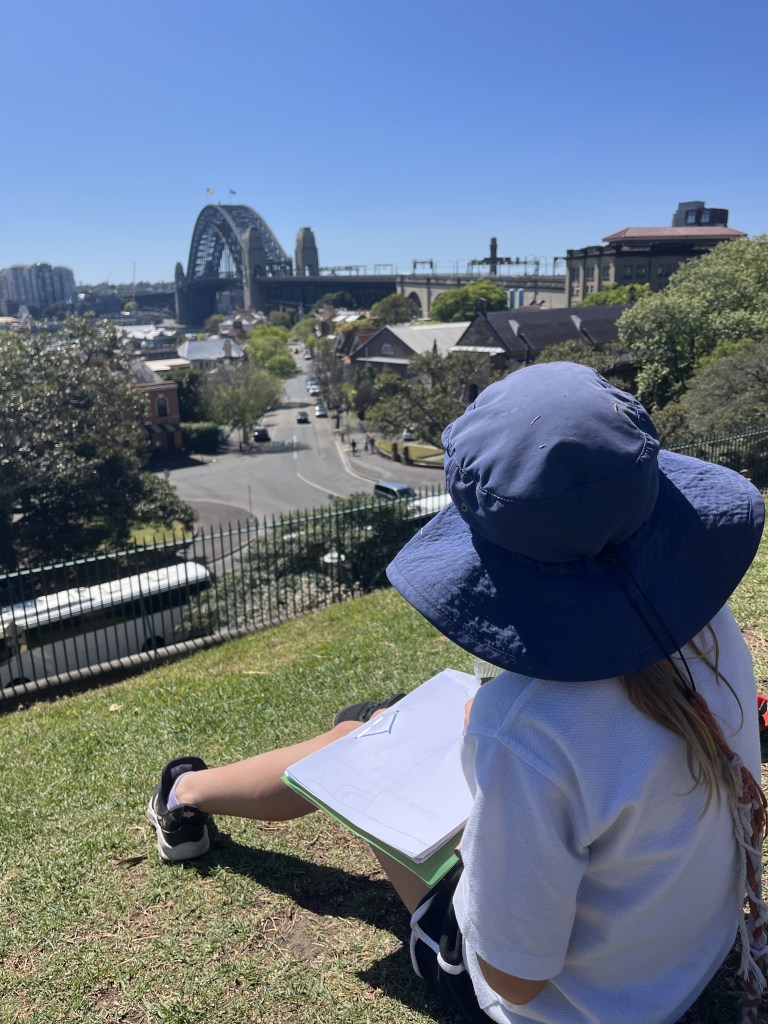
After crossing the bridge, two-by-two and still full of early-morning energy, our group veered off to the right to make our way up to Observatory Hill. A well-known spot for watching the sunset over the harbour, this park was ideal for our intentions: to get a good look at the entire Sydney Harbour Bridge and to take some time to draw it architect-style. Plus, we had several snacks, a few trips to the public toilet, a game of tag in the park, and plenty of time spent just harbour-gazing and letting the world go by.

Vista from Observatory Hill Park
Gisi in Sydney

The walk back across the bridge was, as you can imagine, a little slower and required a bit more coaxing, but eventually we made it. Bye bye to The Rocks and Circular Quay, the Opera House and the Harbour with its ferry boats and sailboats and big gigantic cruise ships waiting in the docks. One child suggested taking said cruise ship one day for our school excursion – I am not sure the School Management will go for it, but hey, you can only try. We walked, schlepped, and complained our way across, back to Milsons Point with Luna Park not far away, the purple carpet of Lavender Bay in the distance, the cafes, parks, and grassy areas in the shadow of the bridge for us to rest in until it was time to return to school.

Milsons Point by night

A tiny part of Sydney, a huge trip for little people. “Today we learned NOTHING!” one of the students proclaimed, with a bit of satisfaction in his voice. I dare to disagree. I believe today we learned a whole lot. And if only it was that there is so much more to explore in this great city. Minus the kids though. Only Gisi in the City! Cheers!

Lost Socks

I can’t keep track of all my socks
I’m irresponsible, not because I’m a rockstar
You can call me what you want
I think I’d like to hear you talk

If I set fire to these walls right now (right now)
Would I set foot inside your mind? (Would I?)
And if you say yes, am I allowed back in?

Socks. Dominic Fike

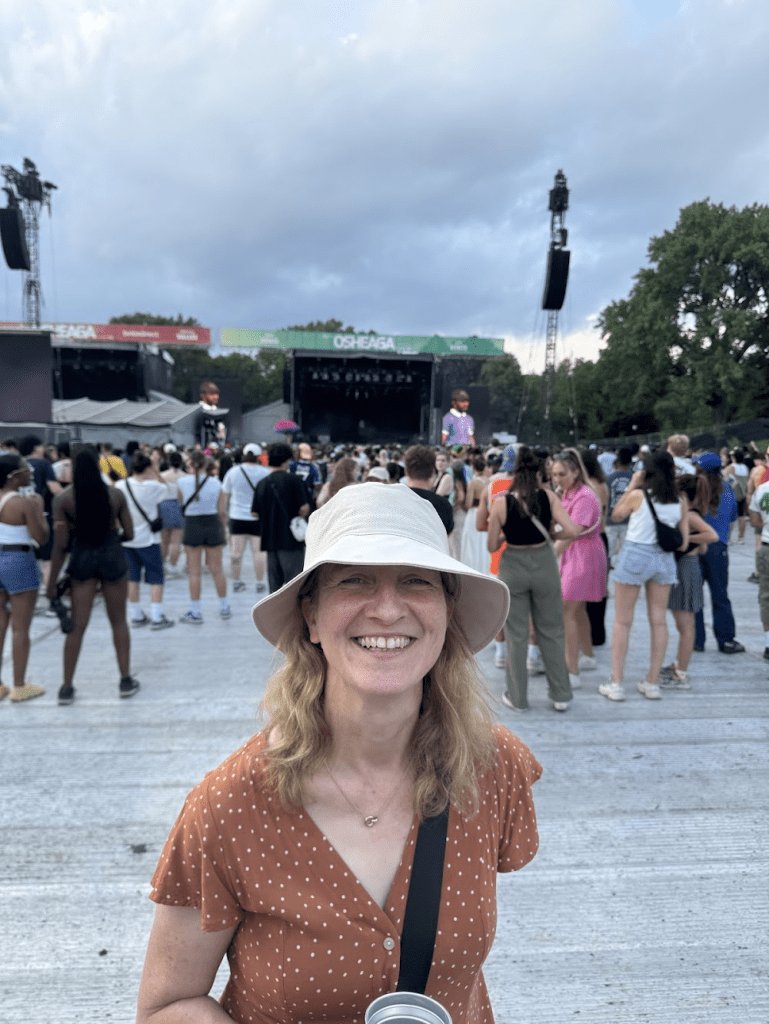
Lost socks @ Osheaga 2024

Next to a row of smelly pit toilets, in the dirt of the concert grounds, they got left behind. White, wet, and no longer needed: a pair of worn sport socks. The short, annoying kind that travel down your ankles while you’re wearing them. Then disappear into your shoes, all bunched up around your heels, betraying their intended purpose.

Soaking wet from the water cannons at the EDM stage, these once-essential items now lay discarded. Left behind next to a metal fence somewhere between one stage and the next, they became silent observers to the ebb and flow of the festival.

I wonder what these small and inconspicuous socks must have witnessed while lying there against that metal fence, motionless yet all-seeing. Did they watch the concert crowds pass by? Slowly shuffling by. Stumbling by. Dancing by. Perhaps they felt the ground vibrate with bass-heavy beats, or caught snippets of excited conversations and off-key singing.

Thrown out one night, they still lay there the next day as we walked by. Their presence was almost accusatory, as if to remind us of our careless abundance. Their position against the fence had shifted slightly, but they hadn’t even been deemed important enough to be cleaned up by the night crew. I picture the cleaners coming in when all the fans are gone, off to after-parties or drunk in their hotel rooms, sleeping it off. I imagine them picking up garbage, cleaning the pit toilets (one can only hope), collecting other items left behind. Yet the wet white socks remained where we left them.

As time passed, they were no longer wet, but dried stiff from all the water and dirt they had collected on these concert grounds. They became a constant in the ever-changing festival landscape, a small monument to forgotten necessities.

And then, on the third day, as we made our way past their usual spot, they were gone. Simply disappeared. I found myself wondering about their fate: Were they cleaned up and thrown away? Picked up and reworn by someone in desperate need? Swept up and put with all the other garbage, destined to rot away in some giant garbage container?

If socks could talk, I would love to have had a chat with them. “Hey, how have you been? Sorry we left you behind, but we hope you understand.” I would tell them about the pang of guilt I felt every time I walked by, seeing them there. And about leaving them behind again and again.

The things we leave behind. Socks. Personal items. People. Ever since moving to Australia for the first time in 2019, I have taken great pride and comfort in the fact that my entire belongings fit into two large suitcases. Well, three by now probably. Or four. Actually, make that five. And a vacuum cleaner – my most recent purchase. It is the most amazing tool I have ever owned, worth every cent but that’s a story for another day (because surely you would want to read about a vacuum cleaner since you just read a whole paragraph about socks!).

For some reason, not having many items with me liberates me. Almost like a fresh start, a clean slate, a new beginning. Able to pack up and leave at any time and move on. Not that I am planning to go anywhere anytime soon. I am a bit tired of starting over and reinventing myself. I am planning to stay put for a while. Well, since I quit my job in Canada I don’t really have any other options right now, anyway. I am here for good, committed and ready to go. 

And I am enjoying the fact that I know my way around a bit more now, understand the systems at my school a bit better, and even manage to find the document I am looking for in the most intricate filing system any school has ever seen most of the time. Not always, but more and more often. The other day, I came across a school document by accident that I had been looking for years ago. Small success. 

Yet I do miss some of the things that didn’t fit in my suitcase and that got left behind: the wooden charcuterie board I crafted with my son and his girlfriend while spending time back home in Toronto. My Ikea shelf full of books. Driving my own car. The long summer nights. People. Friends. My family. The things I left behind to follow my dream. 

Long Summer Nights @ Montreal 2024

July 2019. Toronto Pearson Airport. Security check. The part after you checked in your overweight luggage. Paid an extra $100 because your suitcase was too heavy with things you thought you could not leave behind. The part where you hug your children goodbye one last time, in your stomach a crazy mix of fear, guilt, sadness, and excitement. Where you walk along the black line barriers like a maze: left right, left, right, straight, bag through the x-ray machine, yourself through the gigantic swiveling scanner gate. One eye on your belongings, the other on your family slowly disappearing and getting out of sight. One last glance, one last look, and then eyes forward and off you go.

I have that funny feeling every time I leave Canada to return to Australia. That funny mix of uncertainty and absolute certainty. It does get weaker with every time I leave my family behind. I now manage to see myself as an important expat that goes off to do her job abroad. Until I come back for a visit in a few months time. It is a bit like two parallel lives I am living and I feel lucky to have two worlds I call home with people that I love in it. Even if it means that sometimes I have to leave them behind. Not discarded like a pair of old, wet socks, but like carefully washed, dried, folded and tucked away inside of me. Until it’s time get them out and wear them again. Experiencing great things together.

Pull up your socks, I say. Time to get wet again.

First Day of Spring September 2024

“Dreams are fun when they are distant. The imagination loves to play with possibilities when there is no risk of failure.

But when you find yourself on the verge of action, you pause. You can feel the uncertainty of what lies ahead. Thoughts swirl. Maybe this isn’t the right time? Failure is possible now.

In that moment—in that short pause that arises when you stand face to face with your dream—is the entirety of life. What you do in that pause is the crucible that forges you. It is the dividing line between being the type of person who thinks about it or the type of person who goes for it.

When I really think about it, I want that moment to be my legacy. Not that I won or lost. Not that I looked good or looked like a fool. But that when I had something I really wanted to do, I went for it.” (James Clear)

The Ghan Or: Everyone on this train is a suspect

Oh, Puff, the magic dragon lived by the sea
And frolicked in the autumn mist, in a land called Honah Lee
Puff, the magic dragon, lived by the sea
And frolicked in the autumn mist, in a land called Honah Lee

Together they would travel on a boat with billowed sail
Jackie kept a lookout perched on Puff’s gigantic tail
Noble kings and princes would bow whenever they came
Pirate ships would lower their flags when Puff roared out his name

Puff The Magic Dragon. Peter, Paul, and Mary

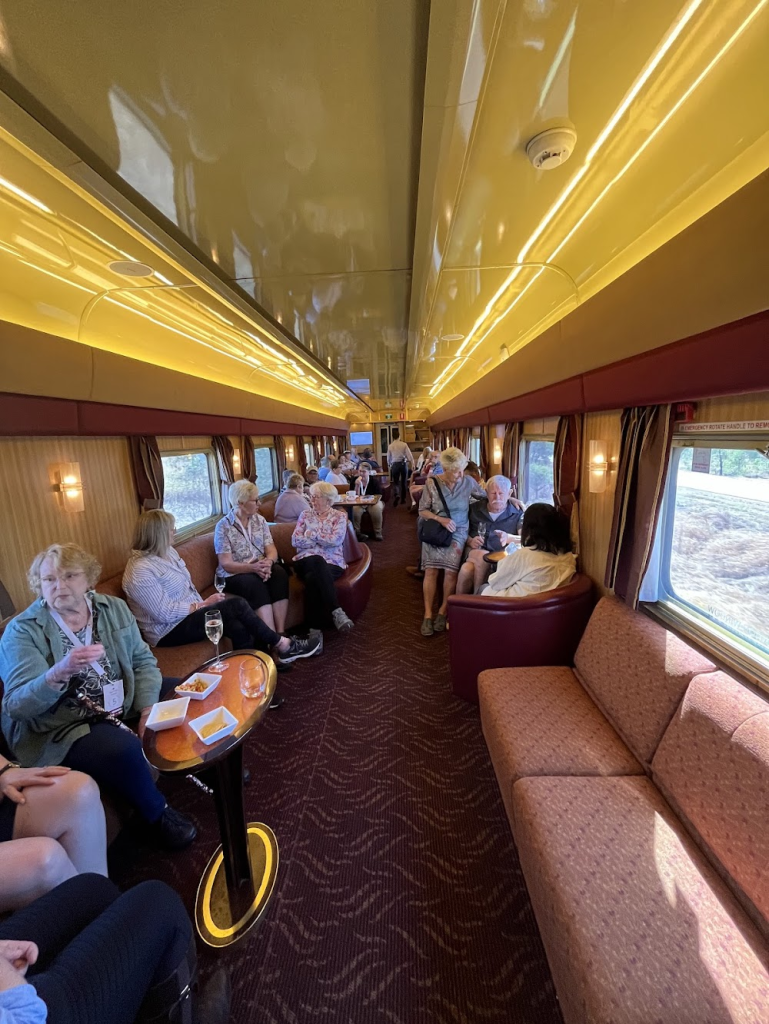
It was 10:30 AM, rock music blaring over the portable speaker in the middle of the lounge, drinks flowing freely: beer, wine, champagne. The odd non-alcoholic drink. The barista-turned-bartender was entertaining the single guys at the bar. All of them double her age. All the ladies were getting increasingly chatty. Everyone was getting increasingly happy. Happy hour on The Ghan had started early. It was 10:30AM! And we were stuck!

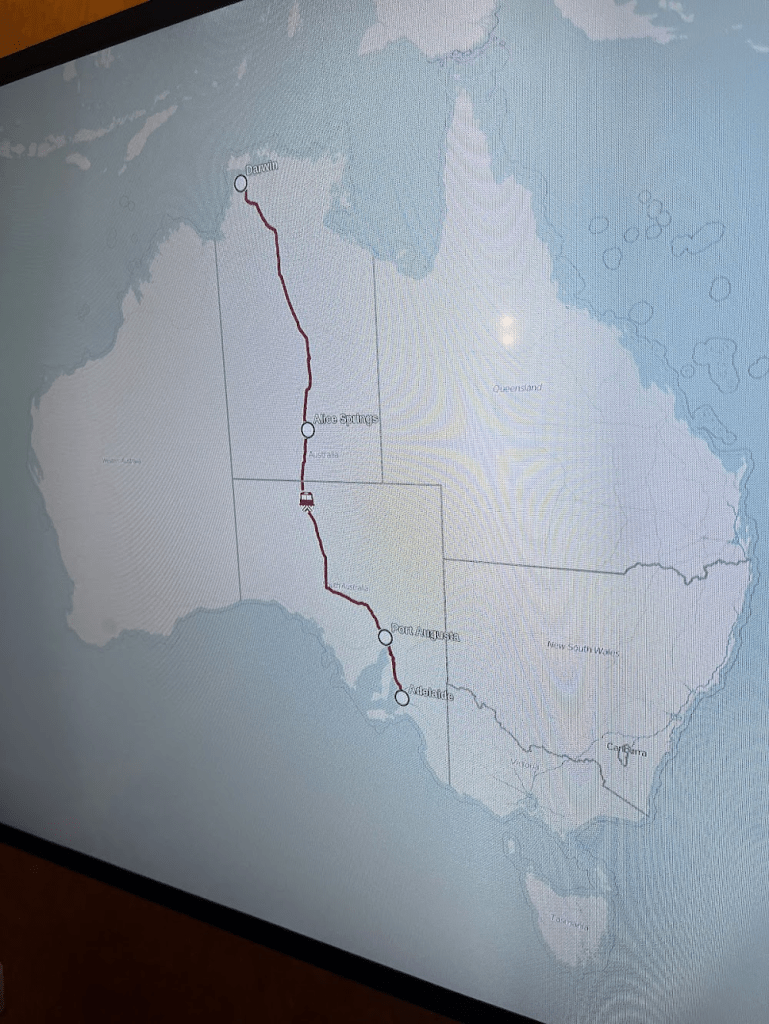
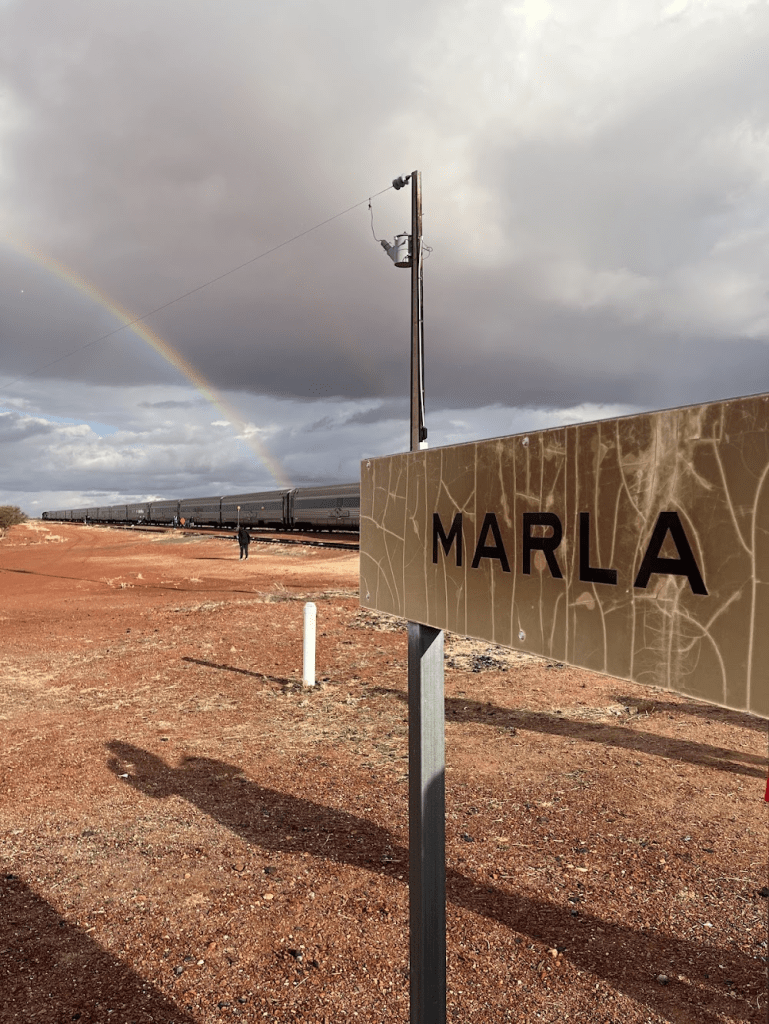
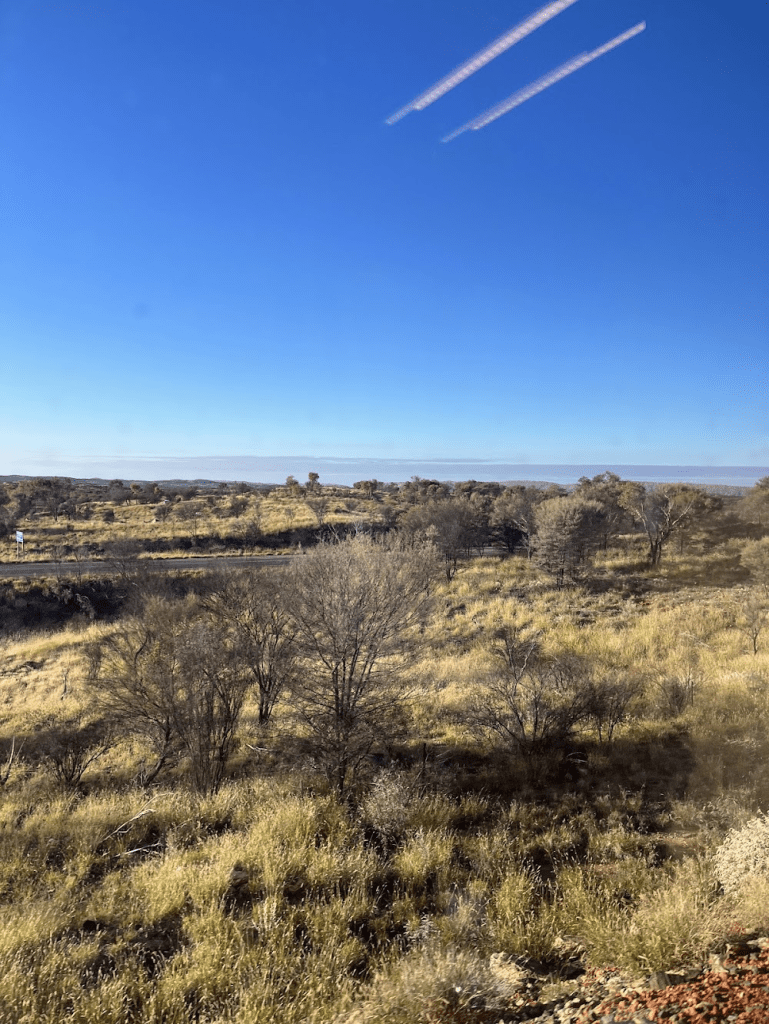
It was the third day on my journey from Darwin in the North of Australia, to Adelaide in the south. The third day on the iconic Australian train The Ghan, and we were about halfway on the almost 3000 km long ride. We had made it to Marla in the centre of this vast country. The Red Centre of Australia. 

Boarding in Darwin, NT

Riding on The Ghan had been on my bucket list ever since arriving Down Under five years ago. I booked a spot on the train in 2019, the trip got covid-cancelled, I rebooked three years later, and here I was – finally. A dream come true. My dream come true! But for now, we were stuck!

The Ghan Route – Stuck in the Middle of Australia

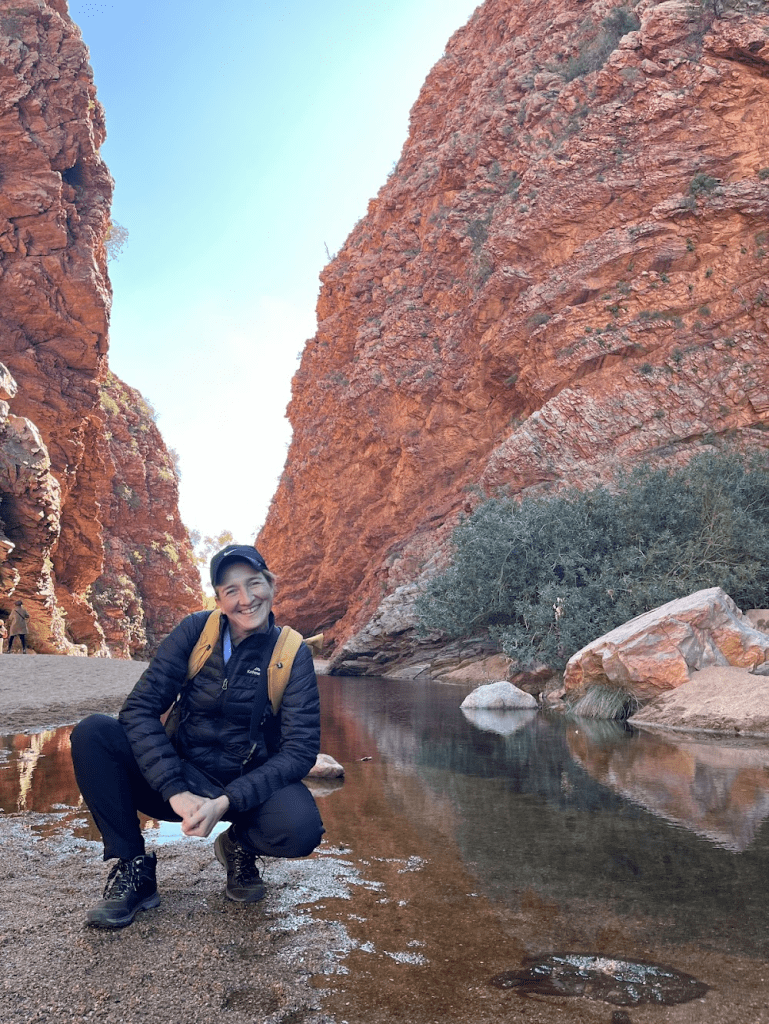
It had all started the day before when arriving in Alice Springs. Usual temperatures this time of year were in the mid-twenties, but they had dropped just above zero the night before. Wearing all the clothes from our tiny carry-on suitcases, I was glad to be on the hiking excursion to warm up quickly. The silver lining: clear blue skies and no flies to bother us, which I remembered them doing when visiting the Red Centre five years ago. 

Simpsons NT

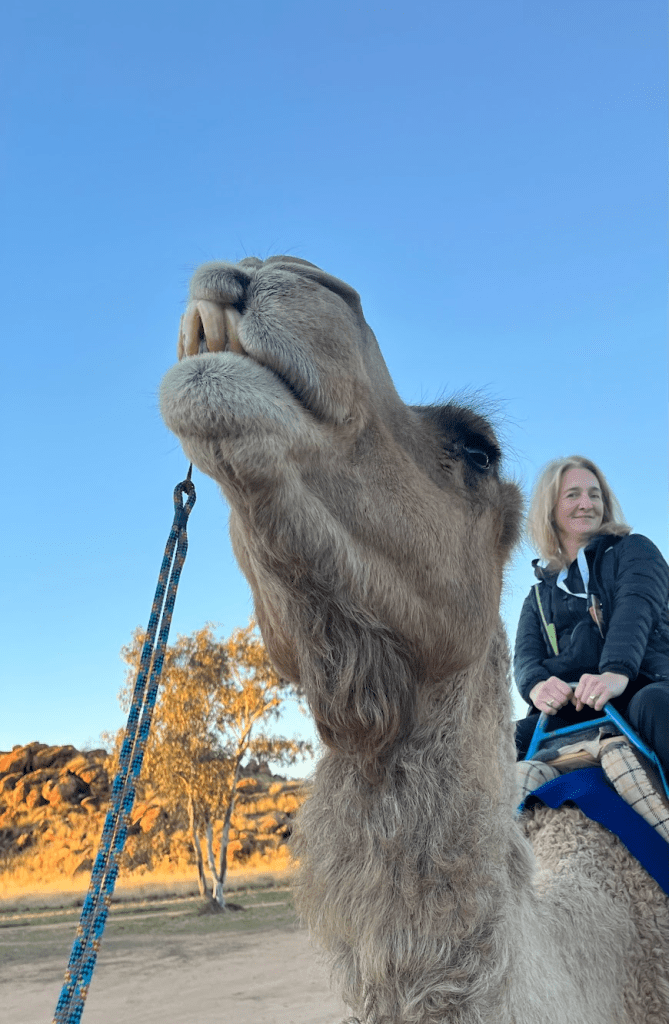
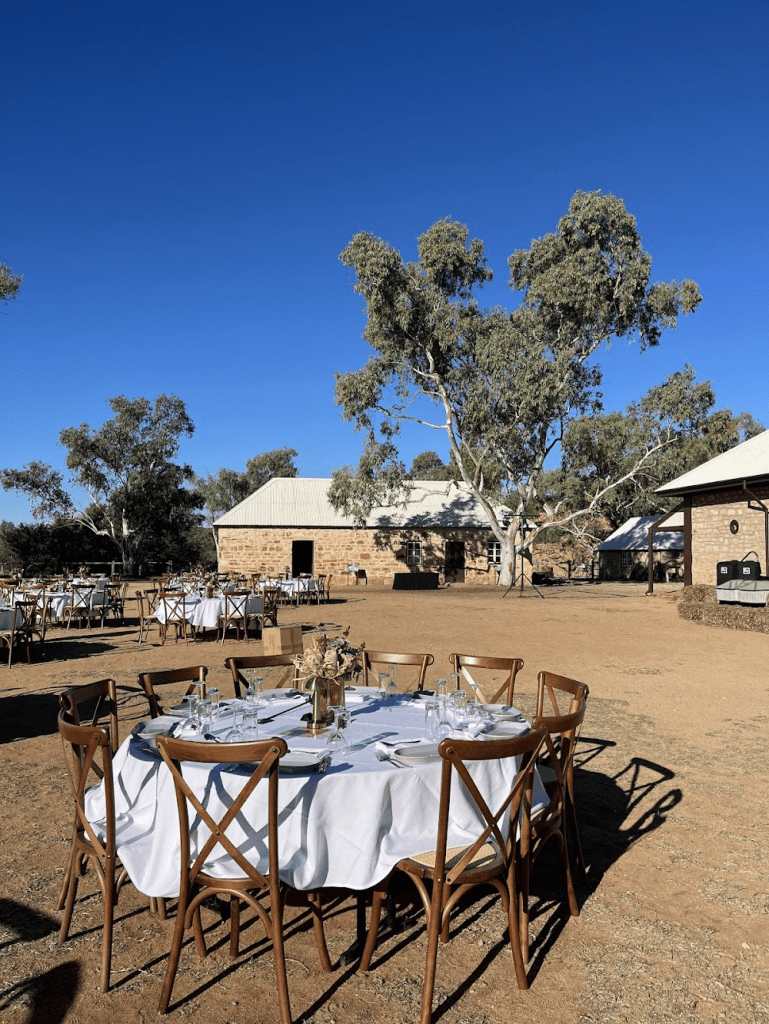
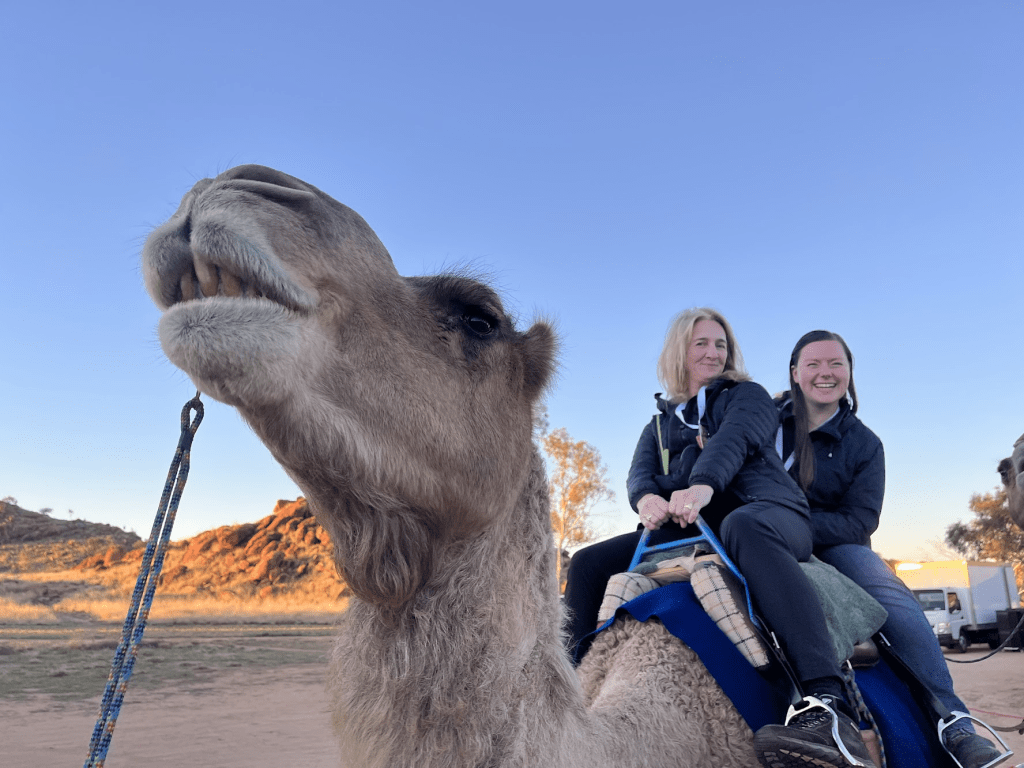
Once the sun was gone, it had gotten quite chilly, even by Canadian standards. The dinner under the stars at Telegraph Station had us all looking like Michelin men, dressed in sweaters and puffer jackets, wearing gloves and beanies. A soft, black fleece poncho as a souvenir for our time on The Ghan, together with firepits and swing dancing, had kept everyone fairly warm and comfortable. Even Harry the camel wasn’t complaining. Well, at least not about the cool temperatures. Maybe about his own stinky smell.

Camels
Telegraph Station NT
Kangaroo again?

The cold winter night in the middle of the red desert had made the stars come out and the steel train tracks crack. Full of food, and happy from the drink, the train’s passengers had settled into their cozy bunks only to realize in the middle of the night that the train had stopped. And it still wasn’t moving by breakfast time. Which no one minded as long as we were served coffee and eggs and bacon and delicious bacon bread. Though that’s when the rumours started: The engine had broken! We all needed to continue by coach bus! Or even worse – there was no more wine on board!

My bed
The lounge
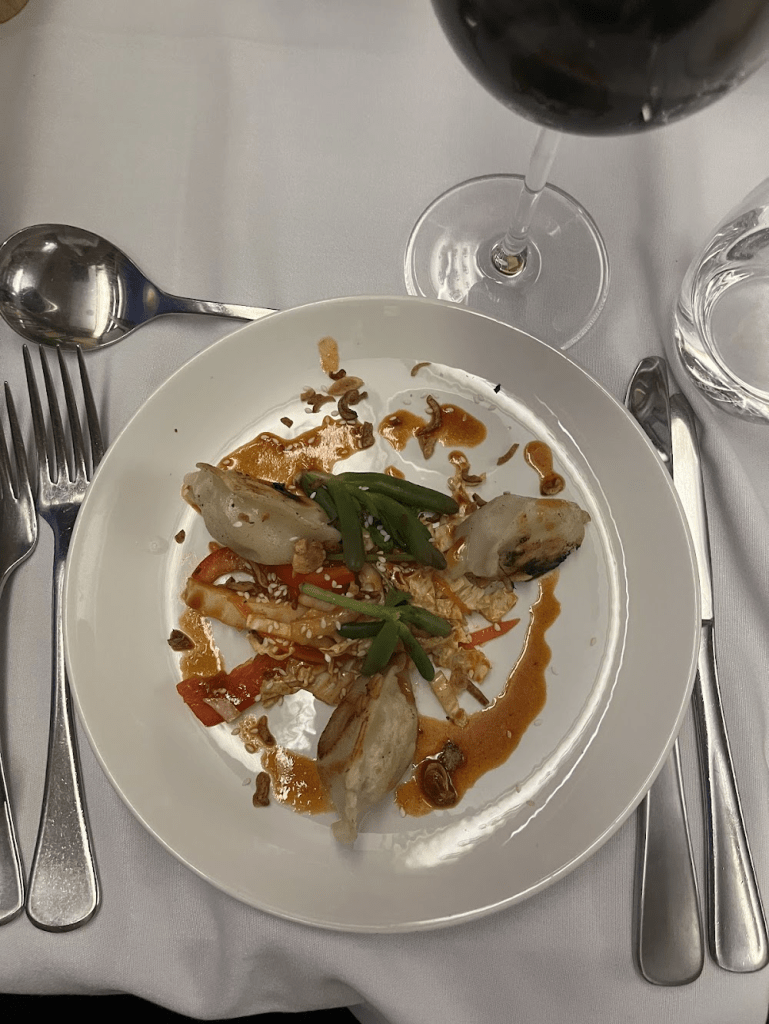
Kangaroo Dumplings

“Dear Guests, this is Ally your Journey Director with a few updates”. Finally, the voice on the speaker system would let us know what had caused the delay and standstill. “Due to the extreme (!) cold in Alice, the tracks 1km ahead of us cracked during the night and have to be fixed before we can proceed on our way. In addition to that, we just have been informed that the roads to our off-train excursion to the underground mining town of Coober Pedy have been washed away by heavy downpours, making it impossible for us to go there to check out the Opal mines and underground living.” 

Welcome to the Australian Red Desert, a place of extreme dryness and heat!? Just saying!

The Red Centre

Instead, the train organizers decided to keep all 273 passengers onboard the train for the whole day, feed us the catered food from Coober Pedy (still wondering how they got it to us considering the washed-out roads) and supply us with unlimited amounts of alcoholic beverages. By afternoon, after having met the representatives from the opal mines (who also made their way from Coober Pedy to the train) and being offered the opportunity to purchase an opal or two (which I probably would by then, just having finished my third rosé wine), we were finally allowed off the train. 

Rainbow over Marla NT

This sounded more exciting than it actually was, as we were stranded at Marla station in the middle of the desert, which offered a few wooden picnic benches, a rustic metal shed, and some rock art graffiti style spelling “FLAT EARTH”. I considered running into the wild and hiding behind one of the dry bushes, or looking for one of the many burnt-out car wrecks you see when travelling through the red desert. Maybe I would just stay on board and switch from rosé to red wine. I liked my wine to match my surroundings.

Everyone on this train is a suspect. And you get to know each other very well, especially when you are stuck in a small lounge/bar for hours/days. Everyone is a friend. Or a fiend. The old lady who celebrated her 80th birthday on board, not wanting to share her cake with any of the other passengers at her table. Each meal you sit with different people – for some reason I ended up sitting with the lady from Sydney every time. We developed a bit of a love/hate relationship over the five days we spent on the train.

The young woman from Salt Lake City, who became my carriage neighbour and camel-riding-partner in crime. We may not have agreed on politics or religion, but that was the beauty of this trip. You met people from all walks, or should I say journeys of life.

Harry the Camel

Summer, the girl from South Korea, who worked her first shift on the train and did everything from pouring us coffee in the morning, making sure we got back on the train after an excursion, to making up our beds at night. Even putting a chocolate on our pillows. A Betthuprferl in the middle of the desert!

Lots of elderly couples from Australia were on board, many of them from Melbourne actually. They were trying to escape the Melbourne cold only to get caught in the coldest night of the year. Life is funny that way sometimes. For many fellow travellers, I met on this train ride, The Ghan had been on their bucket list for a long time. Others were regular train travellers, having been on the Indian Pacific (Sydney to Perth), the Great Southern (Brisbane to Adelaide), or the Overland (Melbourne to Adelaide).

I had only been on a passenger train from Sydney to Melbourne before. A much shorter train ride by Australian standards, though it seemed much longer than 12 hours back then due to the significant delay and the lack of bottomless drinks.

But I had travelled through Canada from Toronto to Vancouver years ago and had been a great fan of train journeys ever since. The idea of nothing to do but looking out of the window, reading, sleeping, napping, and disconnecting from the world seemed like paradise to me. Until I got stuck on this train with nothing to do but looking out of the window, reading, sleeping, napping, and disconnecting from the world. 

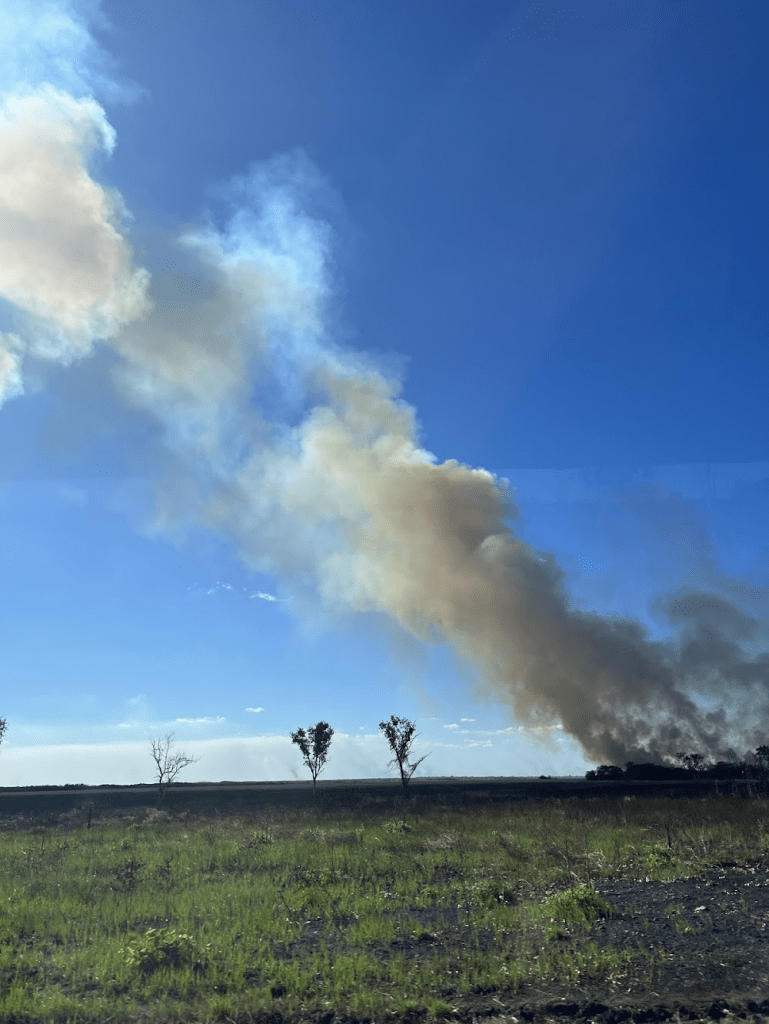
Burn off NT
Burt Plain NT
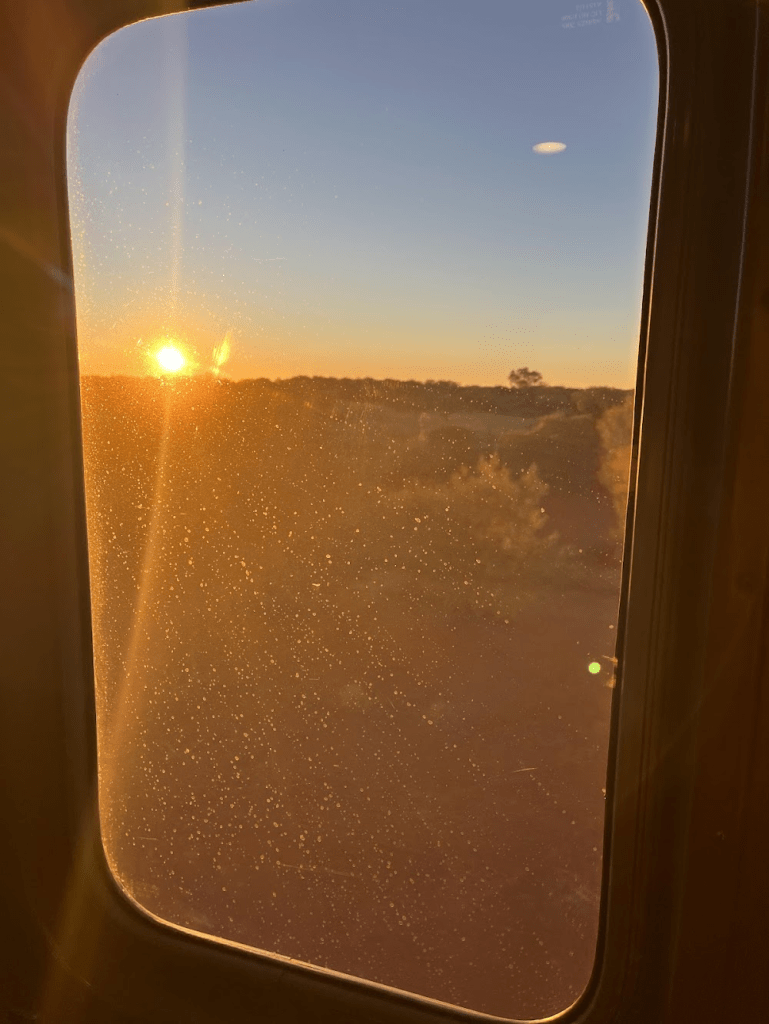
Sunrise

As I sat in my single compartment, watching the beautiful red land go by, I found myself contemplating life. Only a few weeks ago, my teaching position at my home school back in Toronto had been declared redundant. Instead, they wanted me to teach Year 7 and 8 French Immersion. Not my age group. Not my forte. Not my dream come true. At all. They also offered me a job in Primary at a different school that I had never been to. Some may call it a new start. To me, at that moment, it was yet another new start. 

After years of new starts – admittedly all choices made by me – I was tired of starting over. Tired of new schools, new colleagues, new children, new leadership, new curriculum, new language. Tired of meeting new people, of putting myself out there and proving myself. Tired of creating new resources, starting from scratch. I am tired. That’s all.

And so I decided to extend my contract, and to stay in Sydney for a little while longer. The prospect of teaching the same kids, seeing the familiar friendly faces of my colleagues in Sydney, continue using my mother tongue to instruct instead of a foreign language, calmed my mind like the red desert plains passing by in front of my train window. There was comfort in the familiar.

What was meant to be my farewell trip had turned into the beginning of a new start. The beginning of my Australia 3.0. As I watched the landscape roll by, however, I did say a few goodbyes. Goodbye to my job security back in Canada, goodbye to being closer to my family and friends back home, goodbye to what was supposed to be. But as they say: every ending is the beginning of a new start!

Today we were supposed to visit a really cool place in the centre of Australia. Coober Pedy – an active mining town with half its population living underground to escape the extreme from above. But things changed. Instead, I was sitting in a wood-panelled lounge car surrounded by people I had only met a few days ago, singing along to Peter, Paul and Mary’s “Puff, the Magic Dragon”. Everyone on this train was a suspect of becoming a person that might be interesting to meet. Or annoy the hell out of you. To make you laugh. Or amuse you by watching them from a distance.

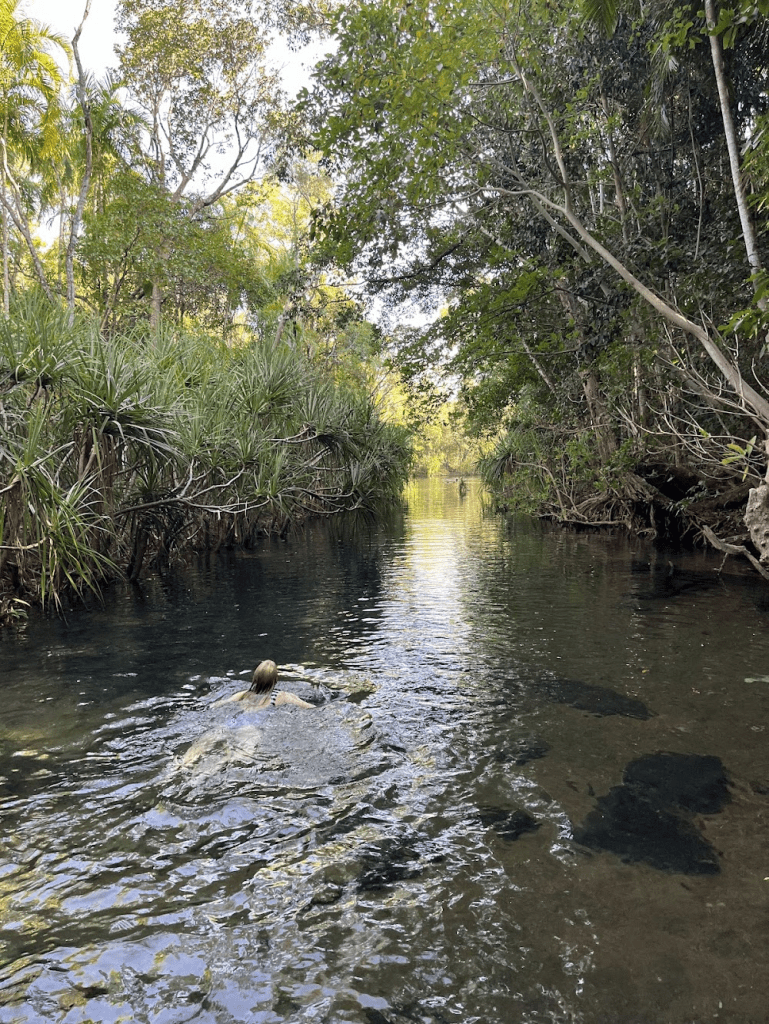
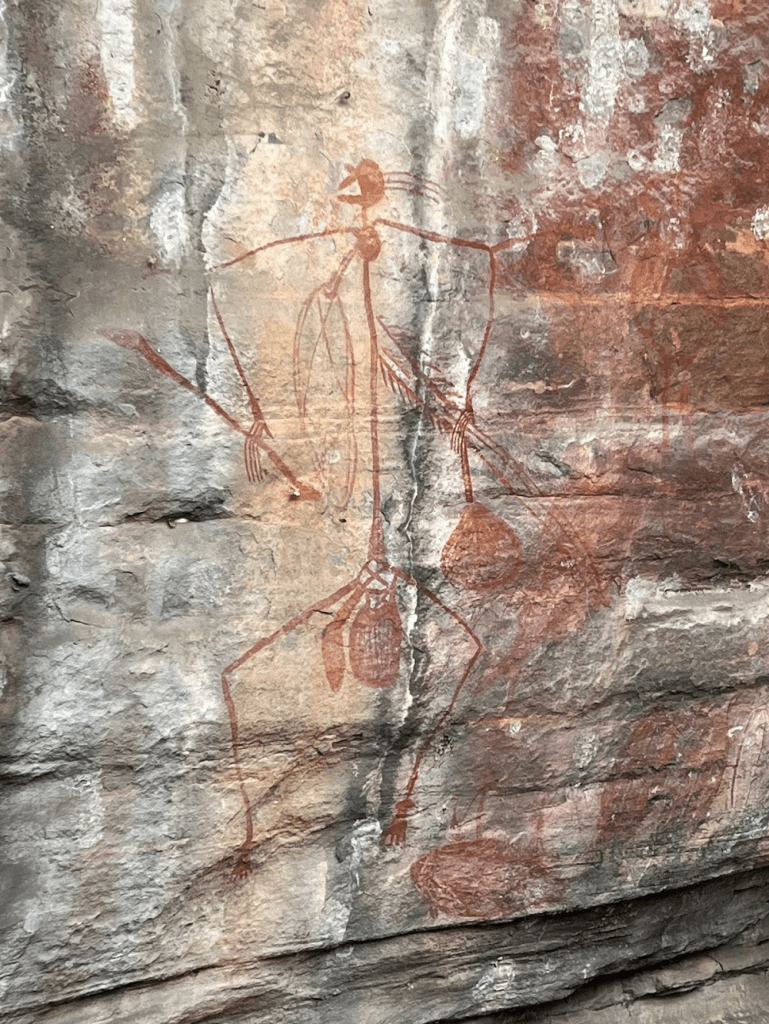
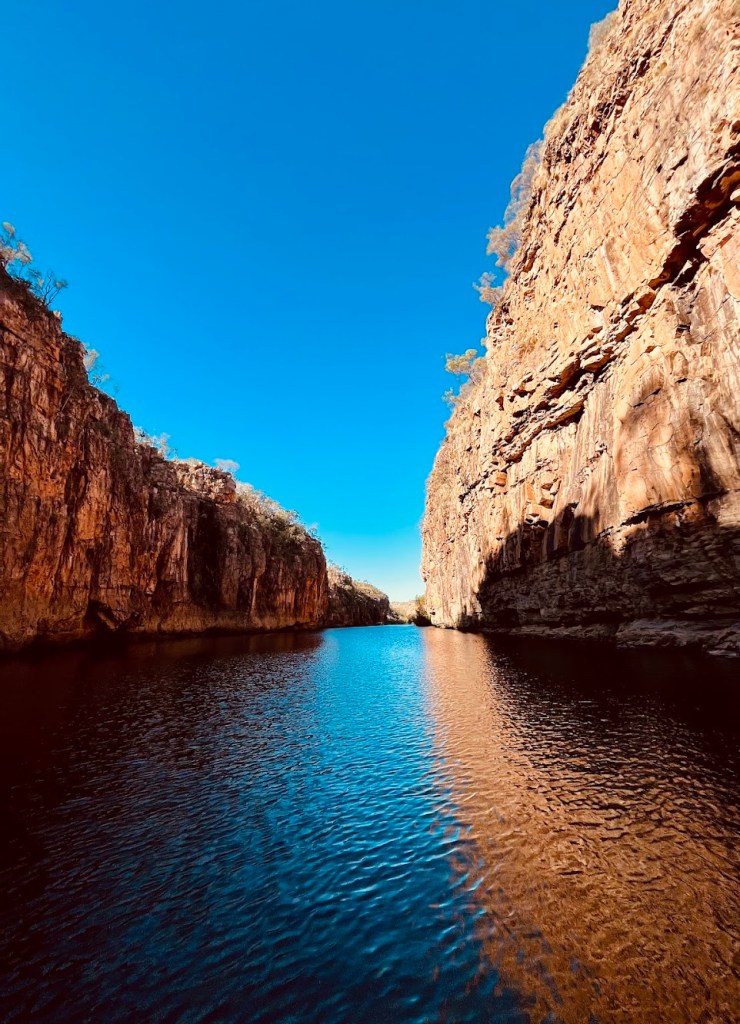
Together with these suspicious strangers, I had swum in refreshing waterholes in the Top End of Australia and hiked through the red desert dirt. We admired the astonishing rock art in Kakadu Park, the sparkling waters of the Katherine Gorge, and the beautiful red rocks of the Red Centre. Together with these strangers turned familiar faces, I got stuck on a train and found the time to get unstuck myself. Everyone on this train was a suspect to make this experience even more fantastic and unique. Everyone!

Litchfield Park NT
Kakadu National Park NT
Nitmiluk NP, Katherine NT

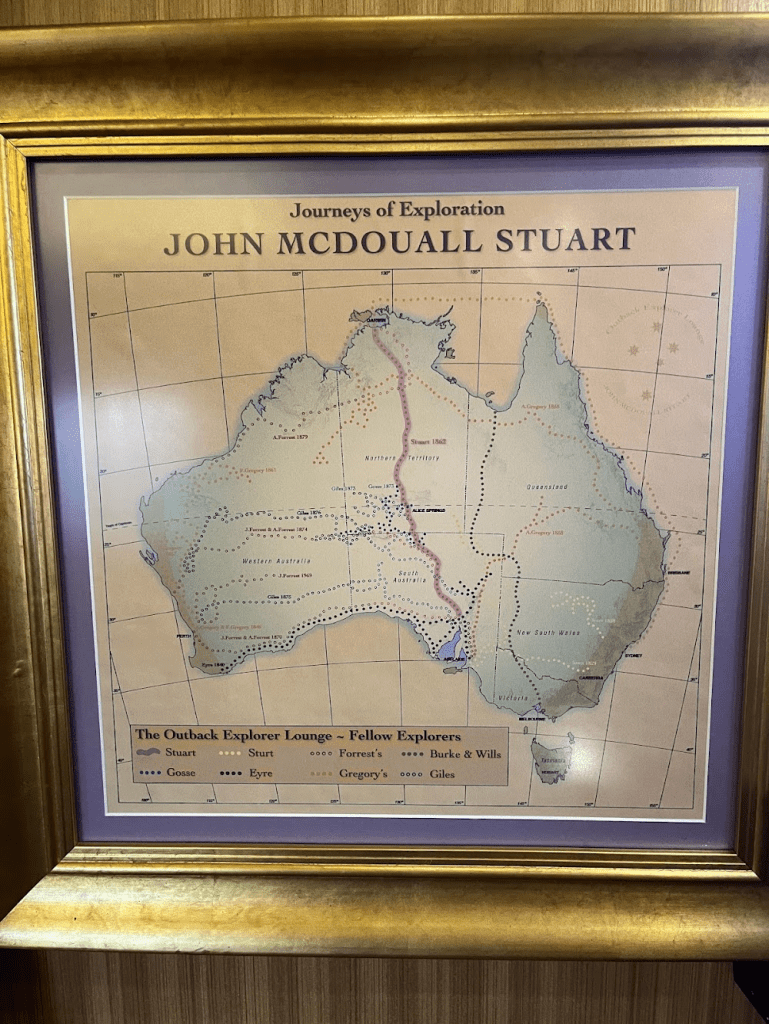
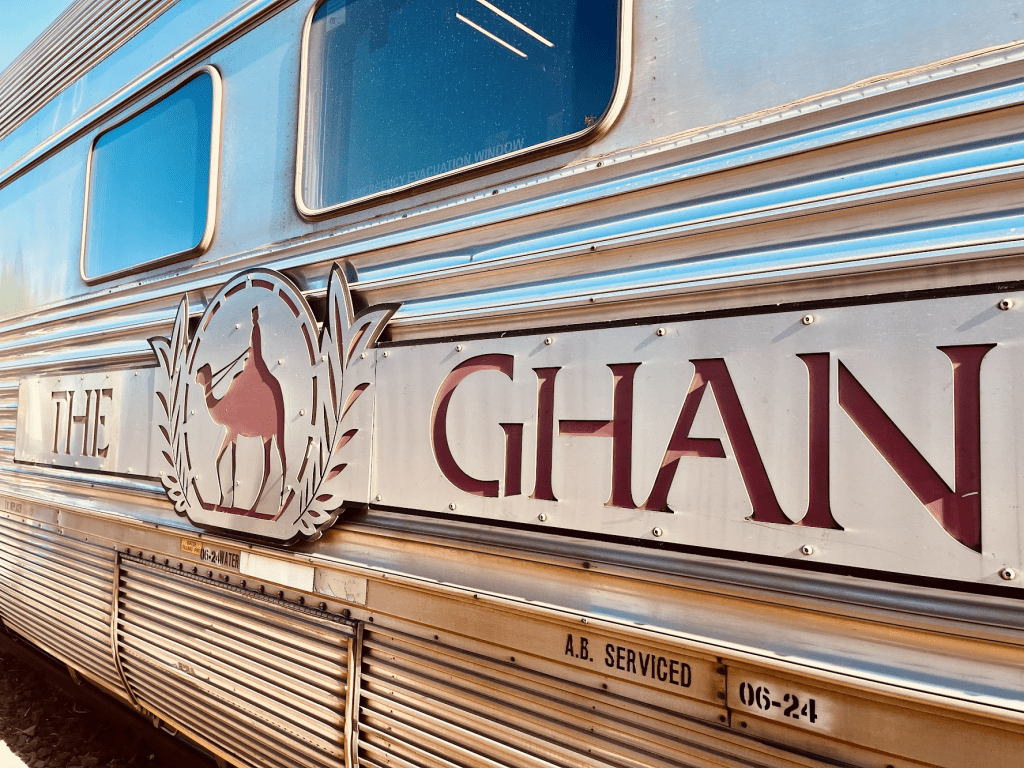
P.S. The Ghan is the iconic train running from Darwin in the Northern Territories to Adelaide in Southern Australia. Originally a freight route, the name comes from a shortening of “Afghan Express”: a tribute to the camel-riding explorers of Australia’s post who came from the Middle East, and traversed the red desert long before steel tracks and steam engines. 

The camels that had helped build the train route which bisects the huge desert of Australia almost exactly down the middle, were released into the wild once their job was done. They became the beginning of what is today the largest feral camel population in the world.

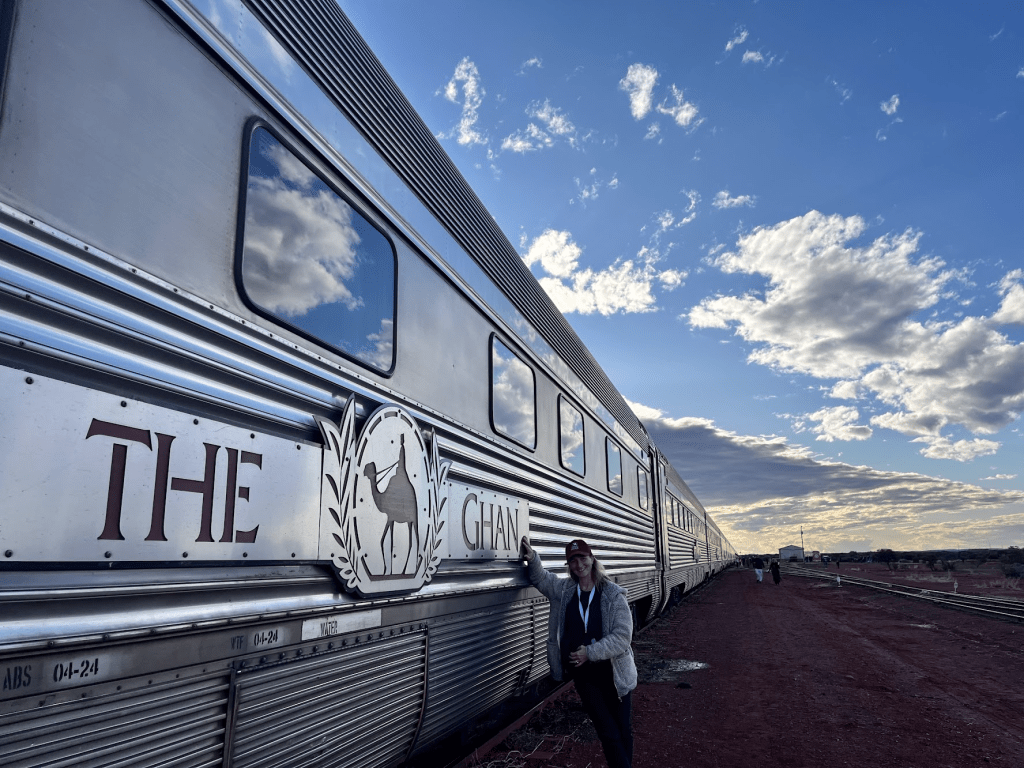
The Ghan

P.P.S. Eventually, they did let us get off the train. Next to more free wine, open fires, and the astonishing view of the Ghan train stretched out to its entire length, there was a rainbow reaching from the train into the red desert around us. I wonder how the train crew managed to organize that! Well done!

“Somewhere over the rainbow, skies are blue. And the dreams that you dare to dream, really do come true”. 

P.P.P.S: I did not purchase an opal ring as its price of $1250 was out of my range. Instead I bought a hat in Ghan burgundy red, the slogan “The Legendary Ghan” embroidered on its front and the picture of a man in a turban atop a camel. Everyone on this train is a suspect. Including myself. Ghantastic!

Bobo! Farewell!

The Good Things

And the stories that the ceiling told
Through the pictures and the grains in the pine-wood boards
And I could stay outside ’til the sky went red
And I could cool my head on the concrete steps

And you could never really see the top from the bottom
I don’t pay enough attention to the good things when I got ’em
And you could never really see the top from the bottom
I don’t pay enough attention to the good things when I got ’em

I don’t pay enough attention to the good things when I got ’em
I don’t pay enough attention to the good things when I got ’em, no

Josh Pyke. Middle of the Hill.

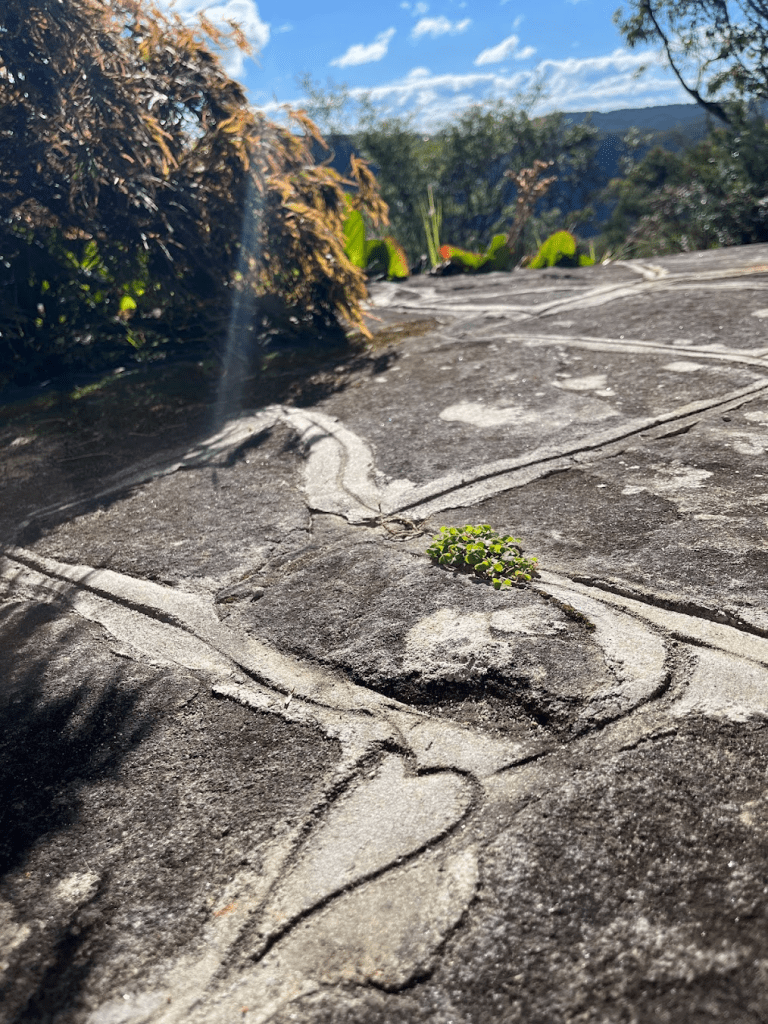
The rock surface beneath my fingers feels coarse. Cold. Rough to the touch. I move the palms of my hands over the surface of the rocky plateau beneath me. Single grains of sandstone come loose and linger on my fingertips. I am Country.

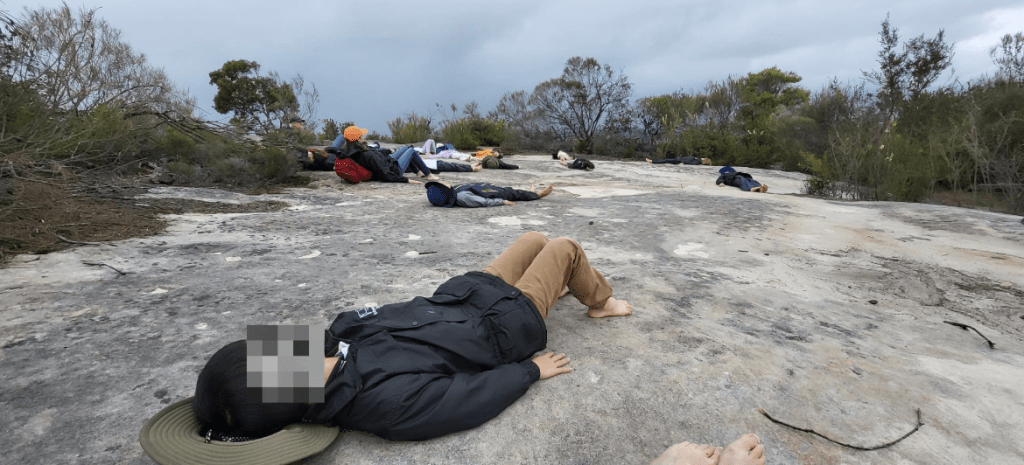
I am also the teacher. And so I open my eyes to check on my students. 19 little bodies lying on their backs, spread out on a stone platform in the middle of the bush. 19 little pairs of eyes closed, 19 arms and legs stretched out peacefully. 19 mouths quiet. 19 little people are Country.

And so I close my eyes again. Hear the wind in the dry eucalyptus trees. The roar of the ocean beneath us. A crow cawing impatiently as if to get us moving again – but not so fast. 19 little people resting peacefully on a giant slap of sandstone doesn’t happen every day. Actually never. 

One eye on the kids, the other closed, I feel the ochre paint on my face slowly drying on my face. A light drizzle is starting to fall on my skin, not enough to wash the soft sandstone markings away. The Country underneath us. The Country on us. For a sweet little moment, we become a landscape within the landscape. 19 little tiny blips surrounded by the vast country of one the oldest living cultures on Earth. Country is alive. Country is timeless. Country is us.

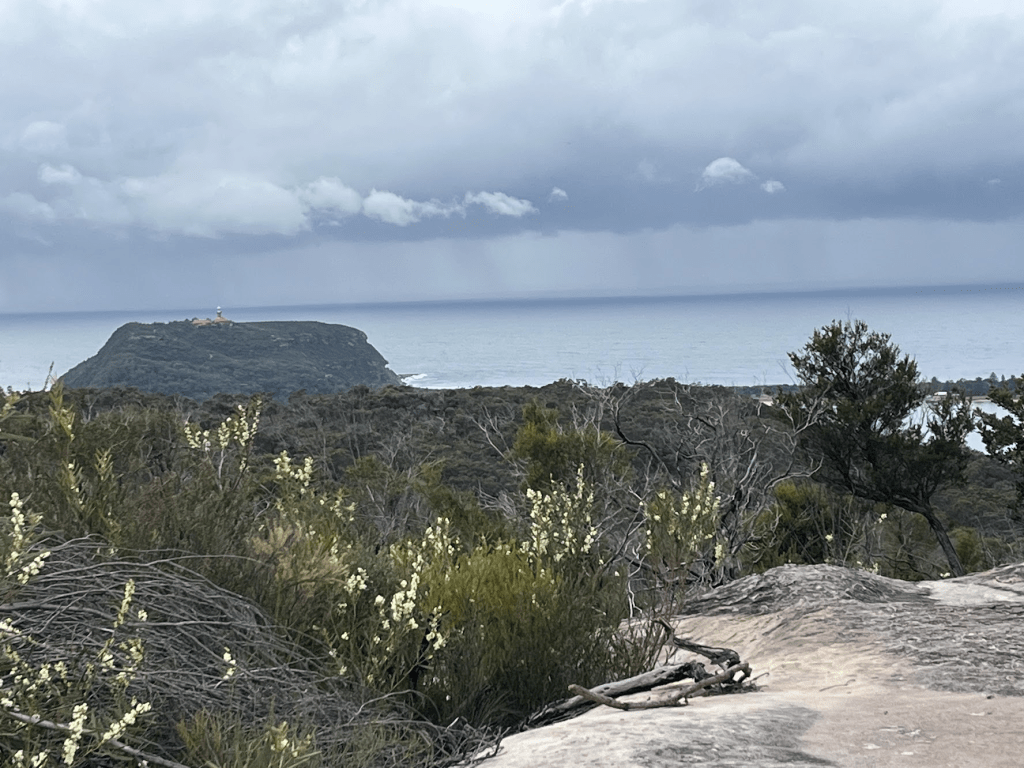
View of Palm Beach Lighthouse in the distance

Until it isn’t. I think one of the kids starts laughing. Another follows with a giggle. Some jump up, glad to get off the uncomfortable hard ground. Others keep their eyes closed, obviously enjoying this moment of rest. It has been a long day. A day in the Australian bush with my year 1/2 class. After exploring local plants and animals, rocks and minerals in the classroom, we jump on the school bus and drive through the Ku-ring-gai National Park that surrounds our school, to get to the iconic West Head Lookout. Twenty minutes from school, a little under an hour from the hustle and bustle of the Sydney CBD, we are in the middle of the Australian bush, the land of the Garrigal people, and home to one of the largest known concentration of recorded Aboriginal sites in Australia. The Ku-ring-gai National Park has at least 1000 sites of significance to the Aboriginal culture.

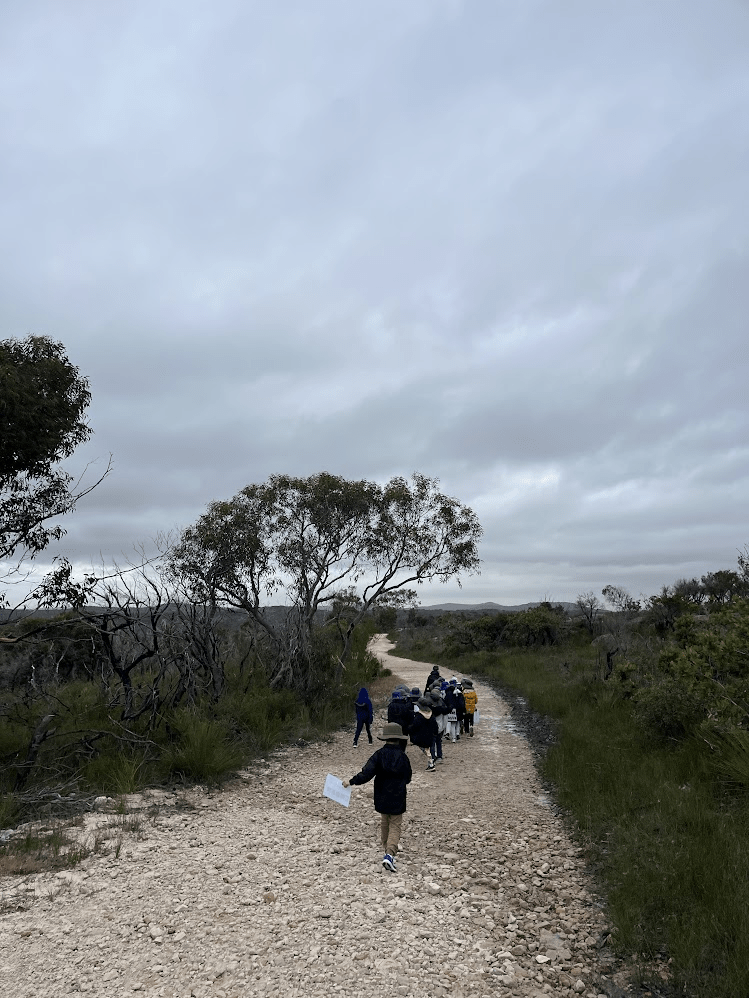
Walk through the wet rainforest of West Head

In his short story “Laugh, Kookaburra”, the American author David Sedaris states “For an American, though, Australia seems pretty familiar: same wide streets, same office towers. It’s Canada in a thong, or that’s the initial impression…To see the country, you have to see the country_side”. Countryside means bush. “When Australians say “the bush,” they mean the woods. The forest.

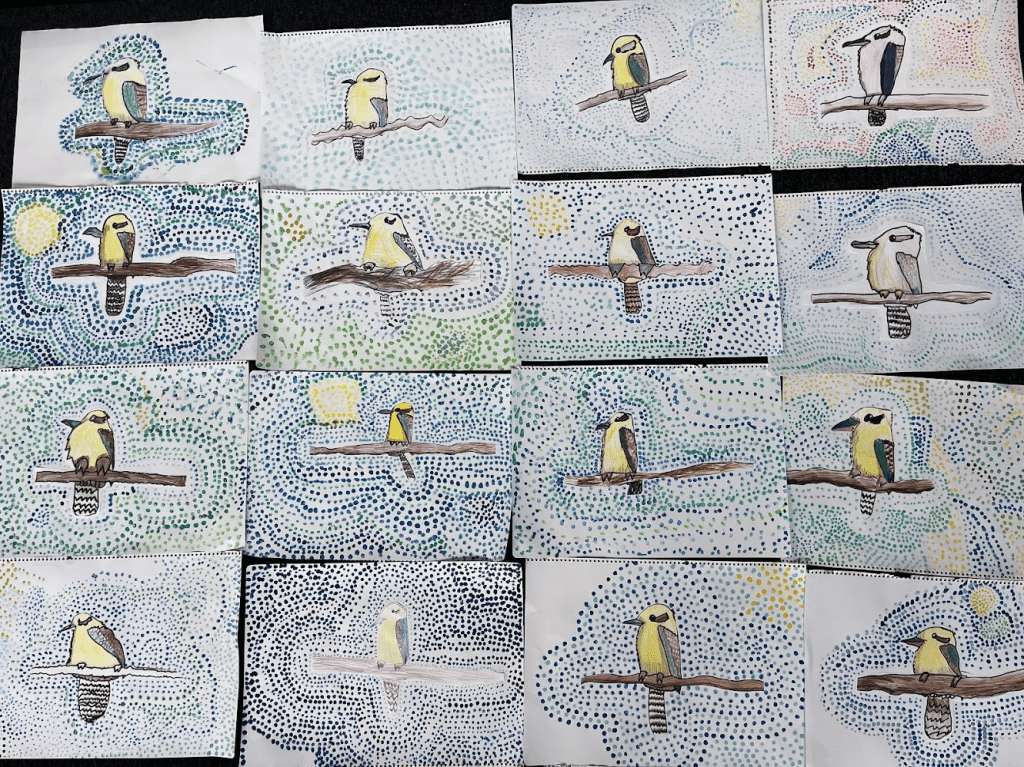
Laugh, Kookaburra (Art Year 1/2)

And so here we are: In the Australian forest, err bush, surrounded by wintery heathland and endless eucalyptus forest. Tiny yellow wattle flowers in bloom as if to remind us that this was indeed Australia. 

The children get to collect different leaves and sort them: plain and patterned, broken and intact, brown and green. Next, each child had to collect an animal that was small enough to fit into a little plastic container. A task that seemed impossible at first looking at the winter bush around us. Until children started to look under branches and logs and found all kinds of creepy crawlers: ants and centipedes, insects and spiders. A very focused and reflective exercise until my team teacher screamed: Funnel-web spider! And jumped what must have been a new Australian record, including the impressive jump of the local wallabies.

Wattle Flower, Australia’s National Flower

A walk through the bush followed, a winding sandy gravel path past yellow sunshine wattle bushes, and banksia trees. Black-bottomed grass trees and scribbly gum trees. Until we reach the Engraving Site. Prompted by our guide Helen, we take off our shoes and socks – on a wet and cold Sydney winter day not a pleasant task but we do as we are told out of respect.  Helen takes a little stone mortar out of her backpack and grinds some white ochre. Mixes it with water from her drink bottle and starts anointing the children and us teachers, on the face – to see, on our hands – to feel, and on our feet – to walk with respect.

West Head NP

As the ochre dries, I can feel the elements on my face. The connection to Country. We follow Helen onto the engraving site and soon we discover figures carved into the grand, flat sandstones over 5000 years ago. There are engravings of wallabies, fish, eels, hunting tools, and echidnaes. The recent rain pools in the grooves clearly outline the shapes giving clarity to their carvings. We are paying homage to the carver-crafters who, thousands of years ago, knelt at this community site with their stone tools and etched their natural and spiritual lives on this rocky canvas.

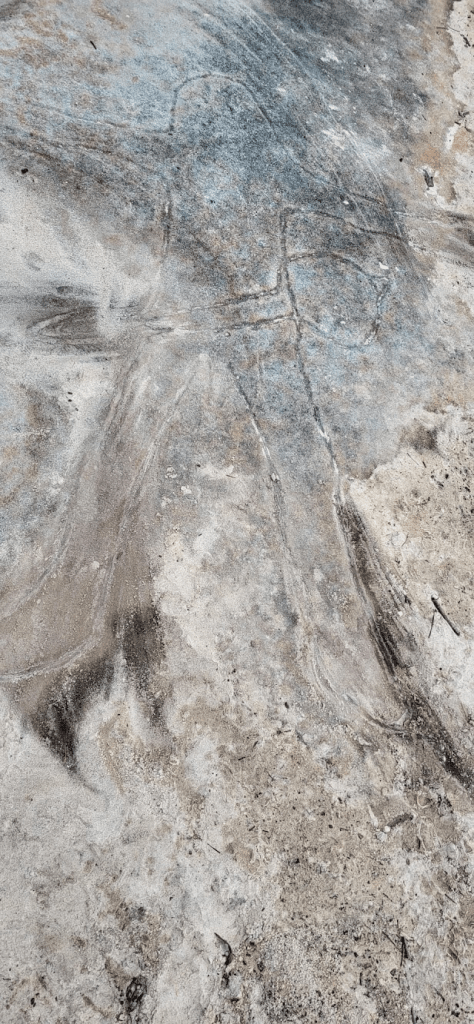
Bulgandry is the name given to the ancestral hero depicted here whose engraving is the most spectacular aspect of this site. It’s the story of Biayami, the father and creator in the Dreamtime legend. Carved into the rock, he stands with his arms outstretched, the sun’s rays beaming from his head. The children smile a knowing smile – Bayame was, after all, the main character in the play they were going to perform the following week to their parts as part of their learning. As their teacher, I feel a mix of pride and fear of being scolded for cultural misappropriation wash over me. That, or it had finally started to rain.

Rock Art (Bulgandry)

In a time where it is not always easy for me to decide what home is or should be, the teachings of the Aboriginal people make me think. Rather than viewing the country as a physical environment, they consider Country as a “deeply symbolic and spiritual place”. 

“Country is alive. Country is timeless. And Country is us. Our idea of home is Country. Country is a place. Country is relationship.”

Lying there on the cold, hard sacred ground, I suddenly realize my backpack is sitting on a pile of fresh wallaby poo. Surrounded by my students and colleagues who have become friends, I can’t help but chuckle at the absurdity and beauty of the moment. This, too, is Country. The ochre paint under my eyes has helped me see, just as our guide Helen said it would. I see Country, in all its messy, wonderful glory.

From Little Things Big Things Grow

Ah, it’s a happening thing
And it’s happening to you
Full load and thunder
Ribbons of blue
Ice on the window
Ice in my heart
Fooling with thunder
Every time we start

It’s been raining for so long

Or is it any wonder
The streets are dark?
Is it any wonder
We fall apart?
Day after days strange rain falls down
All over town rain coming

It’s been raining for so long

Don’t you go out in the rain
Don’t go out in the pouring rain
If you go out in the rain
We’ll never have that time again

Rain (by Dragon)

“Well it’s been raining for so long”, Dragon sang to the crowd at the Robertson Potato Festival, which could not have been more fitting. (The Southern Highland News)

I am back in the Southern Highlands and what a difference a week makes!

Golden autumn sunshine and crisp blue-skied mornings turned into wet, soggy days with drizzle, rain, and torrential downpours alternating. Australia’s east coast’s fifty shades of rain. Australia’s new normal-not-normal weather. The bad weather cannot dampen our mood, however!

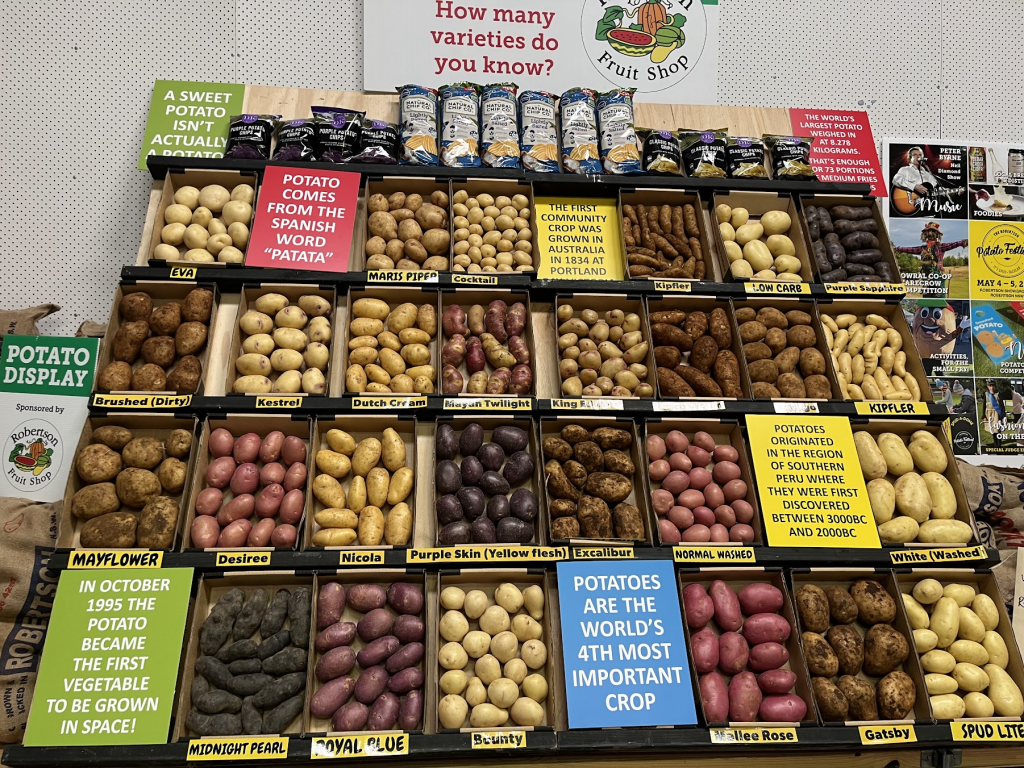
Robertson, NSW

We are back in Robertson, home of the Big Potato, to partake in the annual Robertson Potato Festival. A hefty entrance fee of 25 dollars (which will be lifted the following day due to the rain), and we are ready for all things potato: potato soup (I tried the one served by the local Public School to help buy new furniture), potato merch (bought a classic Potato Hat), potato displays (who knew there are so many different kinds of potatoes!), and potato games (using a potato masher for the race seems like a brilliant idea!). I am a bit disappointed to miss the crowning of the Robertson Potato Queen 2024, though I don’t have a burlap dress, err Hessian, as they call it down here, anyway. I imagine it to be rather scratchy? The sacrifices we make in the name of the potato.

Robertson Potato Festival 2024

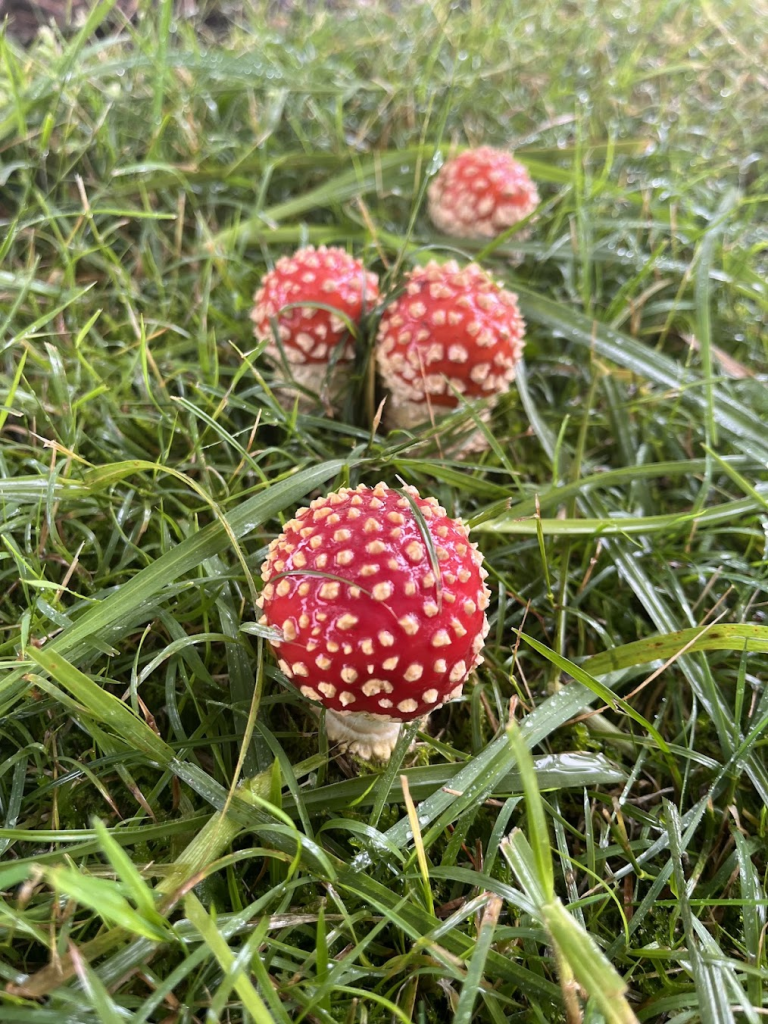
I snap a selfie with a potato cut-out next to the covered stage, on which the following day the legendary Australian rock band Dragon is going to perform their smash hit “Rain”. How fitting! We don’t last long at the festival – it’s hard to get comfy in the drizzle and my hair is so frizzy by now, that I will have a hard time fitting through the front door of our Airbnb. So we walk back to the town centre, across grass patches and swollen streams. Admire radiant poisonous mushrooms, enjoy the rustling of the autumn leaves, and eventually end at the town’s main attraction: the Big Potato.

Fly Agaric Mushroom

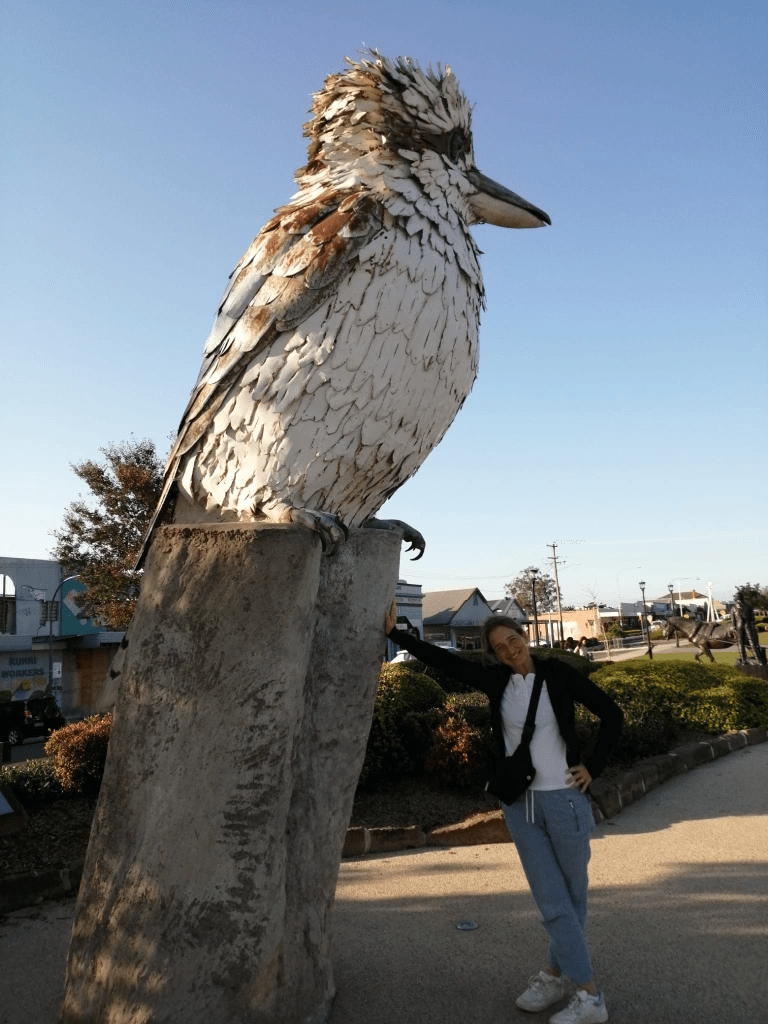
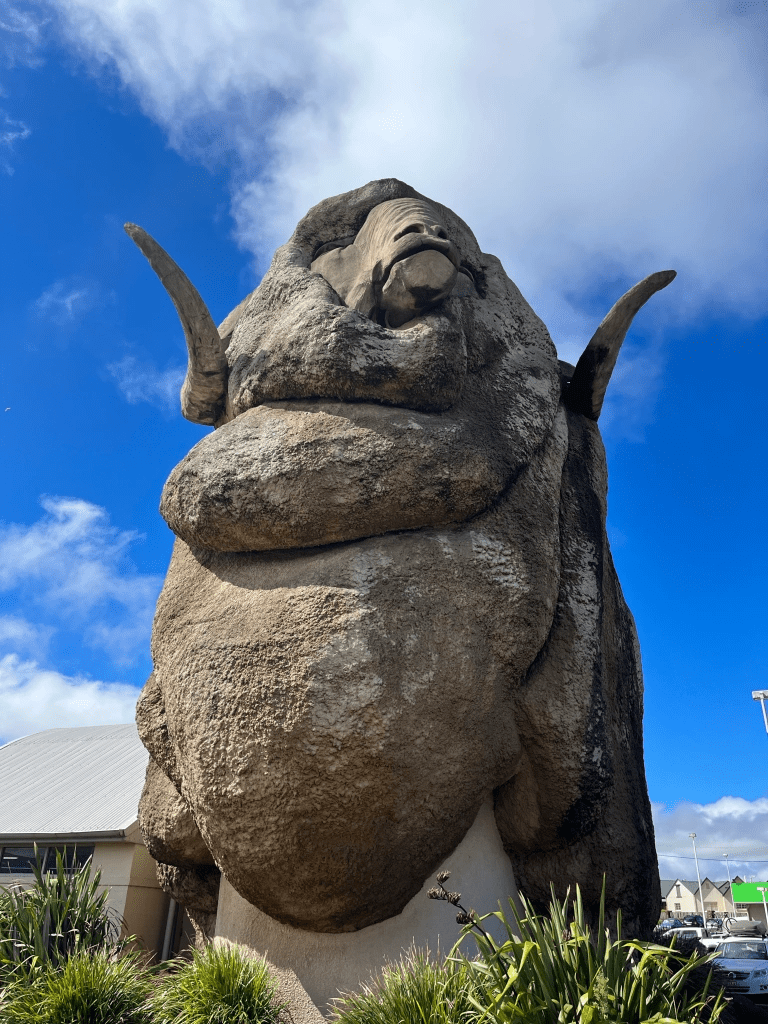
Australia is home to a long list of “big things”, and Robertson’s Big Potato is only one of the approximately 150 large sculptures and structures across this country. The Big Penguin in Tasmania, The Big Merino in Golbourn (though it looked more like a gigantic Jabba the Hut and, as a student in our school pointed out correctly, you can enter the structure through its behind), the Big Kookaburra in the Hunter Valley, the Big Avocado near Byron Bay (still on my bucket list).

Big Kokkaburra, Kurri Kurri NSW
Big Merino, Goulburn NSW
Big Penguin, Tasmania

Big things have been part of the Australian culture since the 1960s, and you can find a big something of pretty much anything: the Big Banana in Coffs Harbour, the Big Pineapple in Queensland, the Big Koala, the Big Kangaroo, the Big Winebottle, the Big Gum Boot … you name it. There’s even the Big Bogan, which translates as your stereotypical Australian guy. And there are even plans to build the Big Chris, as in Hemsworth – your other stereotypical Australian guy.

Why the obsession with big things? Well, it’s a big country, first of all. Also, back in the day, big sculptures were built to attract tourists. “If you build it, they will come!” was the motto. No matter how bizarre – or maybe, because of the bizarre. Most of the sculptures proudly present a town’s industry, a native animal, an event in history, or some random claim to fame. Some were simply beautiful works of art or purposely cheesy to attract attention and make people smile. Or groan.

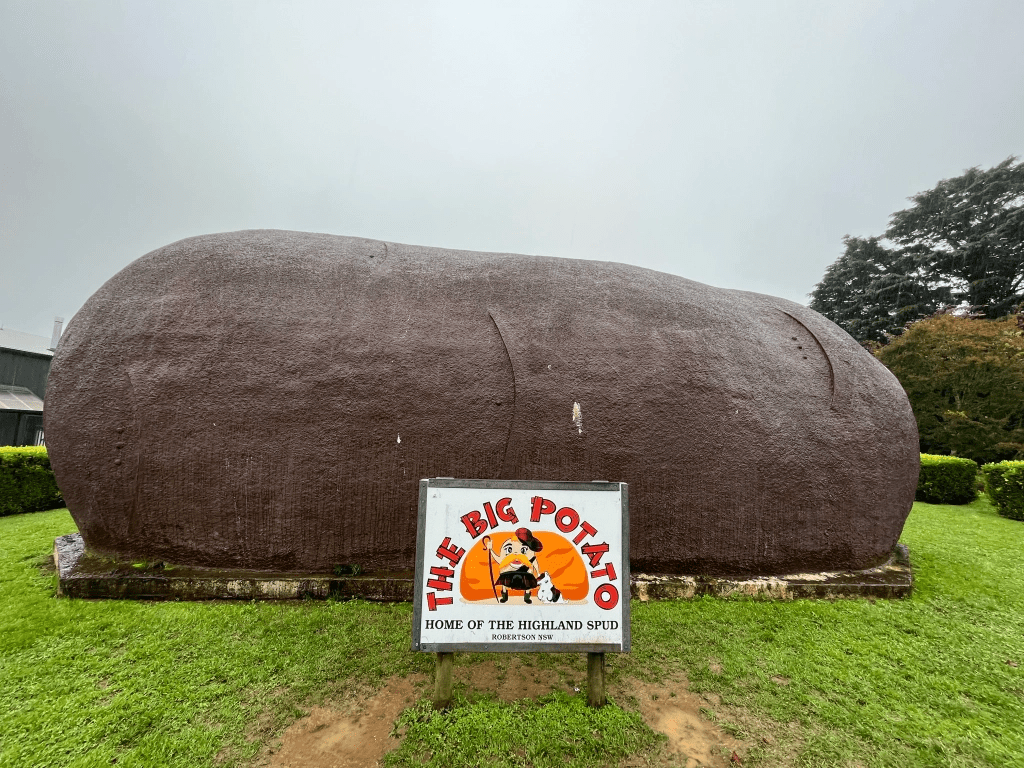
The Big Potato in Robertson is all that: tourist attraction, community effort, and definitely a piece of … art. It is big, it is brown, and to be honest, it looks like a gigantic piece of poo. Sorry Robertson, but I’m probably not the first to say this. After all, it has been called “Australia’s Shittiest Big Thing”. Though the idea behind it is noble.

Robertson is a town in the Southern Highlands, two and a half hours south of Sydney. Its high annual rainfall (not only on this weekend!) makes it an area ideal for growing potatoes. Hence the Big Potato! One day, as the legend says, a couple of bored farmers decided to build a giant concrete potato out of cement and spray it dark brown (what could possibly go wrong?). In 1977 the Big Potato was done – 10 metres long, 4 metres high, and with a little door to see the mashed-yellow insides. Plans to sell potato merch from the inside never transpired, but the Little Big Potato since has had its moments of fame: in 1995 the movie Babe was filmed in Robertson, in 2014 bought by the Australian author Melanie Tait, whose father owns the town’s supermarket (what a good daughter!), and sold it in 2022 for 970.000 dollars to a private investor. The future of the big brown lump in the middle of town is unclear – some spud-spect (sorry, I had to) the bug thing will be dismantled and the land it sits on redeveloped. A big dream of a small community coming to an end.

Spud Lane Gallery, Robertson

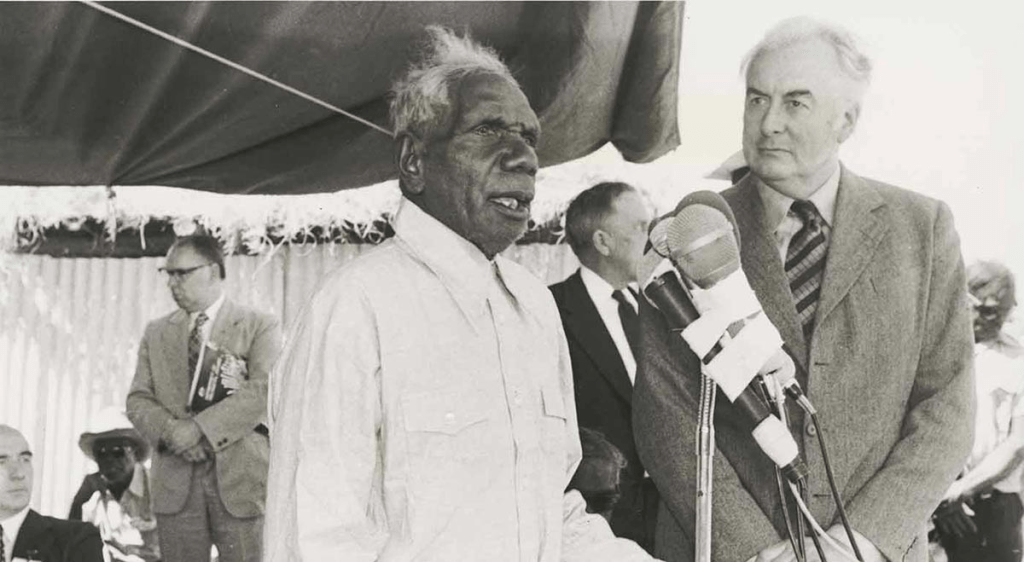
“From Little Things, Big Things Grow” is the title of an iconic Australian protest song I came across while reading up on big things in Australia. Written by Australian artists Kev Carmody and Paul Kelly in the late eighties, it pays tribute to Vincent Lingiari and the Gurindji Strike in 1966. The ‘little’ thing refers to Lingiari leading the Wave Hill Station walk-off in the Northern Territories, demanding Lord Vestey, a rich British meat magnate, to return the land the farm was sitting on to the Gurindji people. Eight years later Prime Minister Whitlam symbolically handed land back to the Indigenous people – a big step toward land rights and equality. From small things big things grow.

Vincent Lingiari, addressing the media after Prime Minister Gough Whitlam officially returns Aboriginal land at Wattie Creek, Northern Territory, August 1975 (https://www.nma.gov.au/)

To try to make a connection between a big brown potato sculpture in a small town in the Southern Highlands and the start of the movement for Indigenous equality and land rights in Australia is more than a stretch and I am not even going to try. I couldn’t help but think, though, that in both cases, a community, any community, can turn something really small and at times even seemingly ugly or undesirable into something big and powerful.

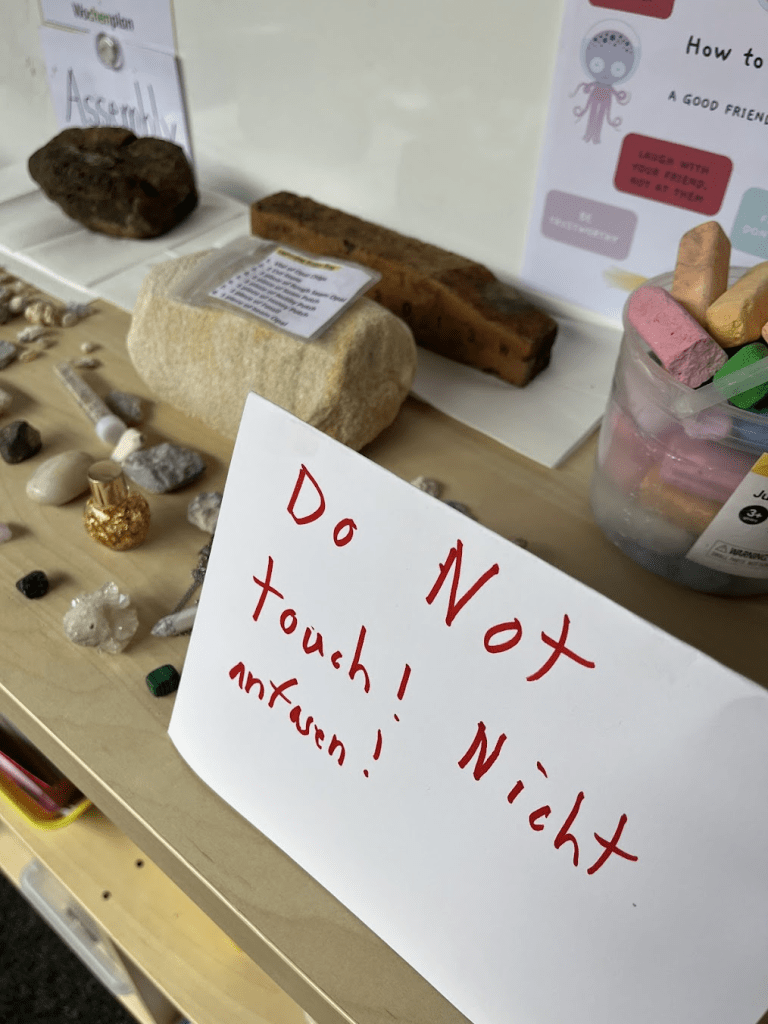
I also could not help but think of another iconic Australian Big Thing, the Uluru. In school, we started a new science inquiry unit this week with the title “Australian Rocks and Minerals”. The students brought in big rocks and little pebbles, gemstones and chunks of muddy clay and investigated this exciting topic (I remember my son #3 wishing for nothing more than a rock tumbler when he was their age. He never got one but maybe it’s not too late and I can get one for the two of us). We talked about little rocks and big rocks in Australia, and of course, Uluru came up.

Rock Project Year 1/2

“Rising 348 meters out of the surrounding red desert plain, reaching 863 meters above sea level with a 9.4-kilometre circumference sits one of the most iconic natural landmarks in Australia. Uluru, or Ayers Rock as it was known by European settlers, is more than just an impressive natural formation. The Anangu (pronounced arn-ung-oo) are the traditional indigenous owners of Uluru, which means great pebble, and the surrounding Kata Tjuta National Park. To the traditional owners of the land, Uluru is incredibly sacred and spiritual, a living and breathing landscape in which their culture has always existed.” (https://www.wayoutback.com.au/blog/ulurus-significance-to-australian-indigenous-culture/)

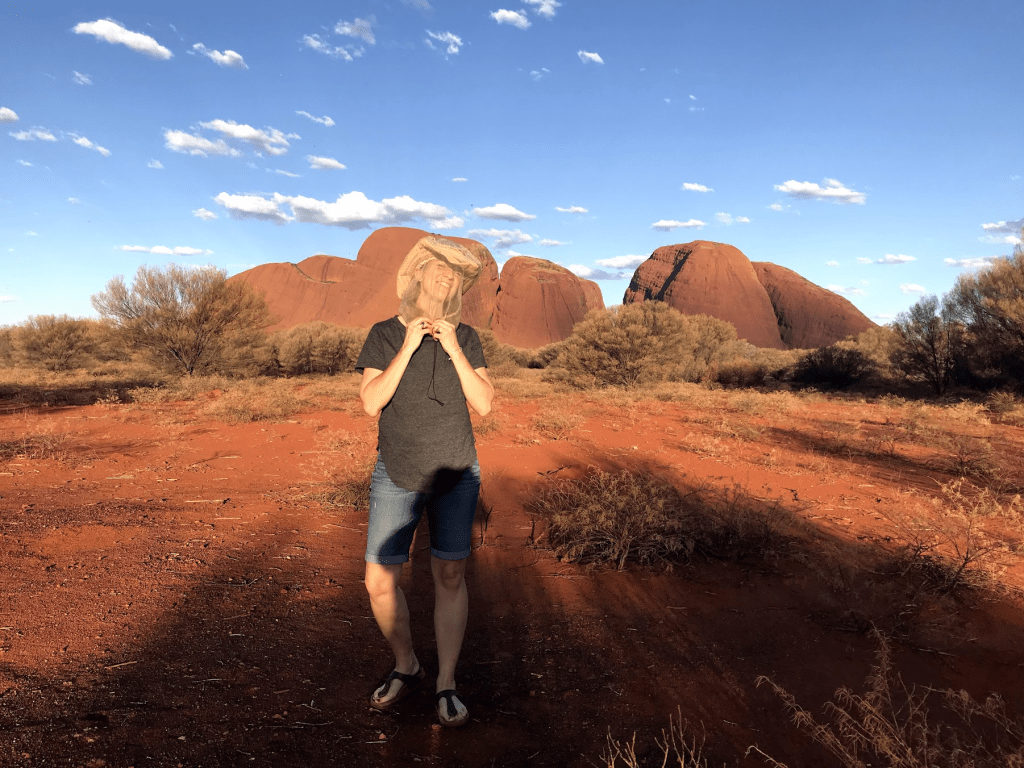
Uluru March 2020 – Big rock and a thousand little flies

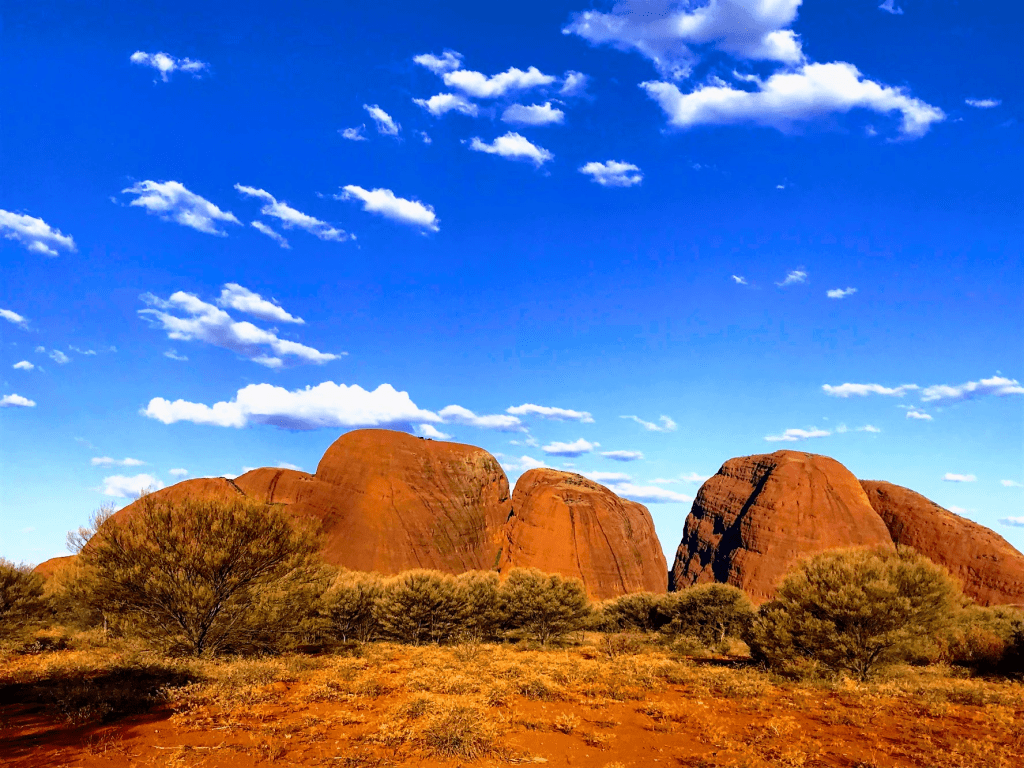
I remember my visit to Uluru in 2020, just a week before Covid-19 brought everything to a halt. It felt extremely magical and special. Uluru is another iconic landmark in Australia, but on a much grander scale in terms of age and cultural significance. It strikes me that while the indigenous people of Australia, who have been here for tens of thousands of years, have Uluru as their Big Thing, the European settlers can only claim giant statues of fruit and animals as theirs.”

The big things and little things in Australia. The big things and little things in life. What I will remember most about my weekend trip to Robertson: the fields of little red-headed mushrooms, pretty and poisonous. The beautiful autumn leaf colours. The little community that could, despite the rain. The connections I made that weekend, for example, with the local artist in whose house we were staying that weekend.

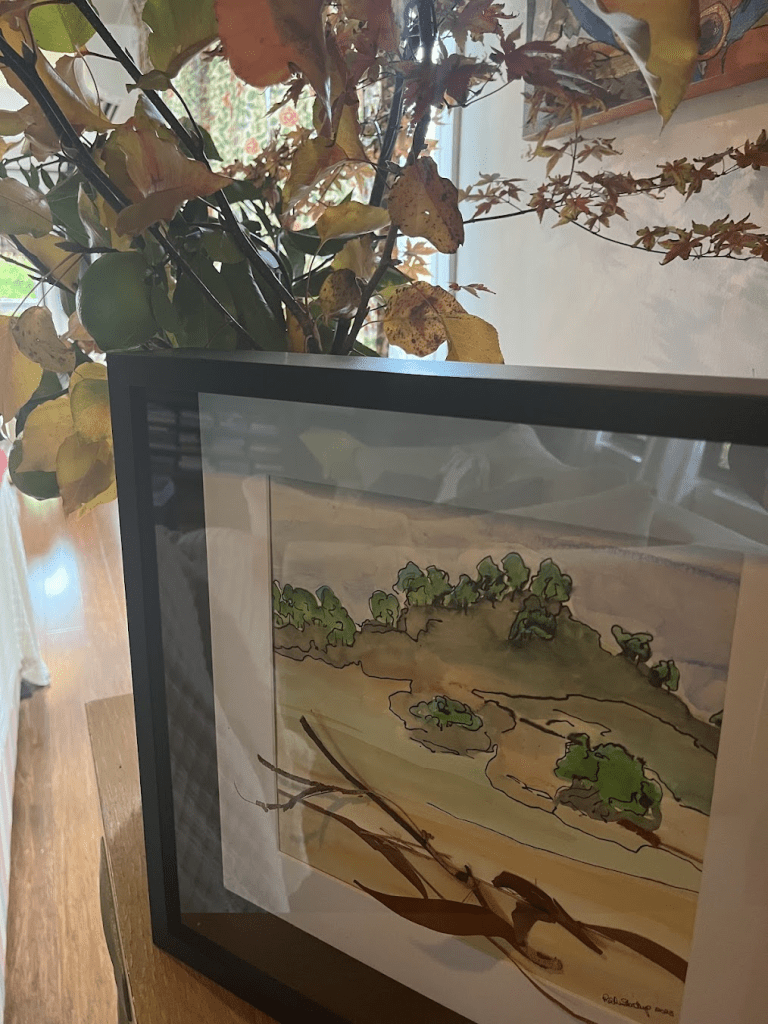
“Gisela’s Hill” by Ruth Stendrup

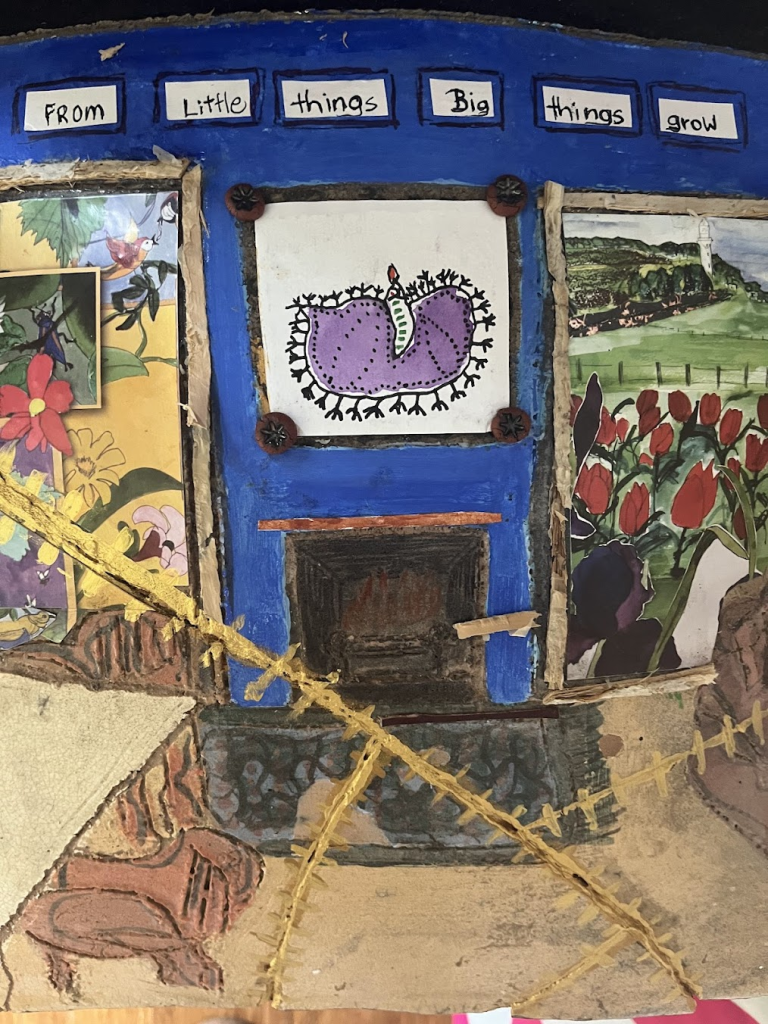
On our last morning there – it was still raining outside – I found myself talking to the homeowner, the very artist responsible for the beautiful pieces around us. We were discussing the purchase of one of her paintings, a lovely rendition of the hills nearby. She then invited me to explore the various artworks she had crafted over the years, scattered throughout the house—paintings, sculptures, and sketches. Eventually, she led me to the back bedroom, where she proudly presented a chair she had crafted from leftover wood, remnants of her husband’s boatbuilding projects. The chair, with its vibrant colours and quirky design, immediately caught my eye. As I moved it to get a better look, I discovered a quote delicately stencilled into the wood:

“From little things big things grow.”

Chair, Ruth Stendrup

The Time Machine

The secret of life is enjoying the passage of time
Any fool can do it
There ain’t nothing to it
Nobody knows how we got to the top of the hill
But since we’re on our way down
We might as well enjoy the ride (…)

Now the thing about time is that time isn’t really real
It’s just your point of view
How does it feel for you?
Einstein said he could never understand it all
Planets spinning through space
The smile upon your face

Welcome to the human race
Some kind of lovely ride
I’ll be sliding down, I’ll be gliding down
Try not to try too hard
It’s just a lovely ride

Secret O’ Life. James Taylor

Back in the days when there was no online streaming, before DVDs or VHS were invented, and certainly no Netflix or Prime, movies came on reels. Not the kind you see on Insta about kittens or cute babies, but film reels in the shape of a wheel that held motion pictures.

My school owned one single movie on reel – or so it seemed, as every year on the last day of school, we got to watch it… year after year. The title of the movie was “The Time Machine” – the story of James, a young inventor in England in 1900, who builds a contraption that takes him to the past, the future, and finally back to the present.

The best part about watching “The Time Machine,” I remember, was neither the weird story of Elois and Morlocks nor the fact that we didn’t have to do any schoolwork. The most memorable thing was when the teacher let the film run backward through the big metal projector, and we got to watch the whole thing again – only from finish to start. In a way, we were doing our own kind of time travel at the end of each school year – a ritual with a hidden meaning I have yet to understand.

I am back from my time in Hong Kong, feeling a bit like a time traveller myself, getting ready for the last couple of months here in Sydney before it’s time to say goodbye. The last term of school, organizing my move, saying goodbye to friends, ticking off the final destinations on my bucket list – it is easy to get caught up in a frenzy to get everything done before I have to leave: go to Brisbane to stalk my favourite Australian author Trent Dalton, drive a car on the wrong side of the road, see a koala in the wild, take that train through the Outback of Australia. Not to forget the teaching, report cards, packing, cleaning… It’s easy to feel overwhelmed and stressed.

A day after my return from Hong Kong, I took a friend of mine to a concert in the city. My favorite singer-songwriter James Taylor was in town, and I was looking forward to listening to the songs that have been part of my life for almost forty years (I am time-traveling again!). I grew up on James Taylor songs and had been to a few concerts over the years.

Arriving at the concert hall in downtown Darling Harbour, we saw a long line of old people forming in front of the entrance, their silver and white hair glowing in the dark. My friend and I, clearly the youngest in the crowd, got greeted by the security guy with the words “Welcome to the Golden Girls Convention”. And this was when it dawned on me that not only had I aged, but so had the audience and, of course, James Taylor himself. We made jokes about walkers and wheelchairs on stage, James throwing his dentures into the screaming crowd at the end of the show when James himself came on stage, and we realized that this concert was a kind of time travel as well. His voice was weak and squeaky, and it took him a while to warm up. But by the second set, James clearly had found his voice, and some of his fans even got up and moved their bodies in a dance-like fashion. Who says you can’t have fun when you are 76?

While James’ voice clearly wasn’t the same as I remembered, his message was louder than ever before: You gotta slow down and enjoy the moment, especially when you get older. The past might be fine memories, and the future something to think about. But it is the present we should appreciate and the experiences it has to offer. Finding joy in the journey rather than fixating on the destination.

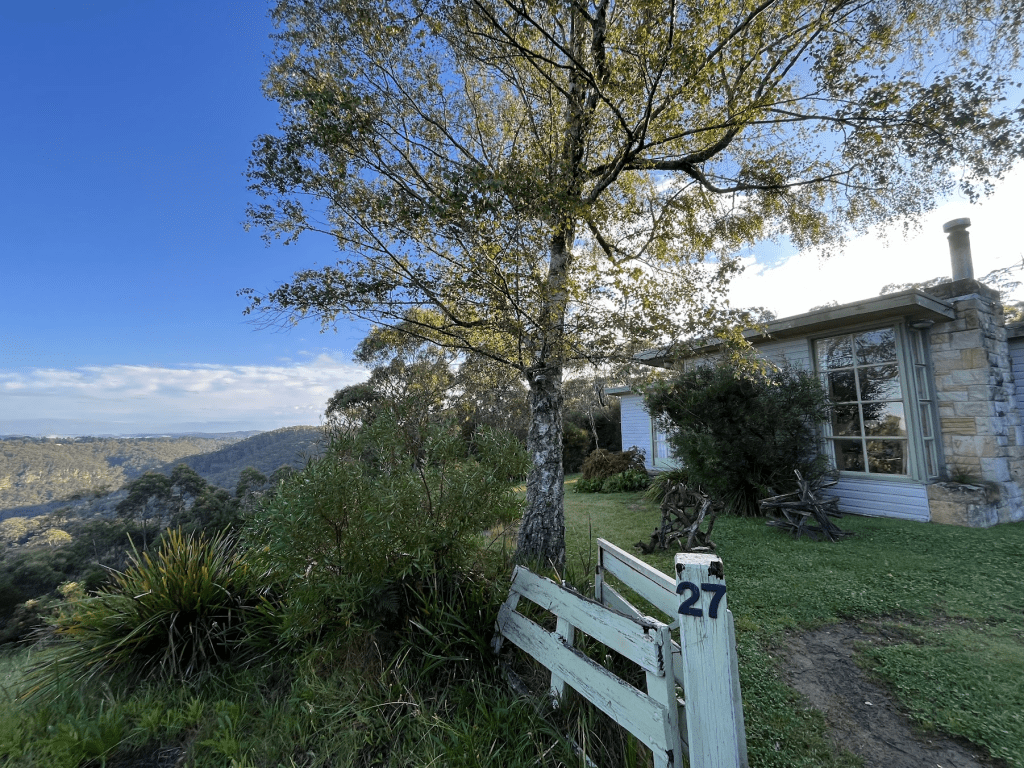
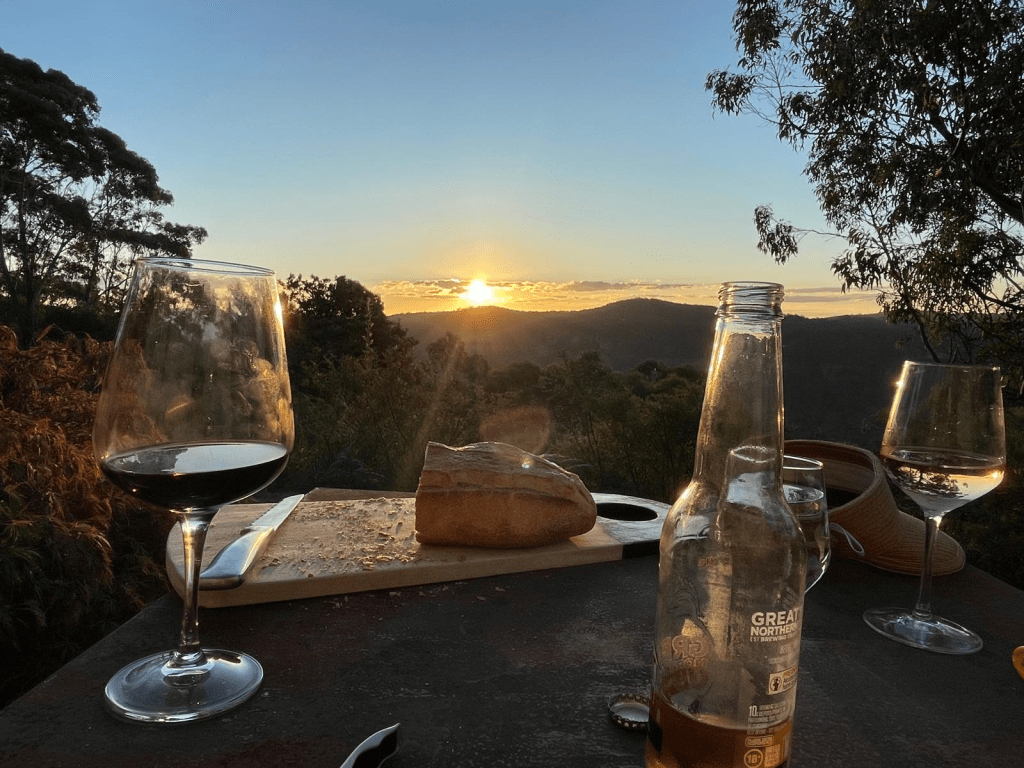
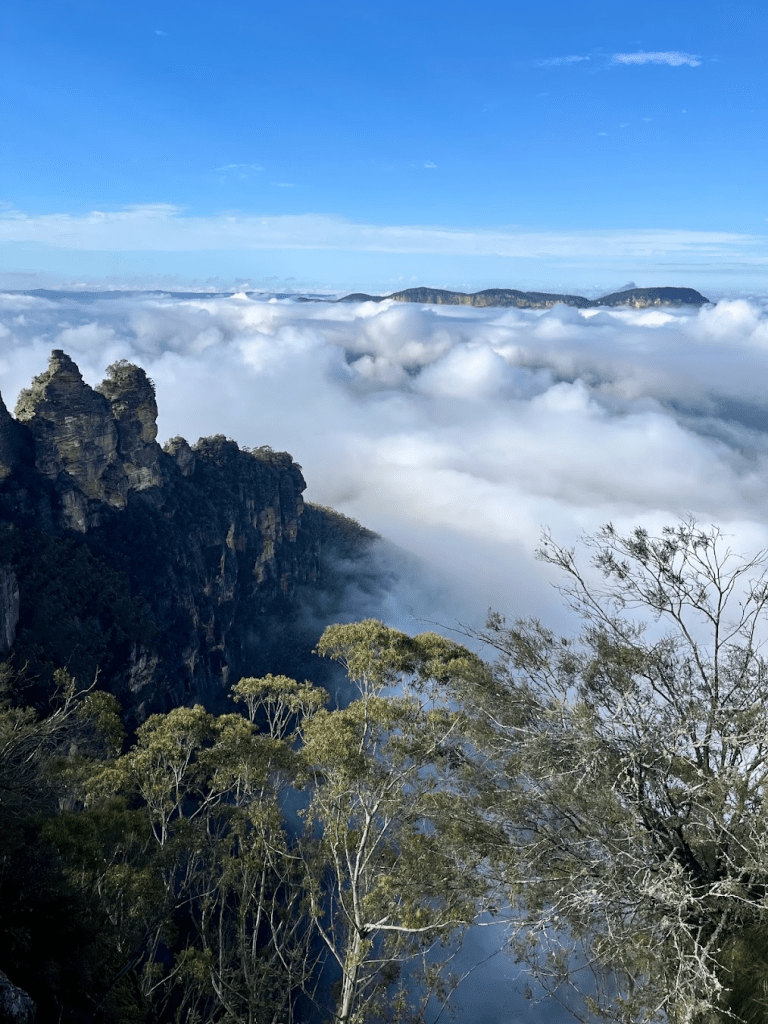
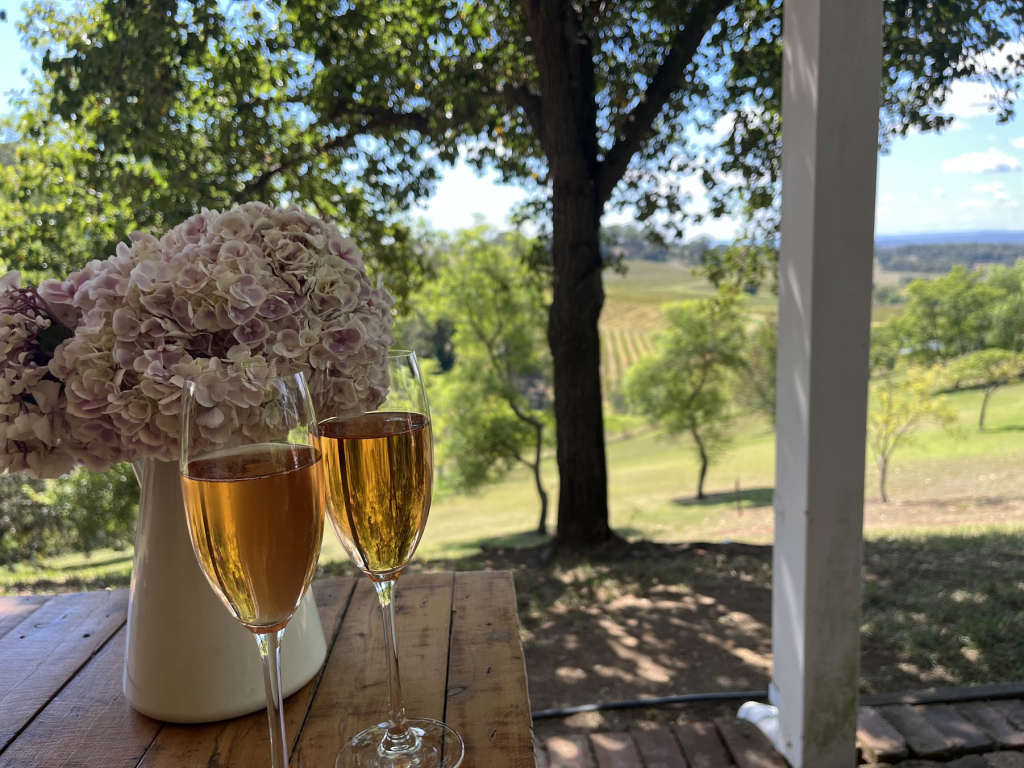
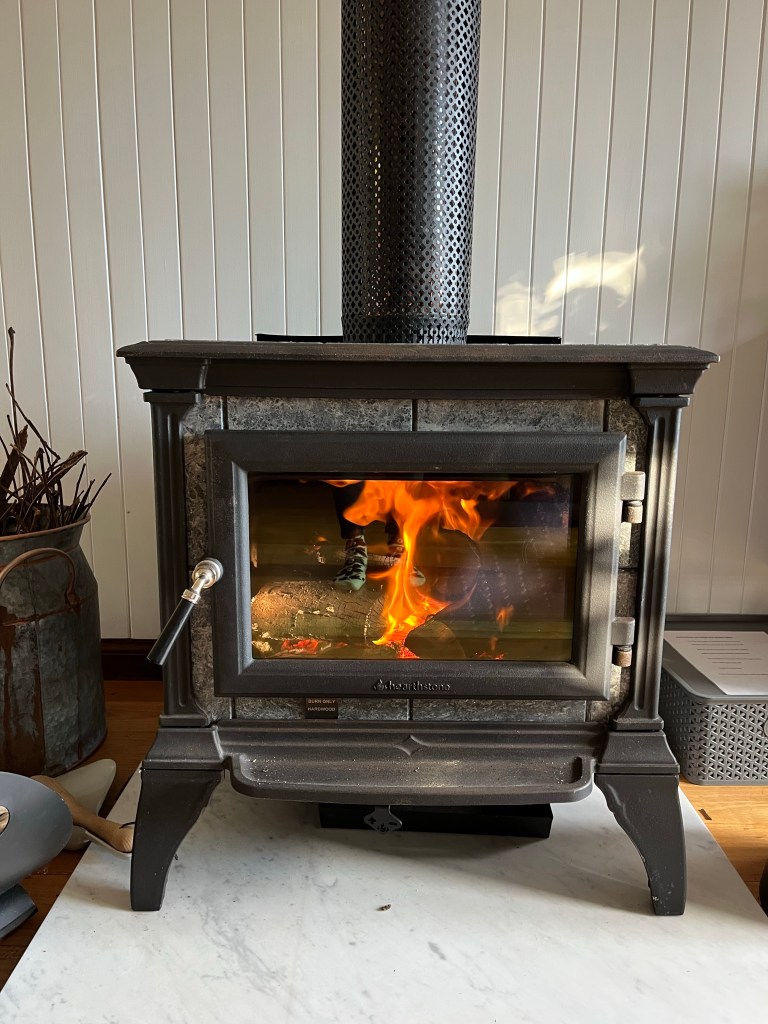
During the last few weeks, I was lucky enough to be able to return to some of my happy places here in Australia and enjoy the moment: the beautiful Seven Sisters cottage overlooking the stunning Kanimbla Valley in the Blue Mountains, enjoying a glass of wine in the foothills of the beautiful Mount View mountain range of the Hunter Valley, lighting a fire in the cold nights of the Southern Highlands in the fall. Being grateful for the moment.

The movie “Time Machine” ends with the main character George telling his friends about his adventures while time-traveling and then bidding them goodbye. Filby, one of his friends and still skeptical, returns shortly thereafter to find George and his time machine gone. His housekeeper, Mrs. Watchett, notes that nothing is missing except for three books. When Mrs. Watchett wonders if George will ever return, Filby remarks that “he has all the time in the world.” And so do I. We have all the time in the world.

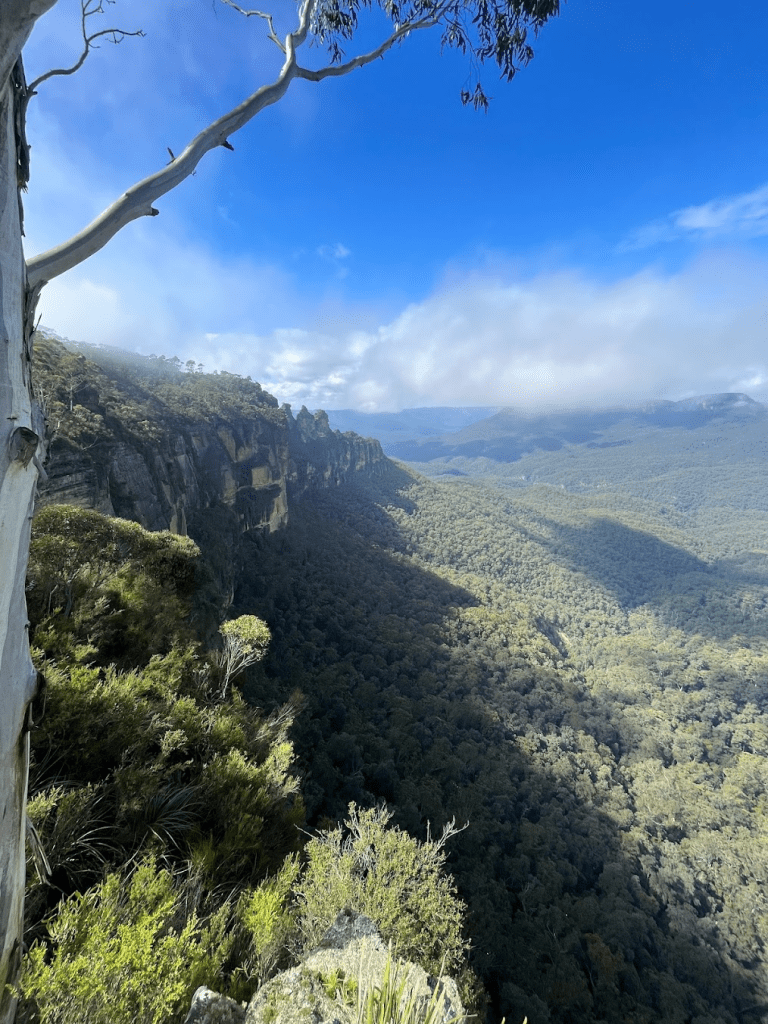
Kanimbla Valley, NSW
The Seven Sister Cottage, Blue Mountains
Sun setting over the valley
The Three Sisters, Blue Mountains
Katoomba, Blue Mountains
Chessnock, Hunter Valley
Mount View Winery, Hunter Valley
Autumn in the Southern Highlandd
“I got all the time in the world”

Silence

Hello darkness, my old friend
I’ve come to talk with you again
Because a vision softly creeping
Left its seeds while I was sleeping
And the vision that was planted in my brain
Still remains
Within the sound of silence

In restless dreams, I walked alone
Narrow streets of cobblestone
‘Neath the halo of a street lamp
I turned my collar to the cold and damp
When my eyes were stabbed by the flash of a neon light
That split the night
And touched the sound of silence

And in the naked light, I saw
Ten thousand people, maybe more
People talking without speaking
People hearing without listening
People writing songs that voices never shared
And no one dared
Disturb the sound of silence

Sound of silence. Simon and Garfunkel
Victoria Prison, Hong Kong Central

She wears a large pink plastic hair roller to hold up her black bangs, with long hair flowing down her back in perfect waves, alongside flawless makeup. Completing her ensemble is a gold leather purse, matching her elegant spring outfit of pale green and white. Flat white sandals make her task easier as she walks past the food-laden table outside the French-style bistro for the fifth time, her steps unsure on the uneven cobblestone of the historic courtyard.

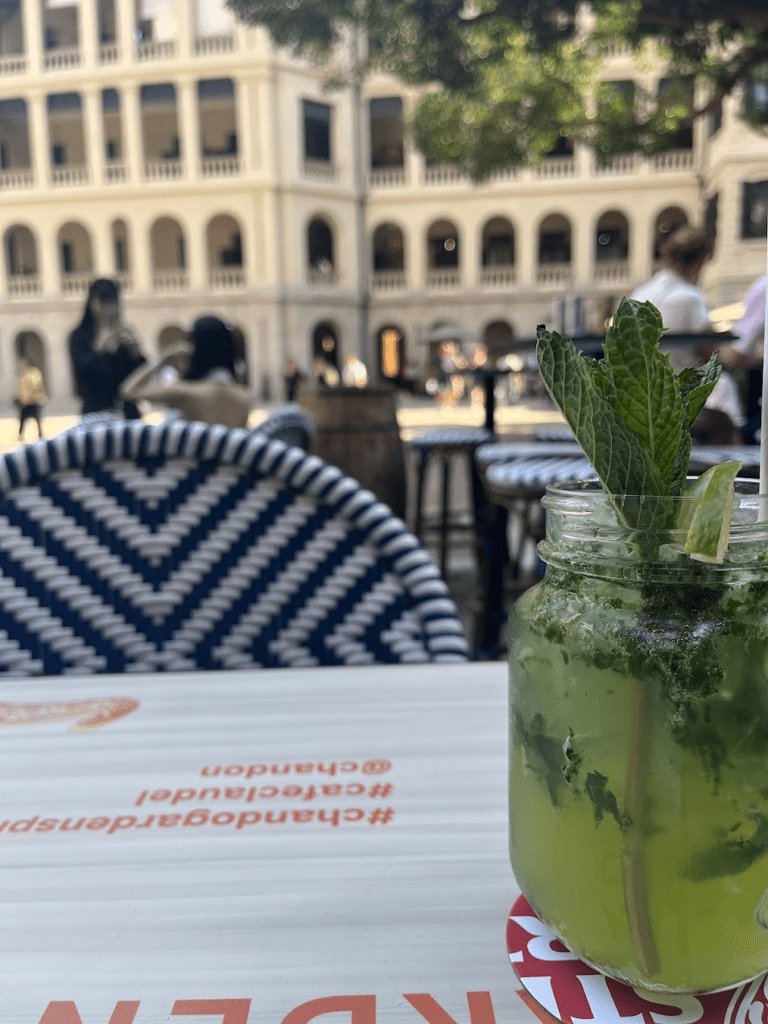
I sip my leafy green mojito, feeling the condensation from the cool glass in the hot, humid air.

On the other side of the table, two shorter girls dressed in black hide behind their cameras. With their wildly gesticulating hands, they let the walking girl know what to do. She keeps backtracking, with a different look on her face, and a different hand on her purse. She never stops to taste the food she keeps passing by. Take 1, take 2… after five takes, the trio stops recording and sinks on the three chairs around the set table. The videos get checked, the hair is fixed, and the plastic hair roller is now lying next to the plate with the chicken wings. The bacon and egg sandwich must be cold by now. No one touches it.

My waitress brings me another drink, catching me watching the absurd scene that is taking place at her cafe. “It’s quite something, isn’t it?” she comments. “It happens four to five times a day. They take photos and videos with food and then they leave. They never eat the food.”

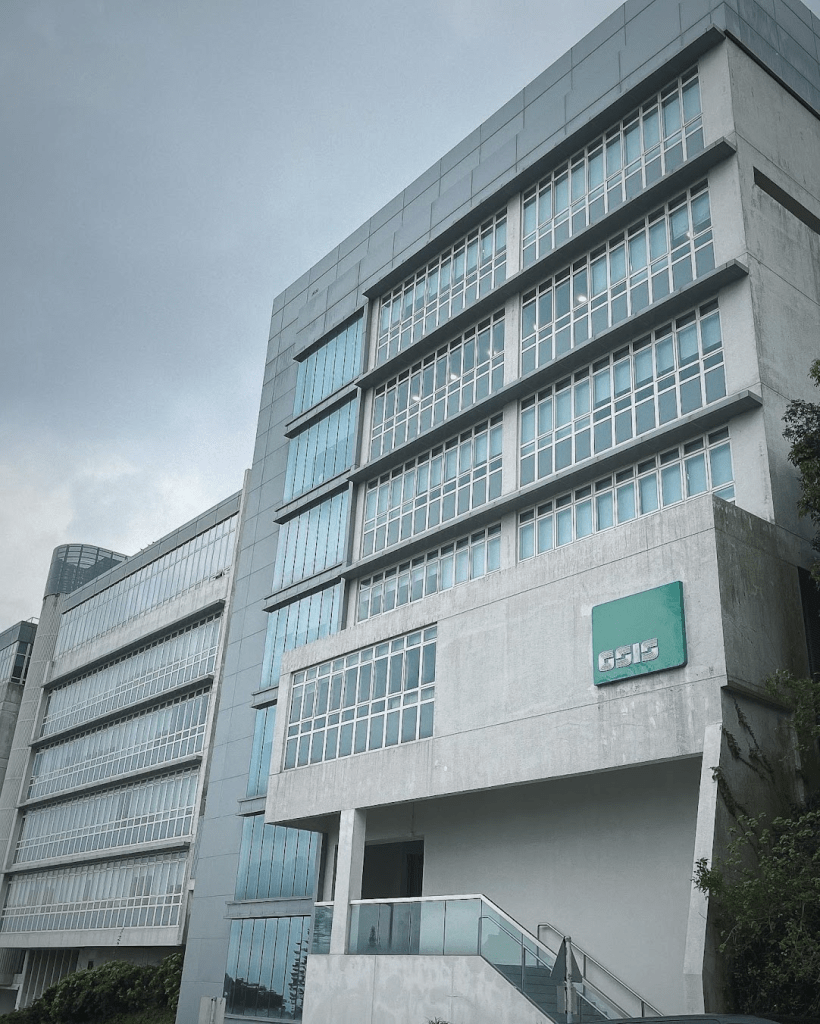
I am back in Hong Kong after 25 years. How some things are still the same – the smells of street food, wet markets, Chinese medicine stores, and air pollution. The constant noise of traffic, jackhammers, and the beeping of the pedestrian lights. Early in the morning, you can hear the birds wake up to the rising sun, their song carrying over the incessant hum of running air-conditioning units. The screeching call of the Asian Koehl, Hong Kong’s version of a cockatoo.

The neighbourhood we lived in – the steep streets, tight alleyways, the escalator taking you down to Central in the morning and back up in the evening. The rest is endless steps, bars and restaurants, and apartment buildings so close together, that you can fold your neighbour’s laundry.

How things have changed here in Hong Kong. Some of the changes are very obvious – like the TikTokers in front of my eyes creating online content. Back in the days of dial-up, your computer needed to perform a symphony to get online. It also weighed a ton, which made leaving home with it very impossible. Cell phones were not a thing, yet, and neither was social media.

Life in Hong Kong before the 1997 handover? I am having flashbacks to what life in this city looked like over two decades ago.

Arriving in Hong Kong was different. The airplane landed – smack – in the middle of the city, allowing its passengers an intimate insight into people’s tiny apartments and lives. An act of great trust, as the planes always came extremely close to the surrounding buildings when landing or taking off.

My arrival at the newly built airport on one of the bigger outlying islands Lantau, on the other hand, has a futuristic feel to it. Vast land stripped of any lush vegetation normally found on the Hong Kong islands. Anonymous tall buildings, endless runways, and construction sights are hidden in the smoggy air. A high-speed train takes you straight to Hongkong Central in a quick 25-minute ride. It used to be that if you wanted to get to Lantau, you had to take a boat or swim!

Taxis had ashtrays, not seat belts. To ride with my newborn son in tow took a lot of trust. Open the back door, lay the baby on the plastic-covered leather seat, leave the door open, walk quickly to the back of the running taxi, open the trunk, put the foldable stroller in the boot, close it, hurry back to open the back door to find your baby still lying on the backseat. Gather up the baby into your arms, and close the car door. Tell the driver where to go. Today, the taxis are the same. My baby is 26 years old now and wouldn’t fit lying down on the backseat any more.

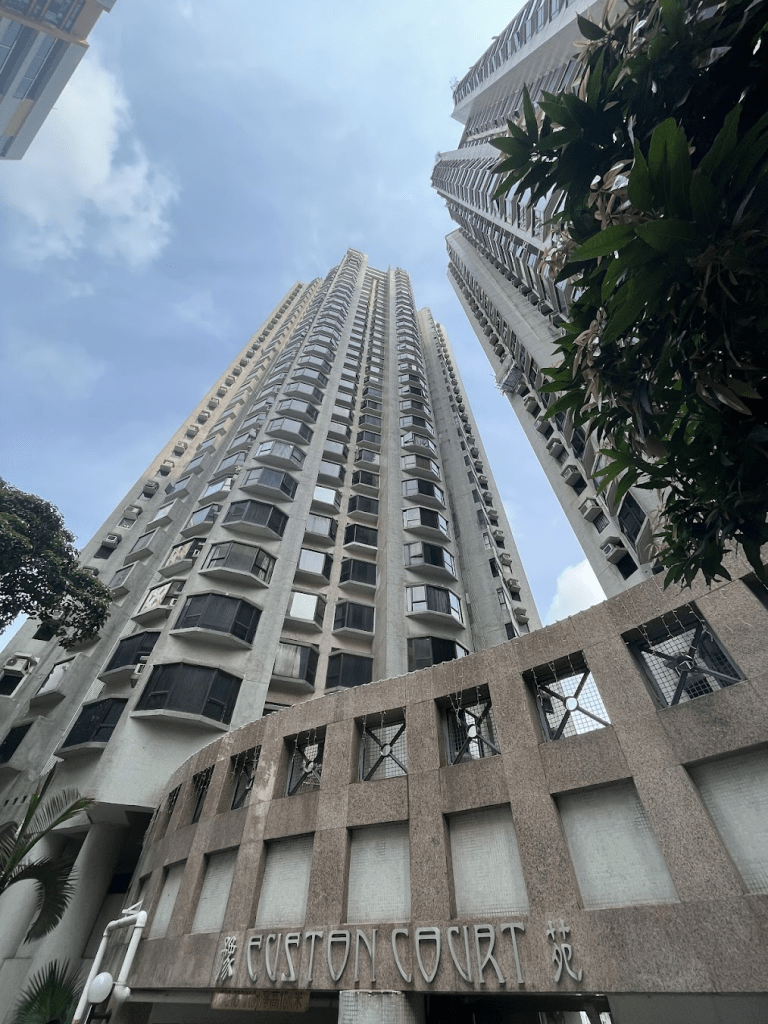
The city now seems more crowded with people, and more tall buildings have gone up. The high-rise we used to live in is still standing. I walk there to have a look – it looks older. Aged. Not as fancy as I remember it and relatively small compared to the other apartment buildings around it. The school I used to teach at is still there, and so is the British Military Hospital where our first two boys were born.

Our place on the 16th floor
Our Road
My school

Other things, however, have disappeared, vanished:

Gone is my favorite restaurant in Wan Chai where we spent endless nights watching fresh ducks being delivered through the toilet window and turned into a delicious meal of Peking Duck.

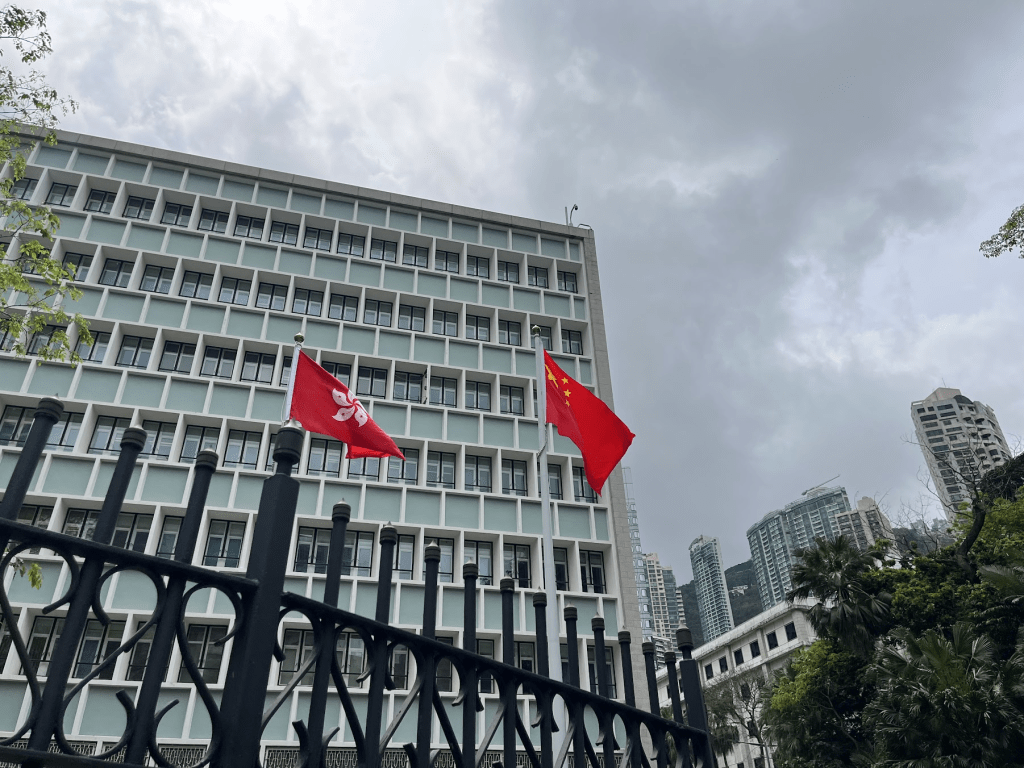
The British flag. Replaced by the infamous Five Star Red Flag, officially and in broad daylight on the day of the Handover on July 1, 1997. We were there.

Other things disappeared overnight, quietly and without any explanation. The Pillar of Shame at the University, commemorating the 1989 Massacre at Tiananmen Square in Beijing, was taken down by the Chinese government in the middle of the night to protect national safety.

Civil rights are diminishing drastically – since 2020, civil rights in Hong Kong have been sharply curtailed. Many pro-democracy activists have been arrested, silenced, or forced into exile. Dozens of civil society groups have been disbanded. Outspoken media has shut down. Many disillusioned, young professionals and middle-class families have emigrated to Britain, Canada, and Taiwan.

Ministry of Justice

On the wall of a public building, I see a sign announcing the 10th anniversary of The Holistic Approach to National Security. A new national security law (Article 23) was passed a couple of weeks ago that allows for closed-door trials and gives the police the right to detain suspects for up to 16 days without charge. No outcry, no protests, no pressroom raids like in 2019. Instead, a deeper, quieter wave of adaptation among Hong Kong residents who are living under the threat of more extensive restrictions.

A friend tells me that half the population supports the new government. The other half does not. They learn to keep quiet or leave, only to get replaced by pro-China citizens. Many just keep their mouth shut and go about their lives. When Britain handed over control of its former colony to Communist-led Beijing, China promised to keep Hong Kong’s relative freedom and way of life unchanged for the next 50 years. Instead, it took much less time than that to change everything.

In a western-style cafe, over Avo toast and an extra strong capp (missing sunny Australia a bit), the waitress tells me that the city has changed since the 2019 protests, the NSL (National Security Law), and the pandemic. There’s a strange climate of fear, she says. I see police officers stopping people on the street, demanding to check their phones. And I am sure it is not their food posts on Instagram they are worried about.

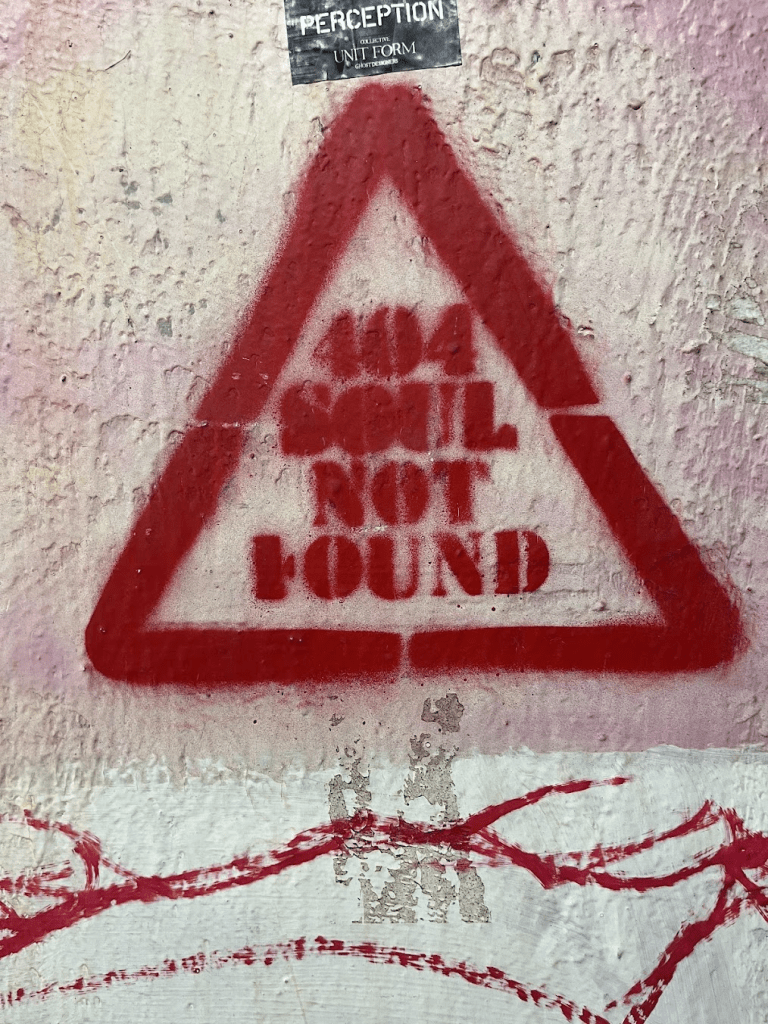
Street Art
Metro Station
Street Art

Just like the 1964 song by Simon and Garfunkel “Sound of Silence,” in which the inability of people to communicate with each other is described, a future where interactions become all the more surface-level and indifference seems to grow, people turn to consumerism more than ever before. The number of Instagram influencers in Hong Kong is growing. Over 85% of the total population in Hong Kong uses social media, which equals almost 6.5 million social media users. I see long line-ups at the hip Bakehouse bakery where young influencers line up patiently to get that shot with the famous egg tart. Social media as the new opiate for the masses. I don’t like egg tarts anyway.

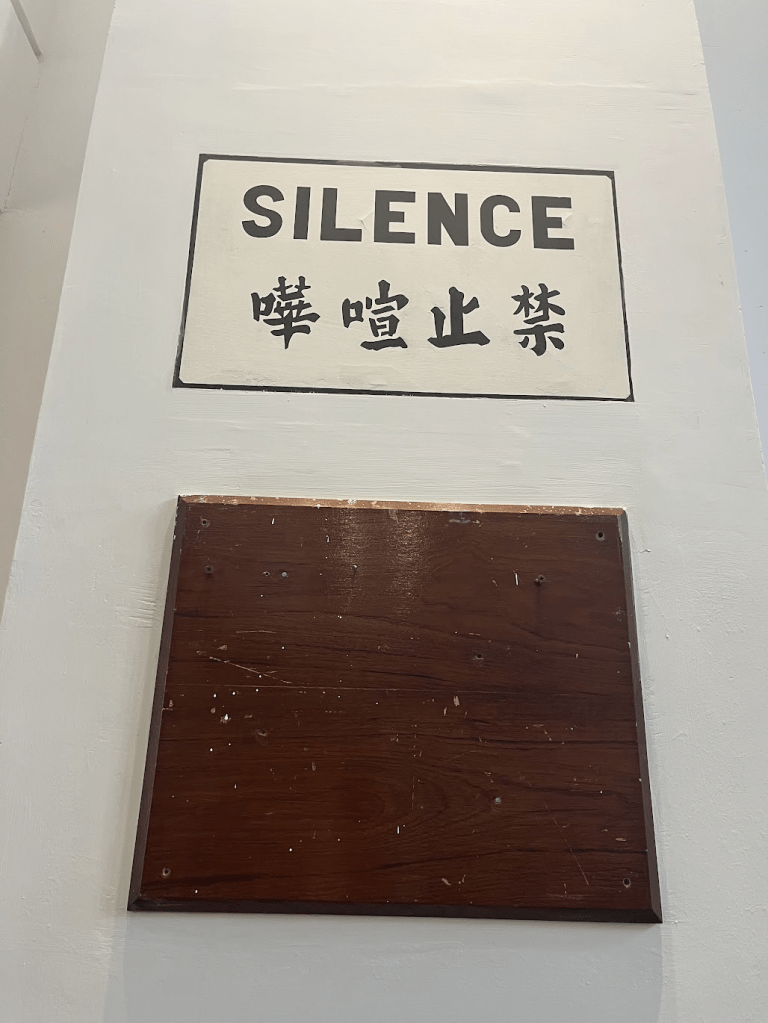
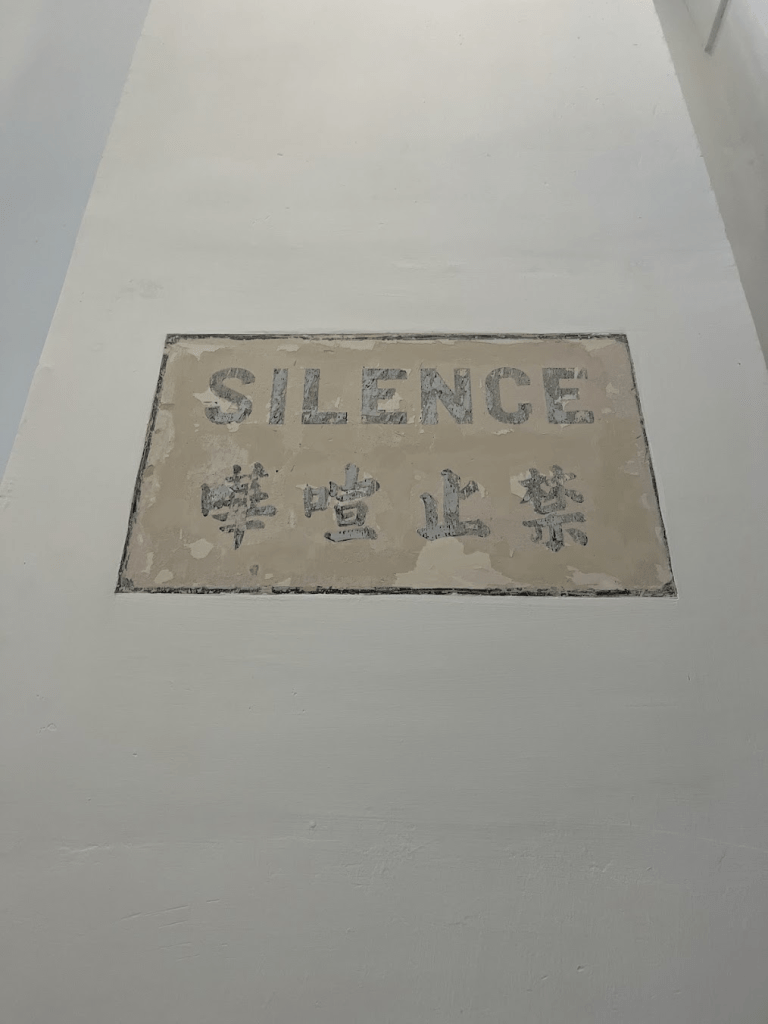
Back at my table at the French bistro cafe. This place used to be the old Victoria Prison. One oppressor replaces another. A place of crime turned into an entertainment hub. In one of the former courtrooms, now bar stalls, an old sign reads SILENCE. The irony is not lost on me.

Victoria Prison

The three girls pack up their things and move on to the next Instagrammable moment. The plates with food untouched in the afternoon sun. I am sure, the wings would taste great with my cocktail. I’ll make sure to take a selfie with it! And keep my mouth shut while I eat.

(Disclaimer: My apologies for any inaccuracies, generalizations, or oversimplifications. I tried to read up on the subject and base my notes mainly on my observations and impressions. Also, please excuse any errors in grammar or spelling. Chat GPT is not accessible here in Hong Kong. I am on my own lol.)

(Addendum: Upon return to Sydney, the draft to this blog had disappeared from my blog site. Coincidence? Good thing I had a copy saved. Enjoy)

Cheer Up, Slow Down, Chill Out!

Rise up this mornin’,
Smiled with the risin’ sun,
Three little birds
Pitch by my doorstep
Singin’ sweet songs
Of melodies pure and true,
Sayin’, (“This is my message to you-ou-ou:”)

Singin’: “Don’t worry ’bout a thing,
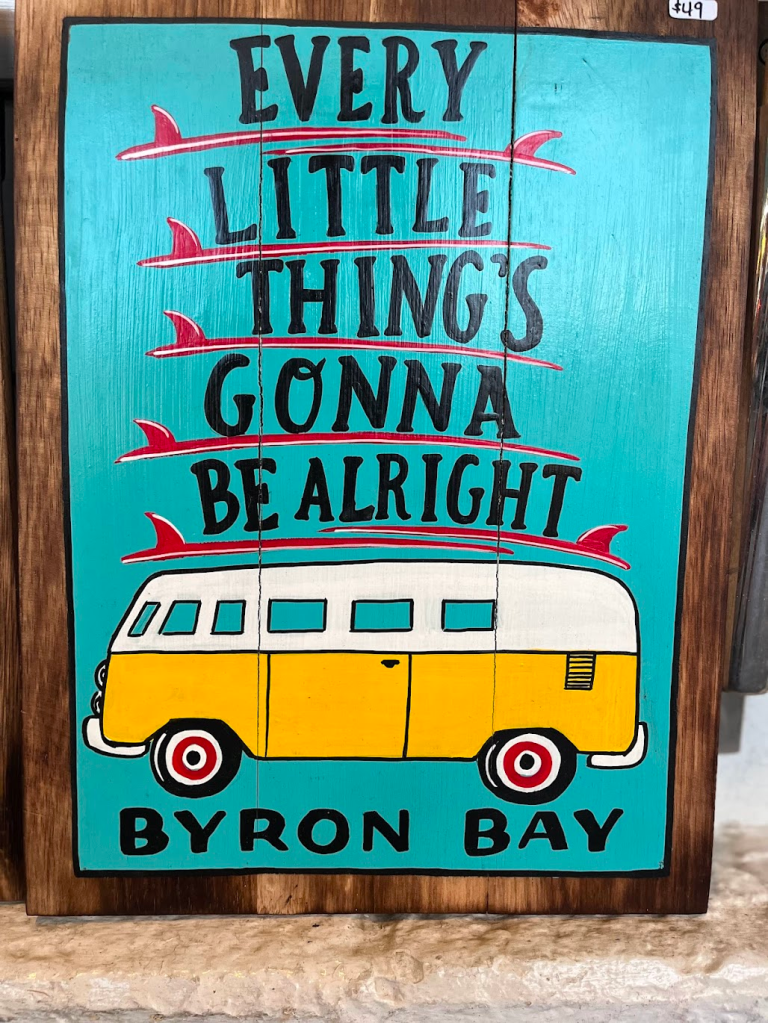
‘Cause every little thing gonna be all right.”
Singin’: “Don’t worry (don’t worry) ’bout a thing,
‘Cause every little thing gonna be all right!”

Everything is gonna be alright. Bob Marley

Welcome to Byron Bay, Australia’s haven of New Age charm. A place of healing and spiritual inspiration for thousands of years, it continues to be famous for its alternative and holistic lifestyle. A magnet for surfers, hippies, new agers, and the well-to-do alike. And then there’s me.

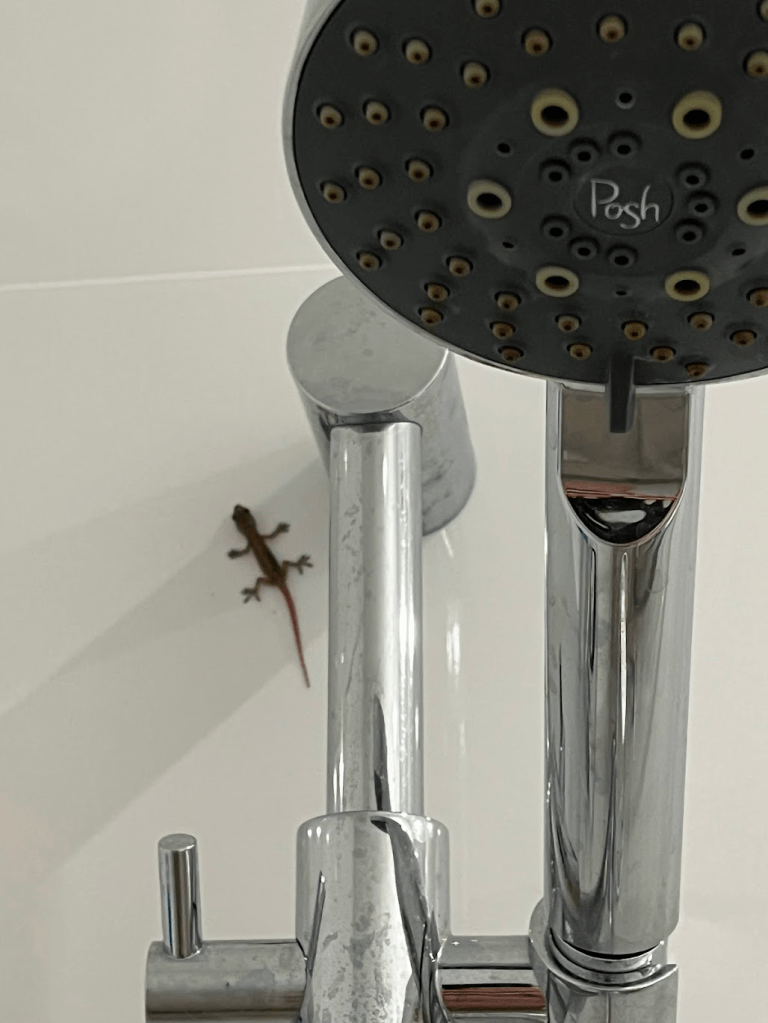
I’m a bit of a skeptic when it comes to New Age stuff. Sure, I’ll read my horoscope, but don’t count on me to take it seriously (unless it’s predicting good news!). I might entertain the idea of a good omen, but I kicked out that little lizard from my shower the other day, even if it supposedly symbolized good luck (I prefer my showers lizard-free). I tried a crystal healing session at the local hair salon: yoga mats, candles, and flashing colourful lights. But all I got out of it was a sore back and a chuckle from hearing one lady scream “Cockroach!” during our guided stillness, disrupting the whole energy flow. And just the other night after work, as I sat on the beach tired, a young man approached me, offering to practice sound healing. Though the thought of him swiping my wallet while my eyes were closed did cross my mind, I couldn’t deny the soothing mix of ocean sounds, the evening sun, and the resonance of the crystal bowl. Still, I didn’t buy into it. A can of coke probably would’ve given me the same kind of joy and energy.

The lizard, a sign of being refreshed

I don’t dislike it. I just don’t buy it.

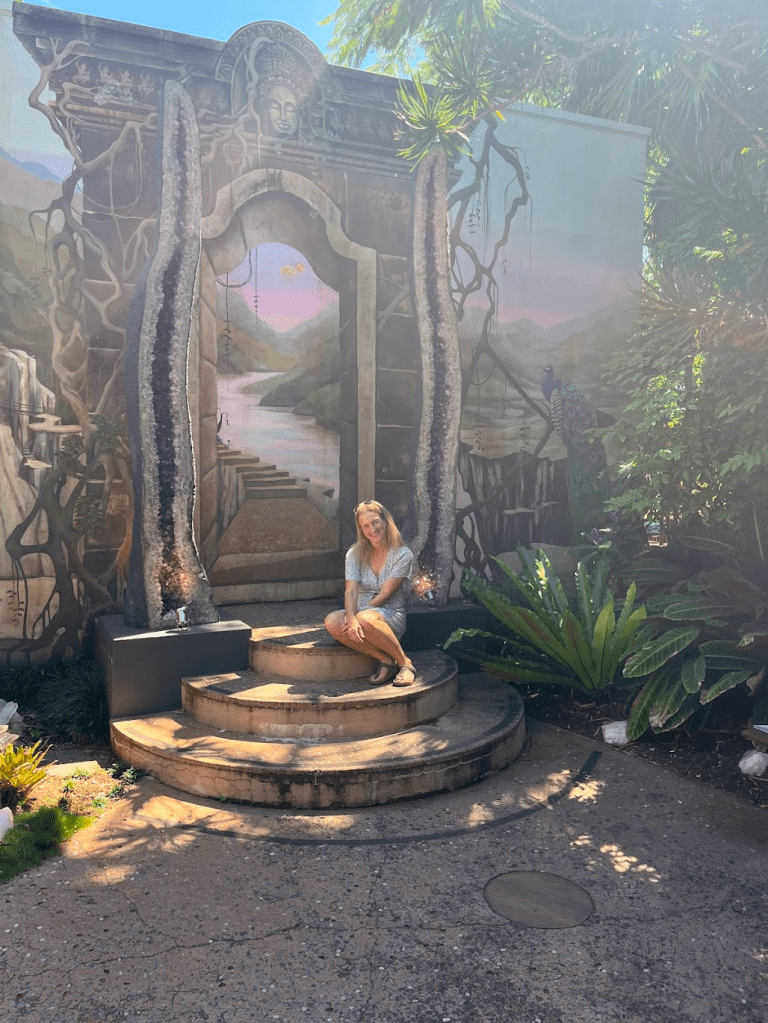
Yet here I am, at the Crystal Palace, the spiritual getaway in the Hinterland Heaven of Byron Bay, ready to be healed.

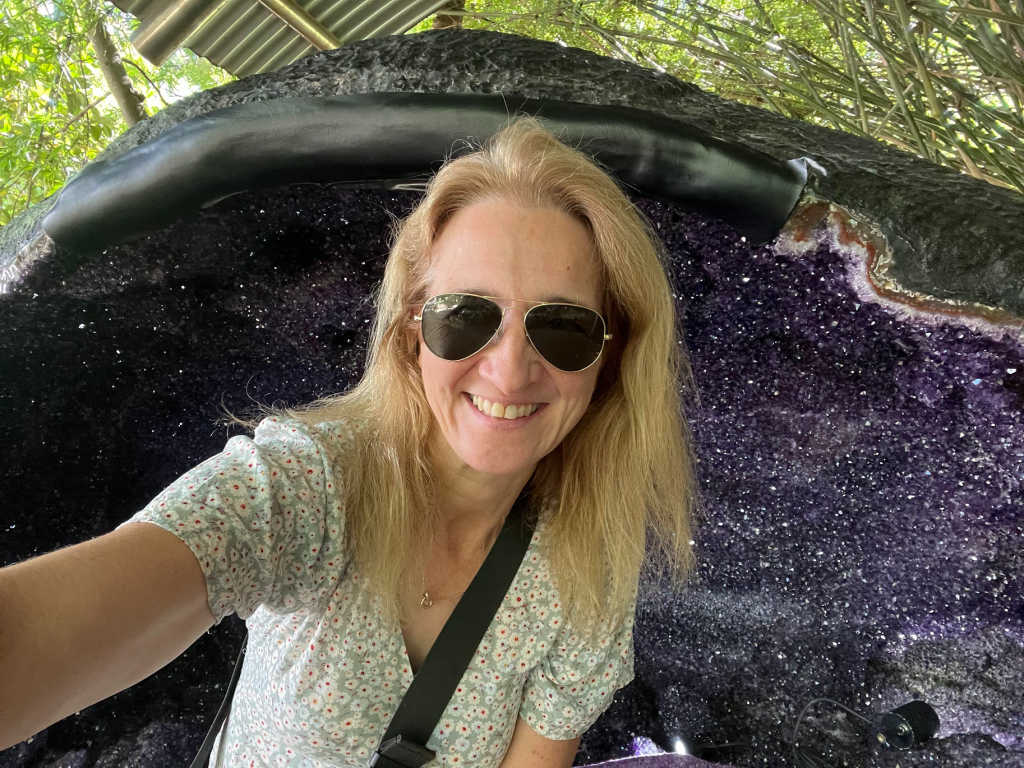
Me sitting in the Draghon’s Egg, ready to be healed

It’s a hot Saturday morning – hard to believe it’s the beginning of autumn. Deep blue skies, bright sun, and a gentle breeze rustling the lush rainforest leaves around me. I decided to escape the drama of work and life in Sydney for a weekend getaway to Byron, prompted by a friend who suggested that going to Byron would bring instant relaxation and chill.

Except, well, it didn’t quite do it for me. Maybe my expectations were off. Maybe I had envisioned something different. Or maybe I was just disappointed not to bump into Chris Hemsworth, aka Thor, at the local health store.

Don’t get me wrong—this place is stunning. The endless stretches of white beach, the crystal clear ocean, and the iconic lighthouse perched over the Bay. The shops, cafés, and wellness centers. Musicians serenading you at every corner, struggling to be heard over the chatter of people and the cacophony of birdsong. Byron Bay is camper vans, and picnic blankets, bare feet and surfboards, with the sweet scent of weed lingering in the air. It’s breathtaking sunsets by the beach and sunrise vistas at the lighthouse. It’s lively, liquid, and loads of fun. It’s just a bit much for me.

Main Beach Byron Bay

Which is why, on my first evening, I retreated to my cozy Airbnb rather early. I set my alarm for 4:30 am to hike up to the lighthouse at dawn, well before the surfers, hippies, and linen-clad riches would descend upon it. Or so I hoped.

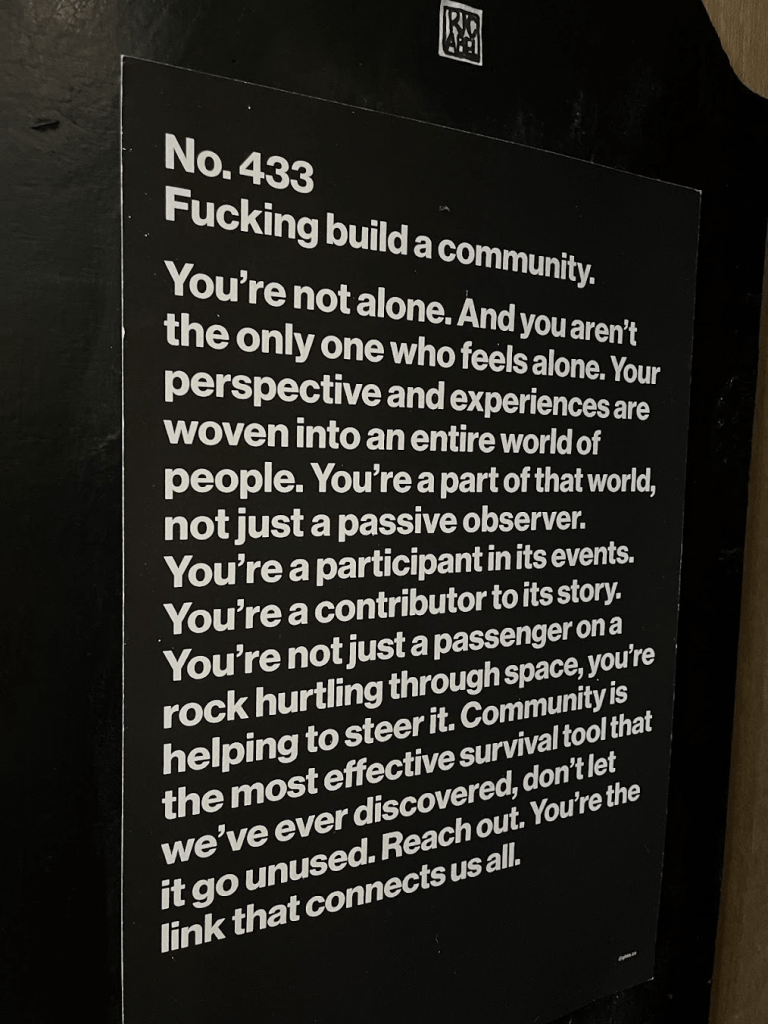
“Cheer Up, Slow Down, Chill Out!”

Now, I’ve done my fair share of foolish and naive things while exploring this beautiful country. Like getting lost during a bush walk behind my school, losing both my sense of direction and phone reception. Or posing for selfies with a poisonous snake in the school playground. Or mistaking deadly box jellyfish for laundry pods (no, I didn’t put them in the washing machine).

And now, hiking through the rainforest to the Byron Bay lighthouse in the dark.

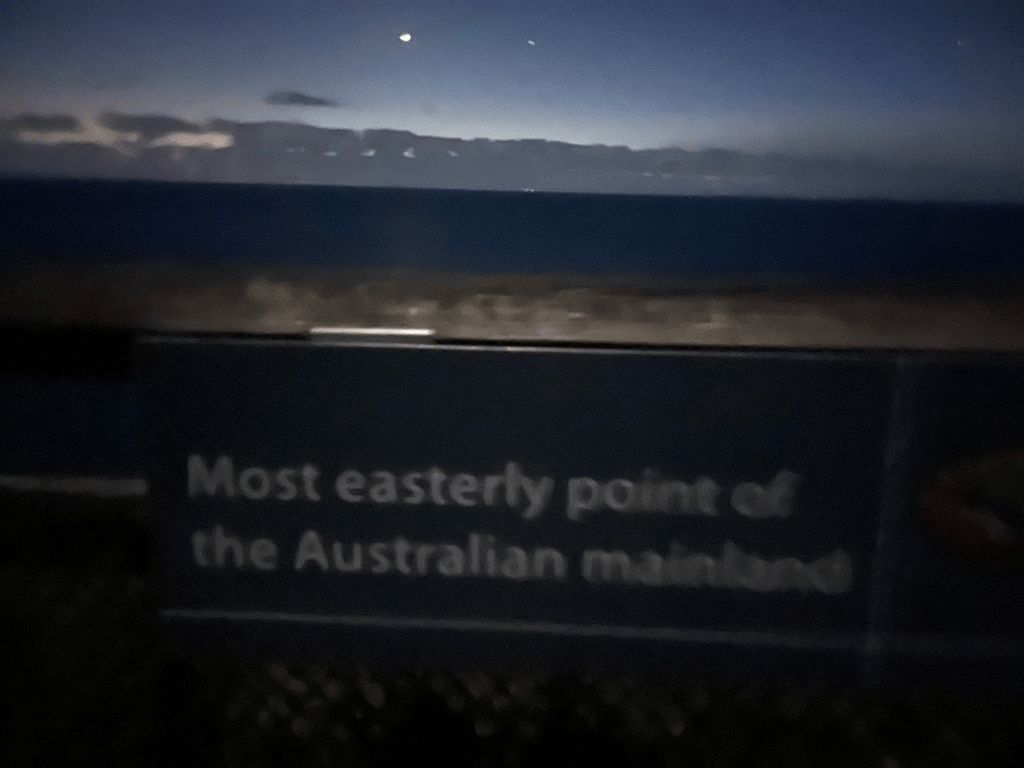
Most easterly point of Australia (in the dark)

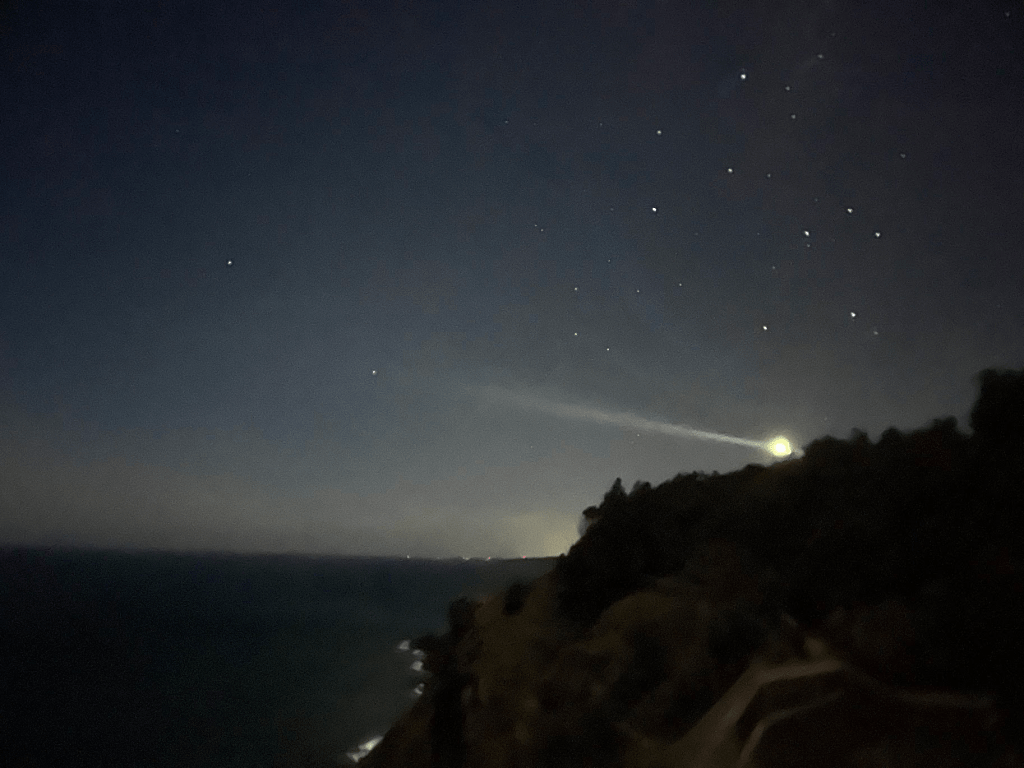
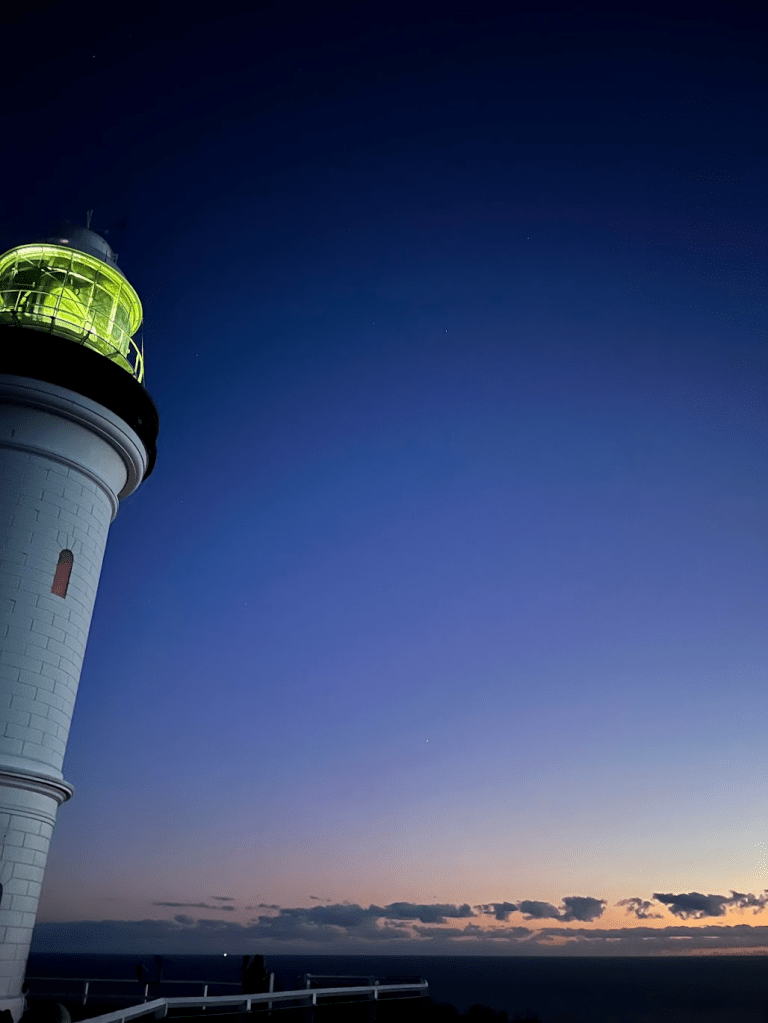
Again, not entirely sure what I was thinking—things can be pretty eerie before dawn. Especially in an unfamiliar, dense rainforest. But there I was, wide-eyed and bushy-tailed, determined to witness the sunrise from the top of the lighthouse. Armed with my iPhone torch and GPS, I navigated through the pitch-black, until I finally found the trail. Or better – the trail found me. Fell right over the first step (of what felt like a hundred) leading up the hill. Face planted and momentarily overcome by a sense of profound aloneness – a feeling that lingered throughout the day. Brushing off the blood and tears, I picked myself up and climbed the staircase towards heaven. Above me, only the dark night sky and stars; around me, the soothing sounds of ocean waves, the occasional guiding light of the Byron Bay Lighthouse – a beacon of hope for ships and lost souls like mine since 1901. As I walked the path, my senses heightened, I savoured the occasional song of cicadas, the distant thump of a wallaby (I hoped), and it was beautiful. So quiet and serene. Just me – alone but not lonely, solitary but not lost.

Beacon of Hope – the Byron Bay Lighthouse

Until, after an hour’s trek, I reached the lighthouse, only to be greeted by a boisterous group of youthful travellers, louder than the sunset birds from the night before. I stayed for a while, marvelling at the dreamlike atmosphere of the lighthouse bathed in the glow of twilight. The closer we got to sunrise, the more people arrived, eager to be part of the spectacle. And so, I left before the sun had a chance to peek above the horizon – I knew it would be fine without me watching. Descending the hill, against the incoming tide of people, I felt oddly liberated and free. Finally, the promised relaxation and chill had reached me.

Next stop: The Crystal Palace. Still in a zen state, I was curious to visit this mysterious place. The idea of leaving behind the bustling hubbub of Byron and retreating to the pastoral lands of the Hinterland appealed to me. Rolling hills covered in macadamia plantations, rumoured to hide numerous cannabis plots. Landscapes reminiscent of rural Ireland, perhaps Tuscany, or even La Provence. Cows, brought over from Europe, grazing peacefully on the land that not too long ago was covered by rainforest and eucalyptus trees.

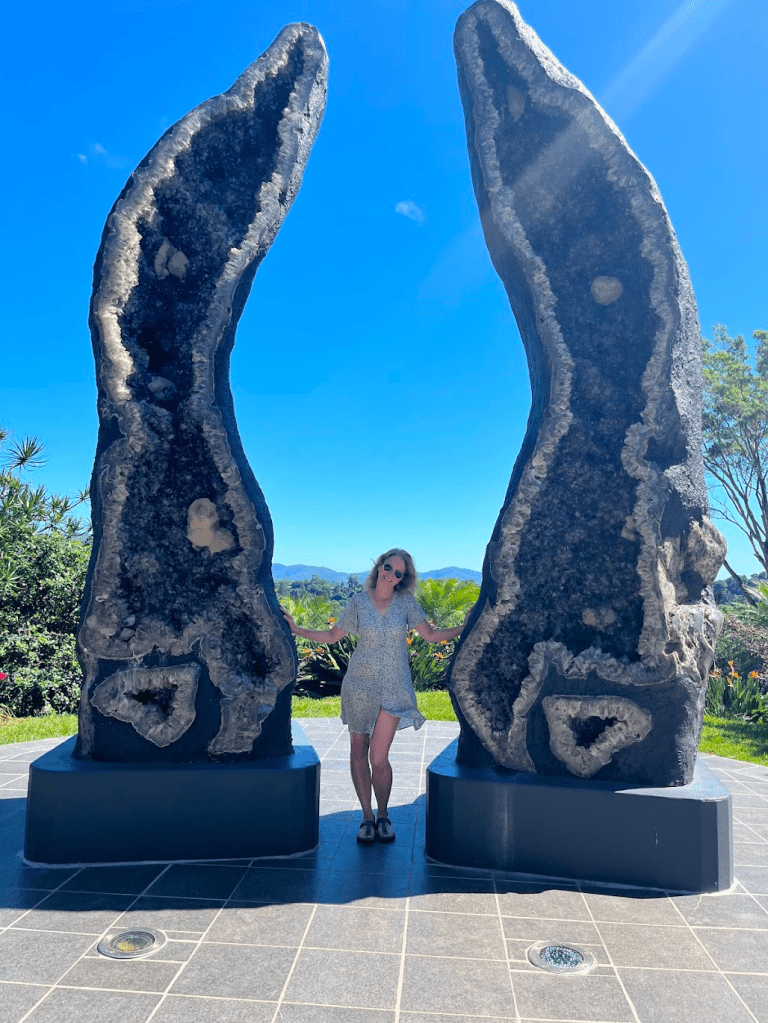
Turned out, the cows weren’t the only imports from distant lands. Arriving at The Crystal Palace – a private botanical sanctuary and ethereal haven cultivated over four decades by the adventurous Naren King – I encountered a multitude of crystals, including the world’s tallest crystal geode, the Guardian. Towering over five meters and weighing 20 tonnes, it took three massive trucks, two cranes, and a considerable investment of energy and capital to transport these natural monuments from Uruguay, South America, to Mullumbimby, Australia. The owner of The Palace and visionary behind all things crystal, deemed them “beacons of hope” and “human charging stations imbued with immensely powerful energies, ready to rejuvenate anyone standing in their midst.” A lot of energy wasted to give energy, if you asked me. For me it was more likely the caramel slice at the nearby Lotus café that did the trick. But as I said – I’m a skeptic.

The Guardians at Crystal Palace

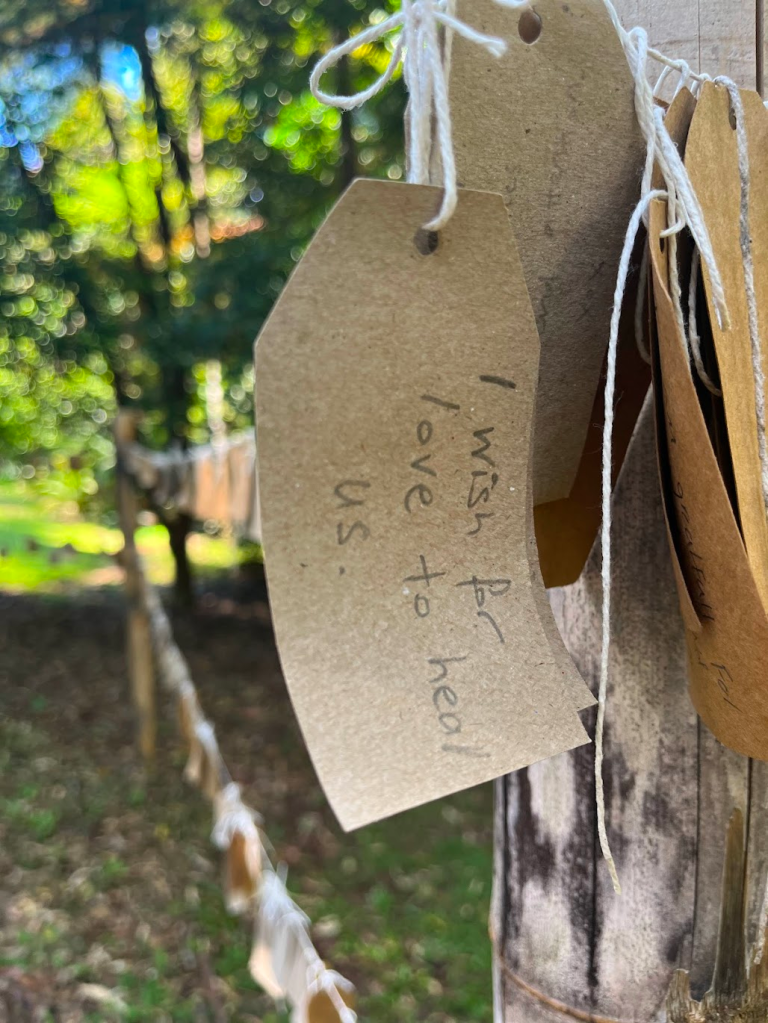
What truly revitalized me and gave me a sense of peace, however, were the Shambhala Gardens themselves. And the lack of visitors. I enjoyed a peaceful rainforest stroll and visited the Wishing Tree. I sat with the gods Garuda and Vishnu in the Bamboo Avenue and received a crystal blessing nestled within the enchanting embrace of the Dragon’s Egg.

Bamboo Avenue at Shambhala Gardens

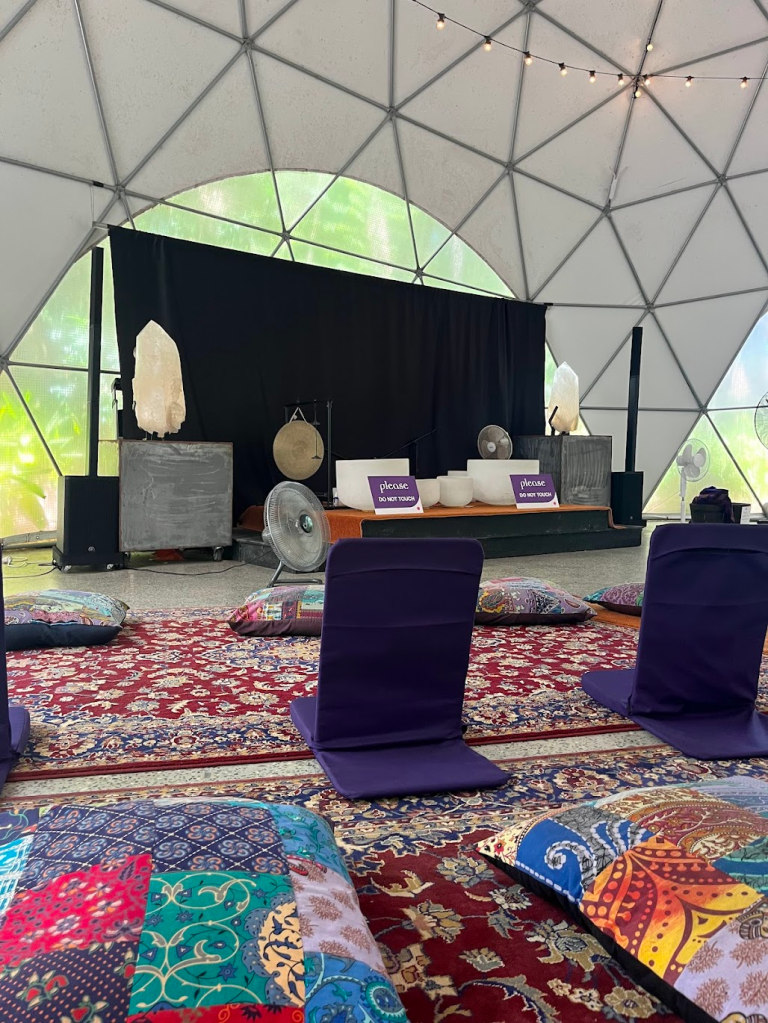
As the hot Saturday morning unfolded, with its blue skies, hot autumn sun, and balmy breeze rustling through the rainforest leaves, I found myself sitting in the stifling heat of the white plastic Peace Dome, experiencing my first proper Crystal Sound Healing Meditation. The resonant tones of the Crystal Singing Bowls filled the air and me, bringing with them relaxation, inner peace, and introspection. Or perhaps I simply dozed off, exhausted from my early-morning adventures. Nevertheless, for the first time since arriving in Byron, I felt a sense of inner calm. Refreshed and rejuvenated…and ravenous!

Gratitude Tree
Back in Middle Earth
Crystal Bowl Sound Healing

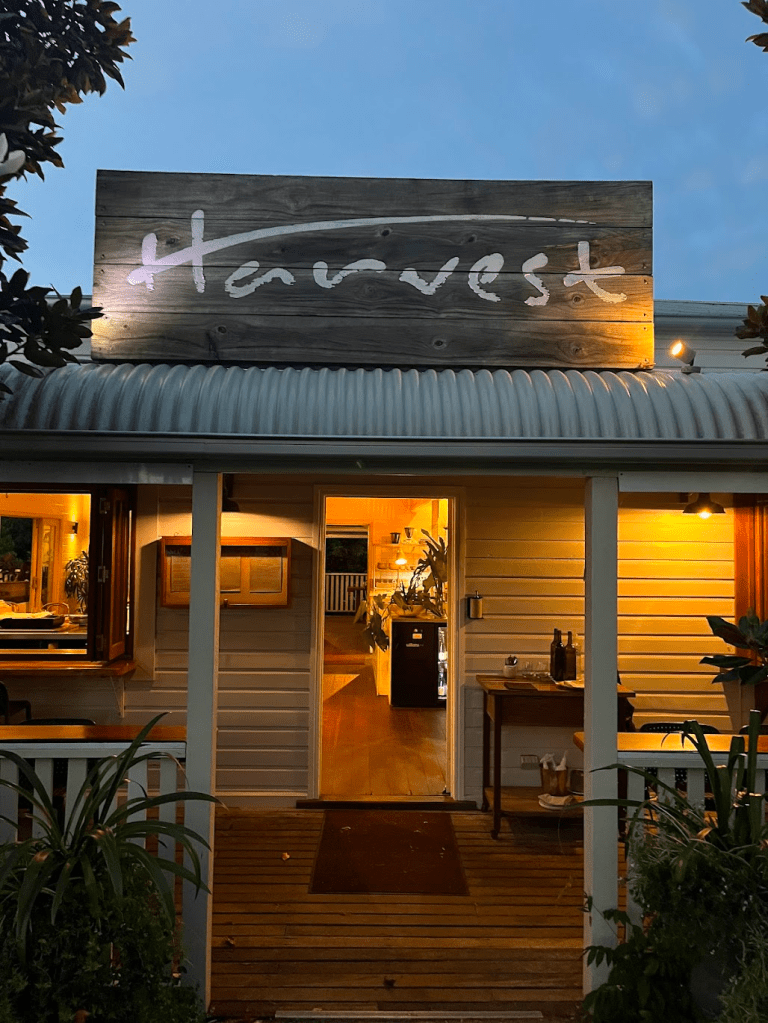
I was ready for some farm-to-table fare from one of Byron’s local farms. Ready for a delicious meal at The Harvest Restaurant. Ready to “Cheer Up, Slow Down, Chill Out!” as Byron’s motto prompts. And who knew, perhaps Chris’s brother Liam would drop by for dinner as well. Peace out, Byron! And bon appétit!

Dinner with one of the Hemsworth Brothers

Just Beach

I never came to the beach or stood by the ocean
I never sat by the shore under the sun with my feet in the sand
But you brought me here, and I’m happy that you did
‘Cause now I’m as free as birds catching the wind

I always thought I would sink, so I never swam
I never went boatin’, don’t get how they are floatin’
And sometimes I get so scared of what I can’t understand

But here I am
Next to you
The sky is more blue
In Malibu

We watched the sun go down as we were walking
I’d spend the rest of my life just standing here talking
You would explain the current, as I just smile
Hoping I just stay the same and nothing will change
And it’ll be us, just for a while
Do we even exist?
That’s when I make the wish
To swim away with the fish

Is it supposed to be this hot all summer long?
I never would’ve believed you
If three years ago you told me
I’d be here writing this song

But here I am
Next to you
The sky is so blue

Malibu. Miley Cyrus

(Caution: This work contains depictions of excessive beauty and gorgeous imagery. For those who dislike such content or have a weak heart, please be advised.)

I remember the first time I saw the beach. 

July 2019, and I had just arrived in Sydney – full of preconceived ideas and beliefs. Among them, the certainty that I would not like the beach. Never much of an ocean lover, I had decided to live close to my school in the lush, family-friendly suburb of Terrey Hills – only to realize, very quickly, that there wasn’t much going on after 5 pm.

Warriewood Beach July 2019

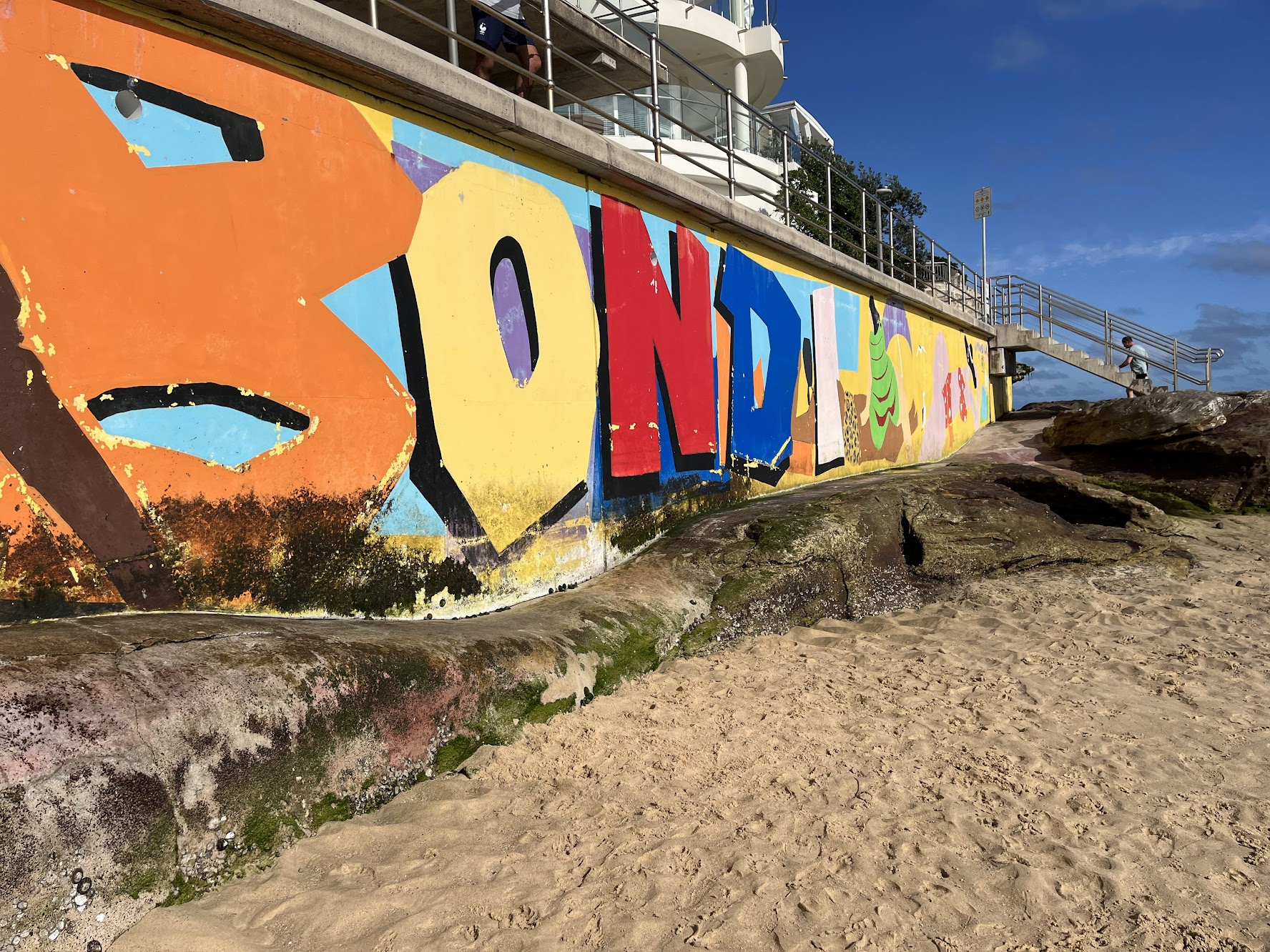
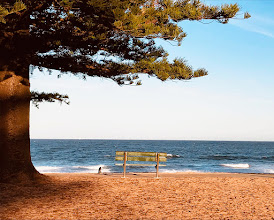
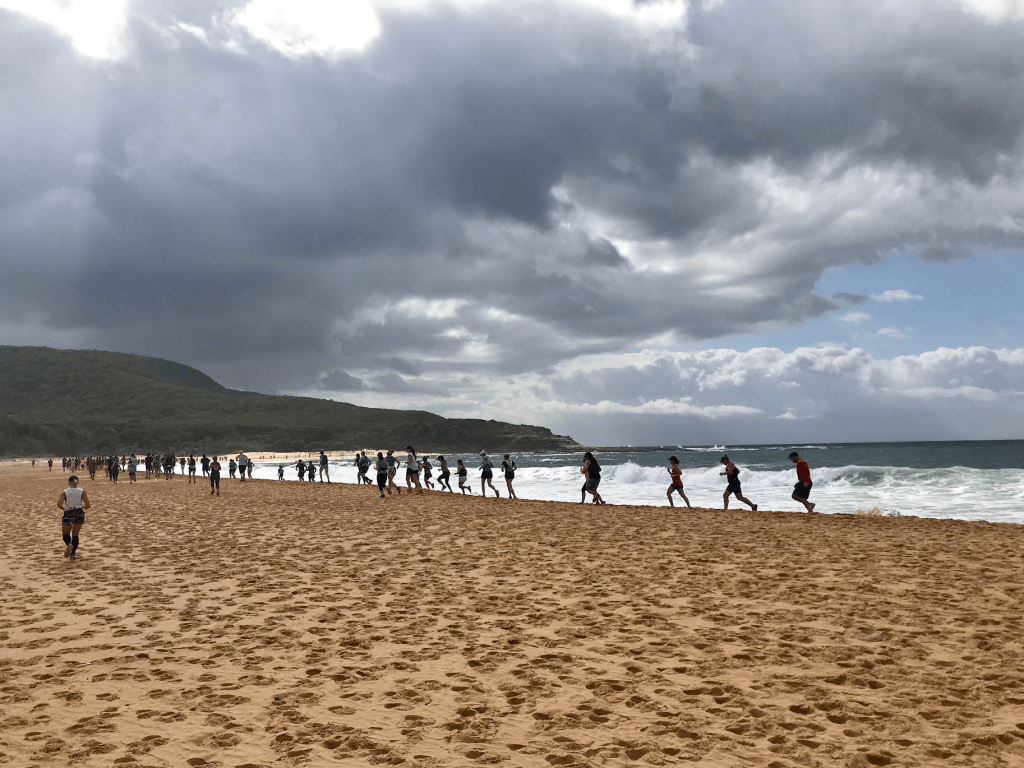
And so, only four days later, I moved to Newport Beach, one of the Northern Beaches, and never left. Fell in love with the golden-red sand, the ever-changing surf, and my green bench. For the next three years, I explored the beaches close to me: hiking the lighthouse trail in Palm Beach, seeing the Sculptures in Bondi, running along the Northern Beaches from Dee Why to Manly, celebrating my first true Australian Christmas with my family in Freshie, learned to surf in Manly.

I did not like the beach. I loved it.

Newport Beach
Freshwater Beach
Palm Beach

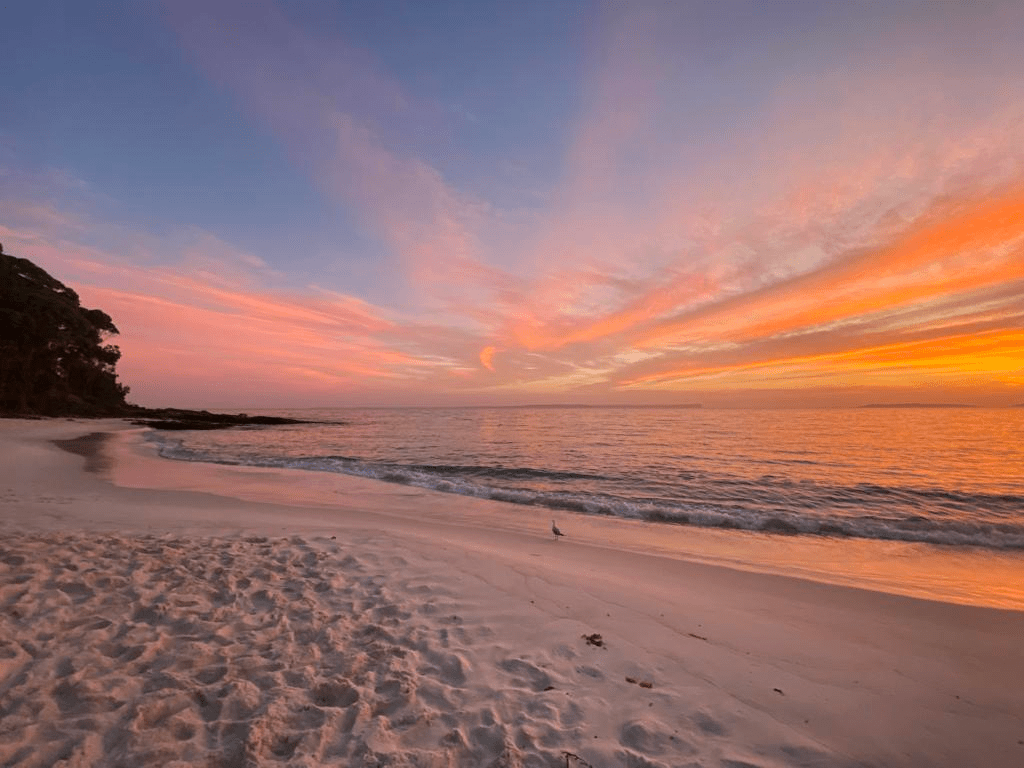
Fast-forward to last weekend, the early Sunday morning ablaze with the rising sun painting the sky in hues of orange. Stirred by the spectacle, I leaped out of bed in my Airbnb, hastily dressing as I dashed out the door toward the nearby beach, my gaze fixated on the radiant orange clouds against the dark blue canvas. It felt as though averting my eyes, even for a moment, would cause the magic to vanish. Arriving at the beach, I saw others who had gathered to witness the impending sunrise. Among them, a group of young French girls, meticulously make-uped and engrossed in an endless stream of selfies. I couldn’t help but wonder about the fate of these captured moments – perhaps they all went into a virtual cloud somewhere. Then again, I realized I contributed my fair share to the “Sunrise Cloud” with my own collection of sunrise photos. “Forever that girl who revels in the beauty of a colourful sky” – that was me in a nutshell.

Sunrise at Hyam’s Beach

6:14 am and sunrise was only three minutes away, when all six cell phones of the girls next to us started ringing. Their mothers were calling, all the way from France, being face-timed into this beautiful moment of red and orange and gold. In the distance, two dolphins were making their way across the bay: “Les dauphins! Les dauphins!” the girls screamed into their phones, loud enough to be heard all the way to France. Ah, to be young again. Or alone, so we could enjoy this beautiful moment in peace. And only hear the squeaking of the sand beneath our feet.

Hyam’s Beach

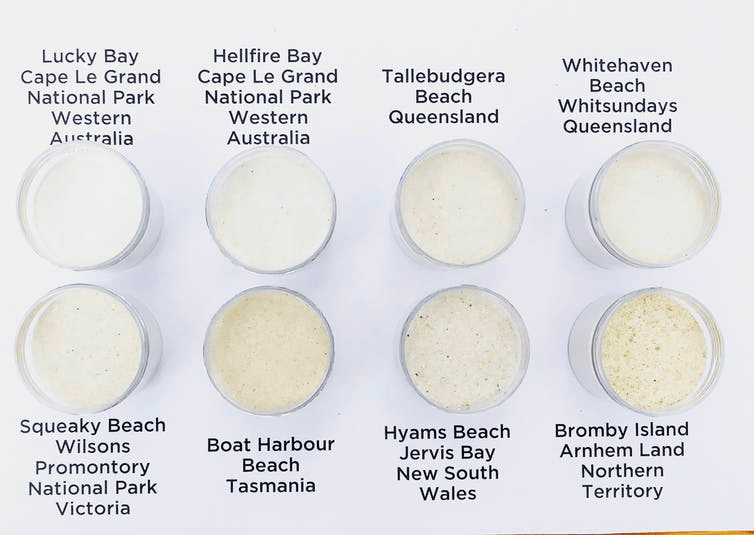
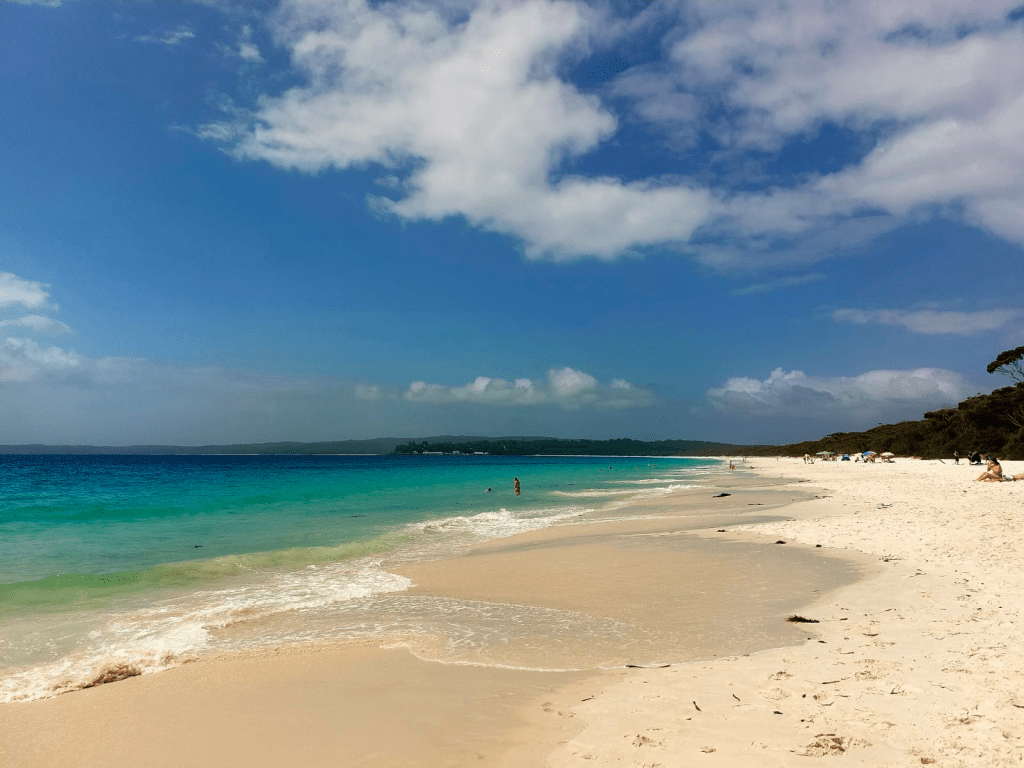
People come from all over the world to embrace Australia’s beautiful sandy beaches. Some are golden like the sun, others red like fire, and a few so white they almost look like clouds on the ground. Take Hyam’s Beach in Jervis Bay, for instance, ranked among the top 10 of the world’s 50 Best Beaches, where the sand, as fine as powder, emits a distinct squeak with every step. “In every grain of sand, there is a story of the earth,” they say.  7.5 sextillion sand grains on Earth. That is 75 followed by 17 zeros. That is a lot of grains of sand. And a lot of stories.

The whitest sand in Australia

I sent a photo of the white beach home to Canada. One of my sons asks about black-sand beaches and red-sand beaches. Funny he mentioned that, because Australia has a lot of beaches – more than any other country in the world. 11.761 to be exact. And they come in all shapes and colours. 

Newport Beach

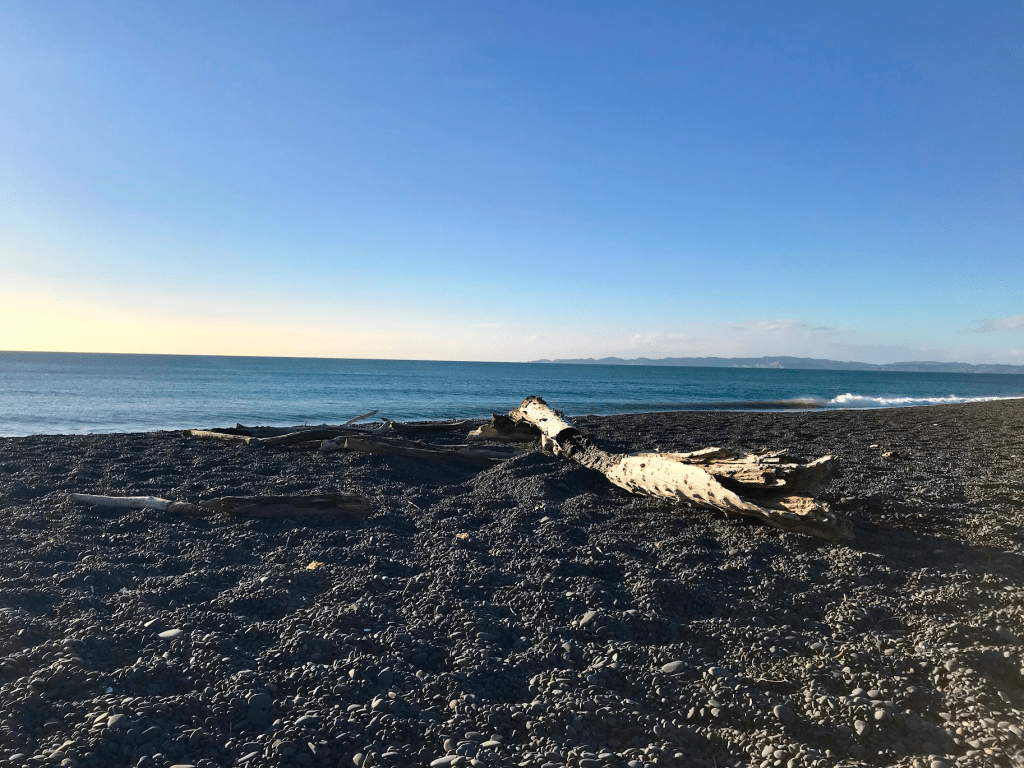
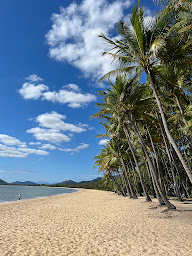
There are the golden reddish brown sands of Newport Beach, made up of quartz with a hint of iron. The tropical white beaches in Queensland consist of broken-down skeletons of coral and other marine life. The black beaches on the west coast of New Zealand’s North Island, a mix of red and black volcanic rock.

Newport Beach
Hawke’s Bay NZ
Palm Cove, QL

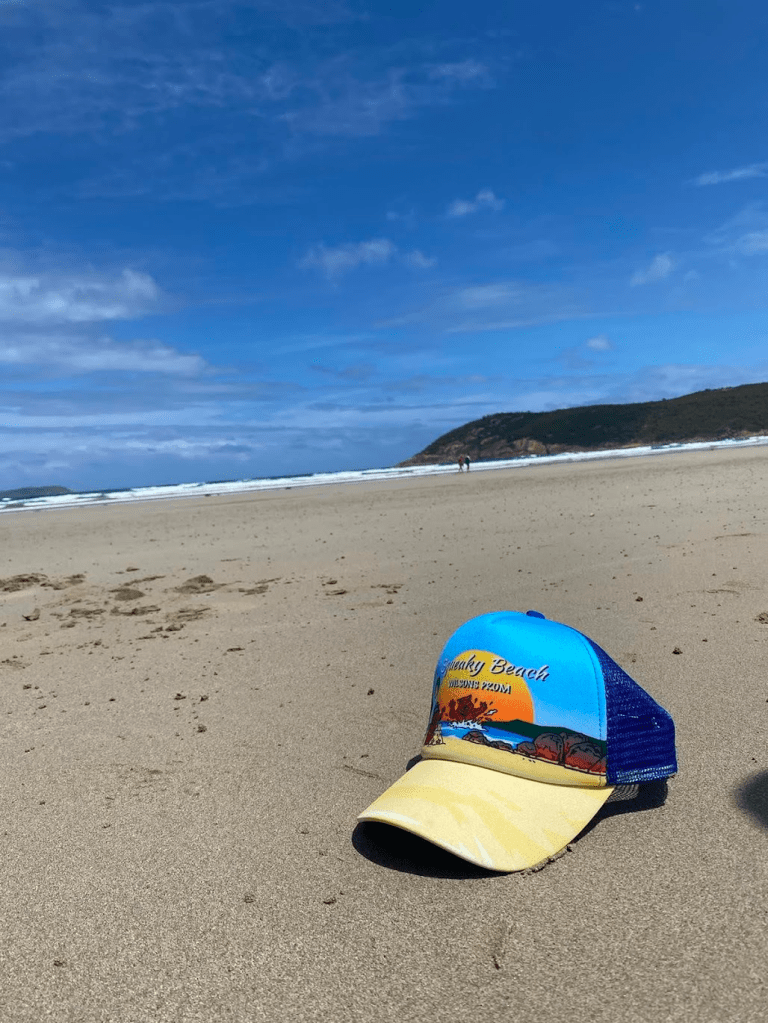
Of the multitude of beaches adorning Australia’s shores, I’ve only had the pleasure of visiting a handful. The iconic Bondi Beach, expensive and full of tourists.  Squeaky Beach at Wilson’s Promontory in Victoria, voted Australia’s best beach in 2024. The golden sands of Noosa in Queensland. The unique shape of Wineglass Bay in Tasmania. And Palm Cove Beach at the Great Barrier Reef with its tropical feel to it.

Squeaky Beach 2023

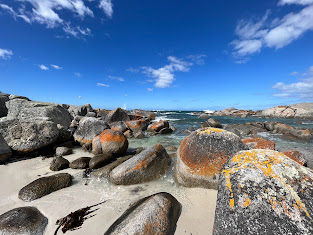
I remember taking my students to the beach for Afternoon Activities,  running along Killcare Beach at Bouddie National Park for the hardest run I had ever done; the roughness and unspoiled beach of The Edge of the World in Tasmania. If I count all the beaches I have visited during my time here in Australia, I may have seen about 30 or 40. Australia has over 10,000 beaches in total. To see them all, I would have to visit one per day for the next 32 years. Let me quit my job and get right on it. 

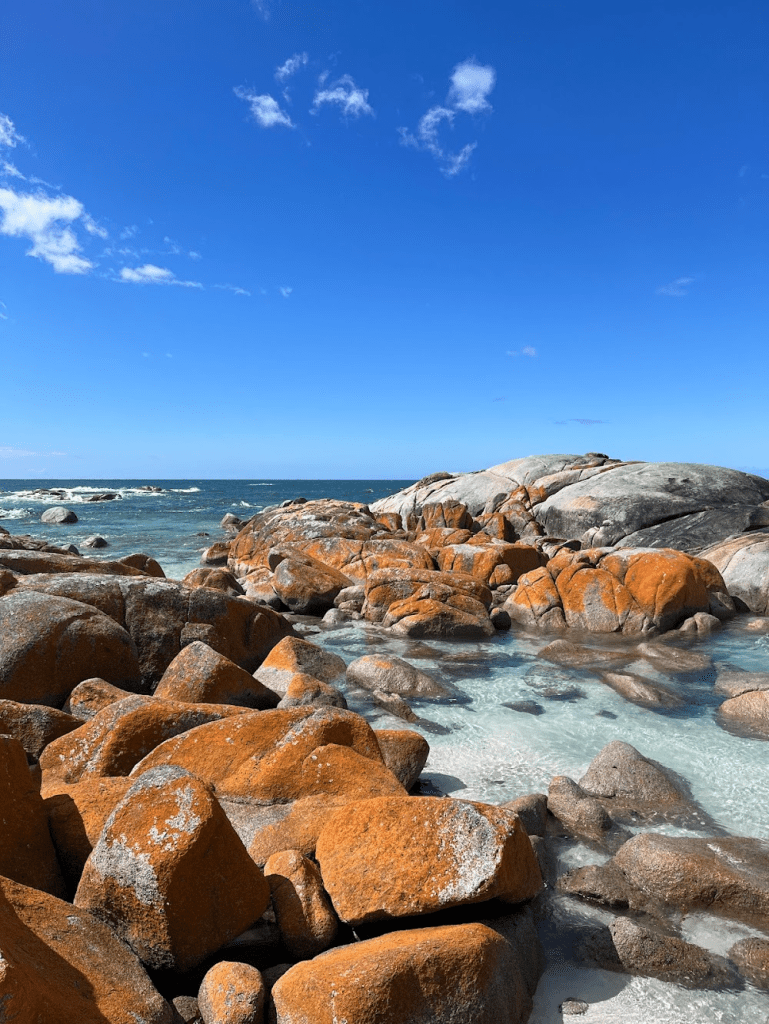
Bay of Fires TAS
Bouddie NP
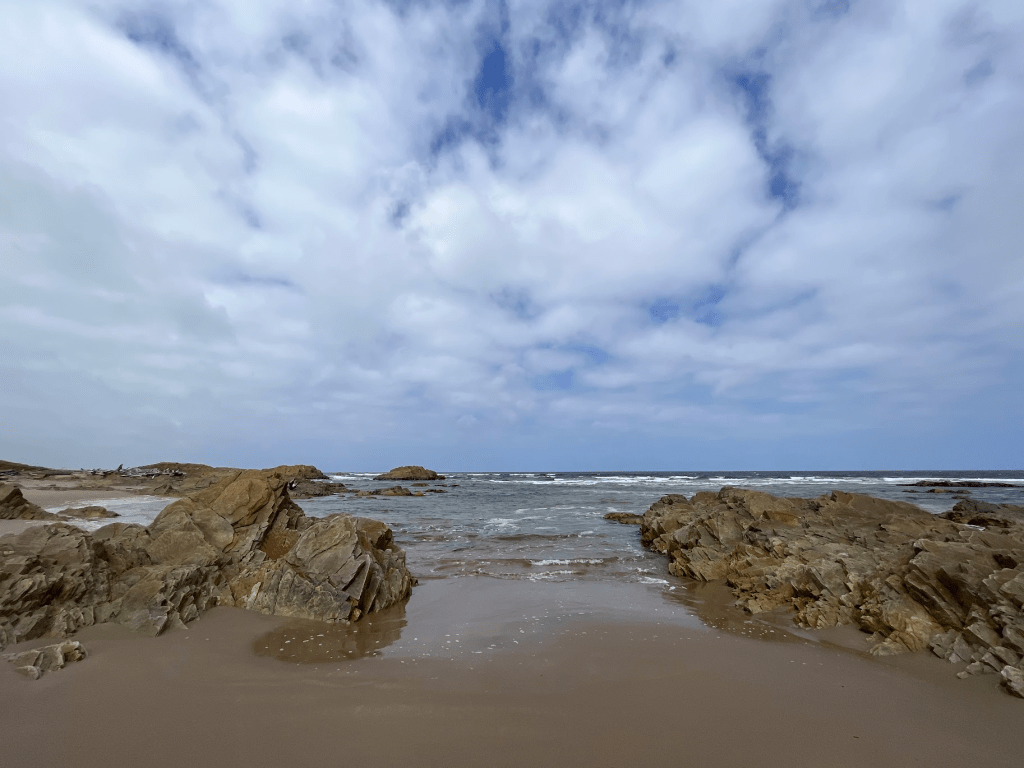
Edge of the World TAS

Over the holidays, I watched the movie “The Beach.” Remember Leonardo DiCaprio, young and full of life? He plays Richard, an American tourist searching for meaning by escaping modern technology. During his vacation in Thailand, he meets a lovely French girl and receives a treasure map from a troubled expatriate. Together, they embark on a journey to a secluded paradise on a nearby island. But soon, their ideal life is shattered as conflicts arise, and they realize paradise isn’t free from problems.

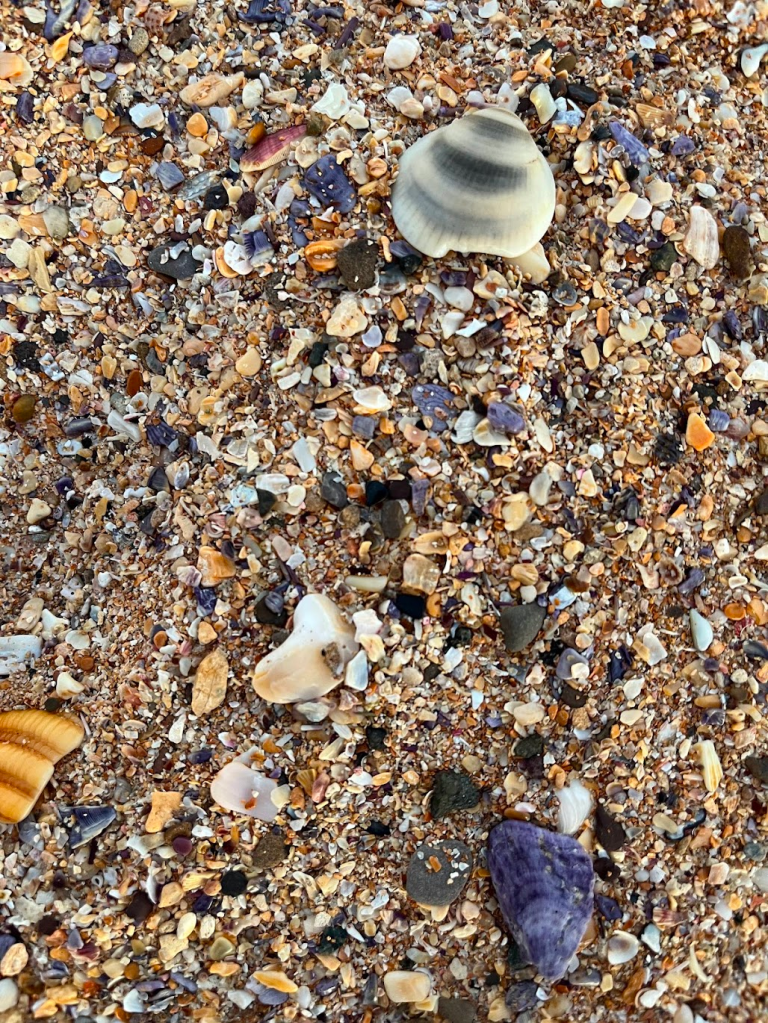
Paradise isn’t just a place; it’s a feeling of connection. Take my beloved Newport Beach, for instance. It’s made up of countless unique grains of sand, each as distinct as a snowflake. Sand forms over millions of years as rocks weather and erode, travelling thousands of miles down rivers and streams before reaching the beach. Here, each grain finds its purpose as part of a larger whole. Even the smallest contribution, like the squeaky sounds of sand on Hyam’s Beach, adds to the beach’s charm. It’s a reminder that when we all work together, amazing things can happen. And that’s why I’ll always remember the squeaky beach.

Hyam’s Beach

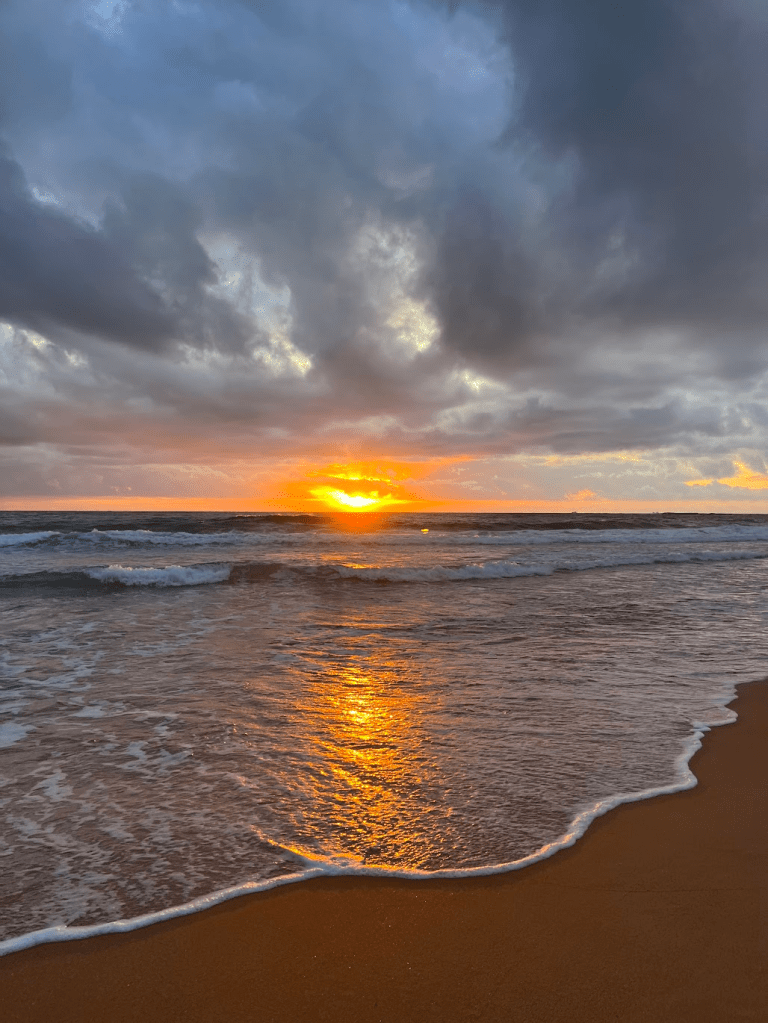
Every morning, as I leave my small white granny flat at dawn to catch the bus to school, I always make sure to stop at the beach along the way. Sometimes, I pause to admire the view, perhaps even snapping a photo. I’ve made a promise to myself: the day I stop noticing this beauty around me, it’ll be time for me to move on.

Morning routine Newport Beach

Returning to school after the holidays has been tough. There have been many changes and disappointments, and it feels like we’ve lost sight of our common goals, with everyone focusing on their own tasks. I’ve also realized that I no longer take the time to stop at the beach in the morning. Caught up in my daily routine and worries, I’ve begun to take it for granted. I’ve started defining myself and my life solely through my job as a teacher. But perhaps I should take a page from Ken’s advice in the movie Barbie:

“You know, surfer is not even my job. And it is not lifeguard. Which is a common misconception. It’s actually my job … it’s just beach.”

Beach on!

Thoughts from the Bathtub

I cast my pebble onto the shore of Eternity.
To be washed by the Ocean of time.
It has shape, form, and substance.
It is me.
One day I will be no more.
But my pebble will remain here.
On the shore of eternity.
Mute witness from the aeons.
That today I came and stood
At the edge of the world.

Edge of the World by Brian Inder
The Edge of the World – Arthur River, Tasmania

I’m in the bathtub. Which is quite unusual as I don’t do bathtubs really. Too hot, too cold, too boring. I like the idea of it, but I never last longer than a few minutes. Restless by nature, I’m out before the bubbles have disappeared.

I’m in the bathtub. Not just any bathtub! But one of the best bathtub that I’ve ever been in. A vintage claw-foot bath, red and white, the four golden claw feet strangely resembling the feet of the chicken roaming the grounds. Clean, hot and…on the verandah of our rental house in Black River, Tasmania. A soak with a view!

I’m in the bathtub. To ponder. To relax. To take in the last precious moment of my summer holidays. (It still feels strange to call it that in the month of January.)

Bathtub @ Mayura Farm, Black River, Tasmania

The Mayura Farm in Black River, Tasmania. Located in the north-west of the island, it is the second time that I am staying here in only a few months time. While I fell in love with all of this beautiful part of Australia the last time I came to do a circle tour of the island, it is this remote corner of Tasmania that appealed to me especially. Off the beaten path, away from tourists and big coach buses, the area is quiet and relaxed, even in the summer, even on the eve of a long weekend. Nothing but the wind, the cows, and my bathtub.

Cow

The cows. Huge herds of cattle wherever you look: black and brown, menacing-looking bulls and rambunctious calves. Beef cattle, dairy cows, and rustic Scottish Highland cattle with their long hair and even longer horns.

There are about 540,000 people living in Tasmania, one fifth of them here in the north-west, and 35 of them here in Black River. Compared to that, there are 800.000 cows on the entire island, about 300.000 in this part of Tasmania. That’s three cows per person here in the North West. Not to mention the 2.4 million sheep!

Good night moooooooon!

Our farm breeds Angus cattle – black, strong, and very intimidating. That I have not gone for a regular run in the evening, I excuse with the fact that these cows scare the s*** out of me. You walk past their pastures, eyes on the ground, quiet as a mouse, with only a thin electric fence between you, and I swear – they can smell your fear. One catches a glimpse of you, snorting and grunting, and starts walking towards the flimsy fence and me. Slowly but steadily, never ever taking its dark eyes off me. And then the next one follows. Ten more. Twenty. A whole stampede in slow-motion. I am sure the other 99 cows have no idea what they come running for, but they do. And so am I. Slowly backing up and getting back to my cottage and my bathtub as fast as I can.

The first record of black cattle imported into Australia was of 8 black cattle that were unloaded at the Hobart Town docks in Tasmania 200 years ago, on the 20th January 1824. After three months at sea, they brought with them meat, milk, and money making opportunities. But also a lot of problems: as cows are not native to this part of the world, there was no insect to break down the cow poo. But tons of bush flies that love to breed in it! This did not matter much when there were a few cows, or a few hundred, or even a few thousand. But there were real problems when there were over 20 million cows spread all over Australia, each pooing 10–12 times a day, and with every pat able to produce up to 3000 bush flies every two weeks. Bring in the dung beetle, to deal with the problem. What could possibly go wrong?

Former forests turned into farmland

Deforestation is an even bigger problem in Tasmania, as cows need space to graze. While I am sitting in my outdoor bathtub, overlooking the green farmland stretching all the way to the ocean shore in the distance, I try to imagine the former native Eucalyptus forest that once covered the entire island. Land clearing for livestock accounts for 75 per cent of forest lost, while native forestry logging is responsible for a further 16 per cent.

“Australia’s largest temperate rainforest is under threat! The Tarkine or takayna (as it is known to the Aboriginal people) in North West Tasmania, is one of the last strongholds for rare and endangered species. It is one million acres of wild country that harbours some of the richest Aboriginal heritage in Australia, and it needs protection.

A staggering 90% of this remarkable wilderness is under threat from logging, mining, and off-road vehicle damage. The Tasmanian government views it as a resource to be exploited, while to the people, it is a place of immense Aboriginal history and one of the last intact wilderness’s left on earth.” (https://wildark.org/journals/australias-largest-rainforest-under-threat/)

Roaring Forties on Stanley Nut

I take a sip of the wine that rest conveniently on a little bamboo tray across the tub (I don’t even want to know where that wood came from), to wash down the bitter taste in my mouth. My eyes focus on the big rock sitting in the ocean in the distance: Moo-Nut-Re-Ker in the Aboriginal language, or simply The Nut.

The shape of a giant bar of soap, the Nut is what is left of a volcano that was active 25-70 million years ago. Even the top of the Nut once had been cleared off trees to make room for grazing cows. Today, a gondola takes you up to the top of the plateau to enjoy the view of Stanley town and the white beaches reaching out into the ocean of the Bass Strait. At dusk, tiny fairy penguins waddle ashore, they say.

Godfrey’s Beach Stanley Nut

Sinking deeper into the warming bath water, I try to protect myself from the strong winds that rattle the wooden verandah my mini metal pool is sitting on: the Roaring Forties. Strong winds from the west that blow in this area most of the time. I close my eyes and in my mind I travel down the coastline: the Nut, Cape Grim – where in 1828 the Cape Grim massacre took place in which a group of Aboriginals gathering food were ambushed and shot by white workers, with the bodies of some of the victims then thrown from a 60-metre cliff.

“First arriving in Tasmania (then a peninsula of Australia) around 40,000 years ago, the ancestors of the Aboriginal Tasmanians (Tasmanian: Palawa or Pakana) were cut off from the Australian mainland by rising sea levels c. 6000 BC. They were entirely isolated from the rest of the human race for 8,000 years until European contact.

Before British colonization of Tasmania in 1803, there were an estimated 3,000–15,000 Palawa. The Palawa population suffered a drastic drop in numbers within three decades, so that by 1835 only some 400 full-blooded Tasmanian Aboriginal people survived, most of this remnant being incarcerated in camps where all but 47 died within the following 12 years. 

For much of the 20th century, the Tasmanian Aboriginal people were widely, and erroneously, thought of as being an extinct cultural and ethnic group. Contemporary figures for the number of people of Tasmanian Aboriginal descent vary according to the criteria used to determine this identity, ranging from 6,000 to over 23,00.(https://www.ourtasmania.com.au/northwest/history-aboriginal-tas.html

Tomorrow’s Australia Day is a holiday and marks the first landing of British ships on Australia’s shores over 200 years ago. A day of mourning and survival for many Australians.

The Stanley Nut

Further down the coastline, the nearly westernmost point of Tasmania, known as the Edge of the World. This rugged shoreline, battered by the gales of the Roaring Forties, is strewn with driftwood, logs, and uprooted tree trunks, each carrying its own unique story. Giant rocks and boulders, shaped by wind and water over millions of years, hold secrets locked within their formations. As I look directly west, my line of sight extended far beyond the horizon. This spot marks the furthest-reaching stretch of ocean on the globe, where, if our sight had no physical limits, we could eventually spot landfall on the eastern coast of Argentina, completing a journey around the globe! The vast expanse of sea before us made me feel as tiny as the pebbles scattered across the beach. The wind of the roaring forties tugged at my hair, blowing in all directions, and carrying away the worries of the past, present, and future.

The Edge of the World (Argentina in the distance)

With the wind threatening to whisk my underwear off the verandah, and into the cows’ grazing fields, I hastily exit the bathwater to prevent it from becoming part of the animals’ dinner.

There’s so much more I want to share – my Fun Fact Forties. Did you know that billions of years ago, Tasmania was connected to North America? That this tiny island produces more renewable energy than it consumes? That there is a Sisters Beach but not one for brothers? That Tasmania is referred to as lutruwita, by the Aboriginal people, meaning Great Island. That Tasmania is the same size as Ireland or Switzerland, and a week or two is not enough time to explore it all.

Well, I guess I have to come back soon, to write some more about Tasmania. And to take another bath with the cows. Cheers!
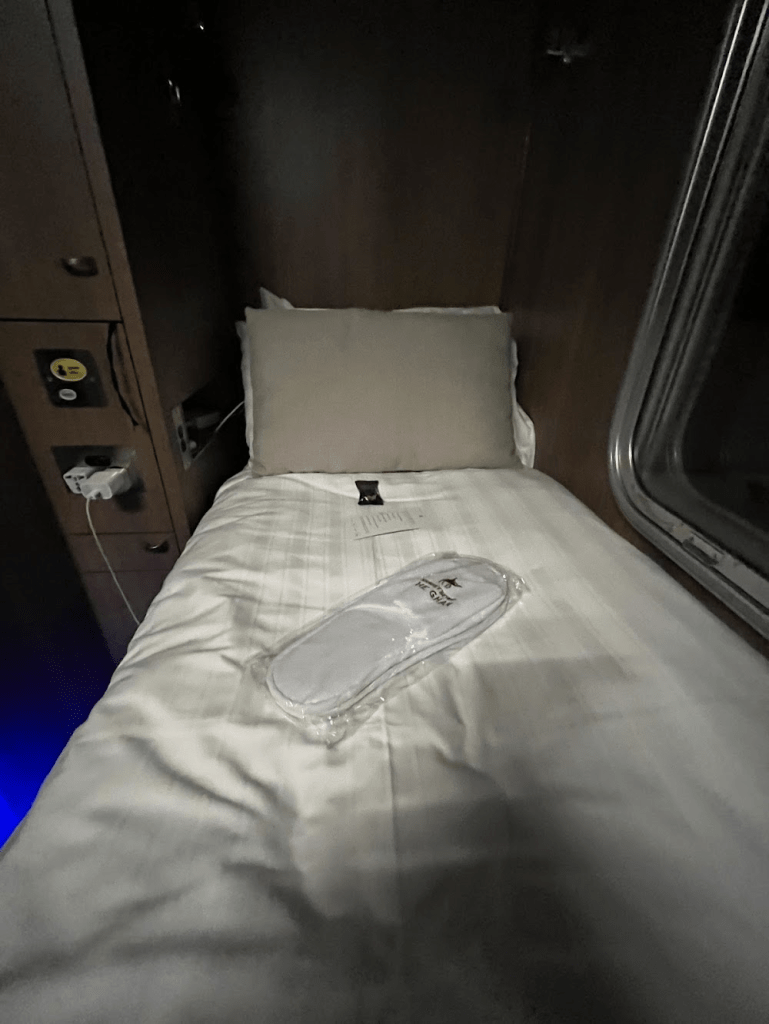
Water, wine, and a view