Two Stars and a Wish

Sail on, silver girl
Sail on by
Your time has come to shine
All your dreams are on their way
See how they shine
Oh if you need a friend
I’m sailing right behind

Like a bridge over troubled water
I will ease your mind
Like a bridge over troubled water
I will ease your mind

Simon and Garfunkel. Bridge Over Troubled Water

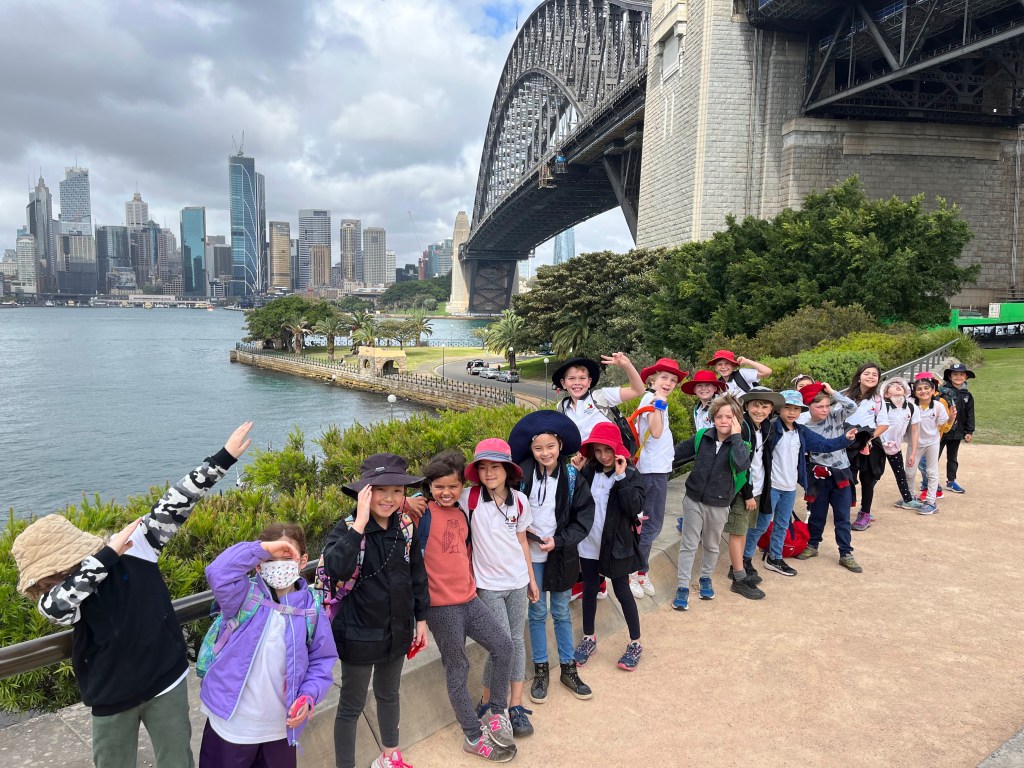
It’s a Wednesday afternoon. School is almost over. My class is sitting in a circle on the classroom carpet. Tired faces. All of us exhausted and ready to go home. We have just returned from an all-day excursion to the Sydney Harbour Bridge. A whole day of outdoor fun and sun, wind, and walking. Lots and lots of walking. Five km that felt like fifty at least. Against the wind.

Sydney Harbour Bridge, Milson’s Point

To end the day on a good note, we do a round of “Two stars and a wish” – What did you like about this day? What we could have been better. And finally, something for that you were grateful.

“I had fun playing in the park!”, “I liked walking across the bridge!”, “I liked the gummy worms in my lunch bag!” Sometimes we find happiness in the most simple things. Some children pass as they cannot think of anything positive to say. Maybe they are just too tired. Perhaps they really can’t. We are working on that.

“What did you wish for?” I ask, and plenty of fingers shoot up: That we didn’t have to walk so far (2 km over the bridge and 2 km back), that we didn’t have to walk at all. That others weren’t so mean. That they were more gummies in the lunch bag. Wishing for things seems to be much easier for some students.

And finally, the tough one: What are you grateful for? Many students simply pass, as they can’t think of anything they thought was cool. Exciting. Awesome. It’s kind of sad. “I am grateful for rolling down the hill.” “Thank you for my friends!” and, of course, “Thank you for gummy worms!”

Two-stars-and-a-wish is something we practice quite often in class. For giving feedback, self-assessment, and focusing more on the positive in general. It’s a work in progress.

So how about my own two stars and a wish? It’s been a bit of a rough week with parent interviews, being sick in bed with tonsillitis and laryngitis, tired and sore, and a bit lonely. Not really being able to swallow, I had to survive on applesauce and hot tea. I’m not complaining… well, maybe a little. Just like my students, it’s easier to get hung up on the bad stuff. The wishes, the things we would have liked to be different.

Yet, in between painkillers and throat lozenges, there were so many little and big stars that were shining quietly, waiting for me to be discovered.

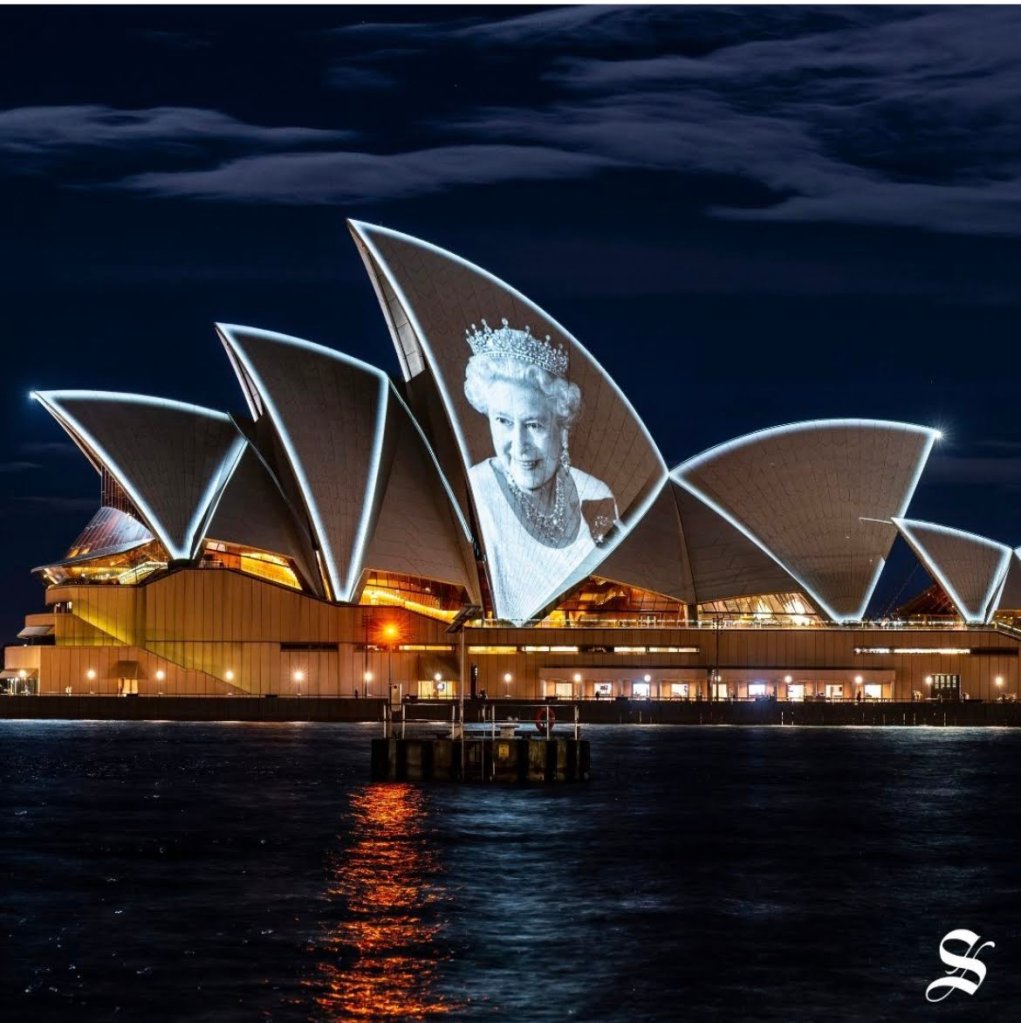
The friend that came by announced to drop off another load of applesauce. The cozy apartment I am staying in, thanks to the generosity of my boss. My team teacher, who picked up the slack and covered for me at the parent interviews. The memories of Book Week fun at school and the prospect of Spring Break starting soon. The public holiday that got announced to mourn the Queen (albeit three days after her funeral – but I’m not complaining!). Friends near and far checking in on me. All the little stars I am grateful for.

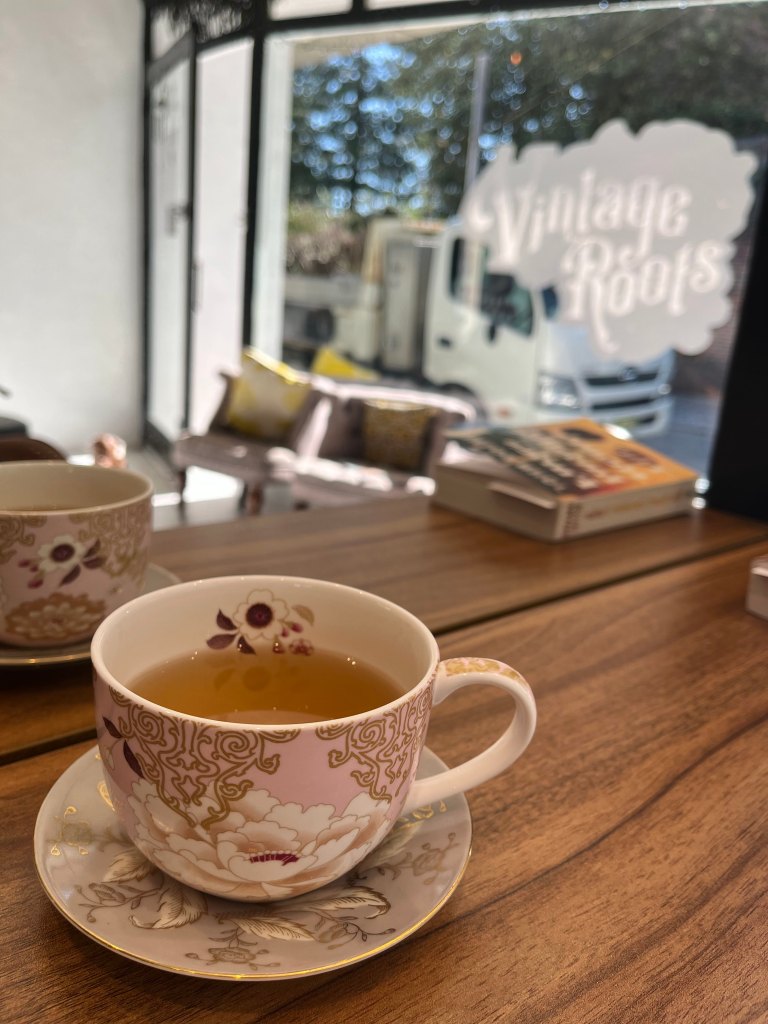
A cup of tea in memory of the Queen

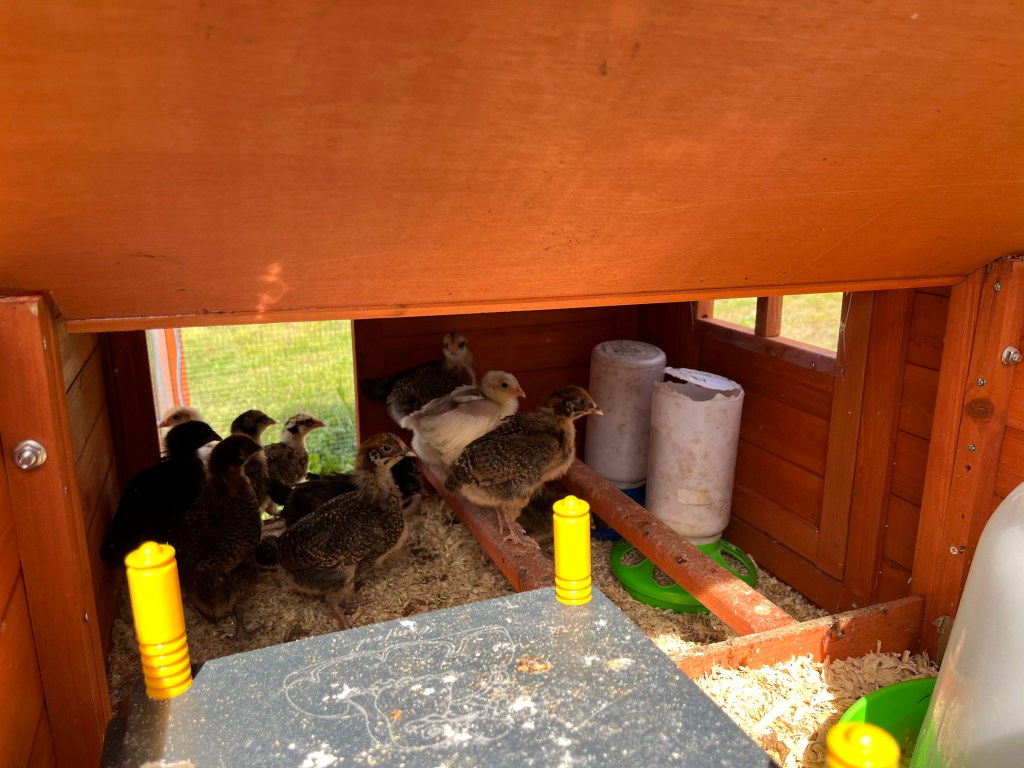
And then there were the big stars – the giants and supergiants. Sparkling and shining brightly, once I felt a bit better and was able to leave my bed again. We went on a trip to a former colleague’s farm two hours from here – a mini girl’s road trip with a bottle of coke from the gas station, two dogs in the trunk, and a rooster in his cage on the back bench. The bird had been banned from school for crowing too much and so we were taking it back to its birthplace. The poor thing looked like it was being shipped off to boarding school. And sure enough, once we dropped him off in the chicken coop with various hens and rooster strutting around, he got attacked by the “big chicks” on the block that started picking at his precious head feathers – chicken coop bullying at its finest. We left the poor bird standing at the mesh wire fence with a look on his face saying: “Wait! Don’t leave me here! I promise I will never ever crow again.” A wish made too late – no more room for improvement in the poor roster’s case.

New Chicks on the Block. Cessnock, NSW
Hunter Region, NSW

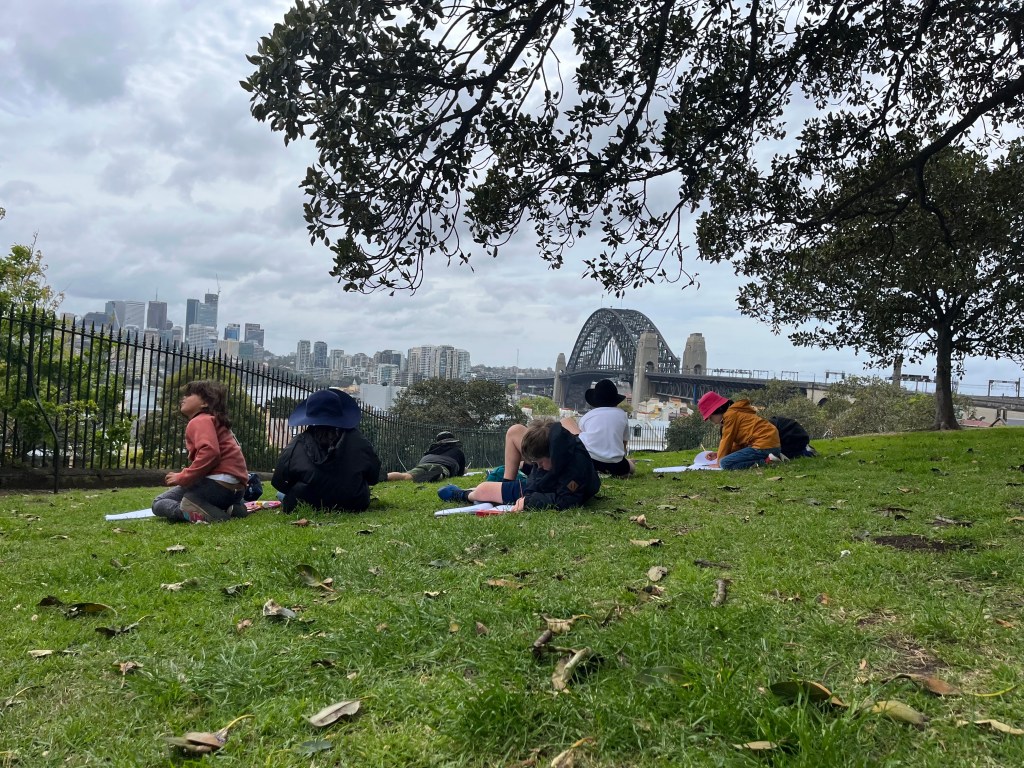
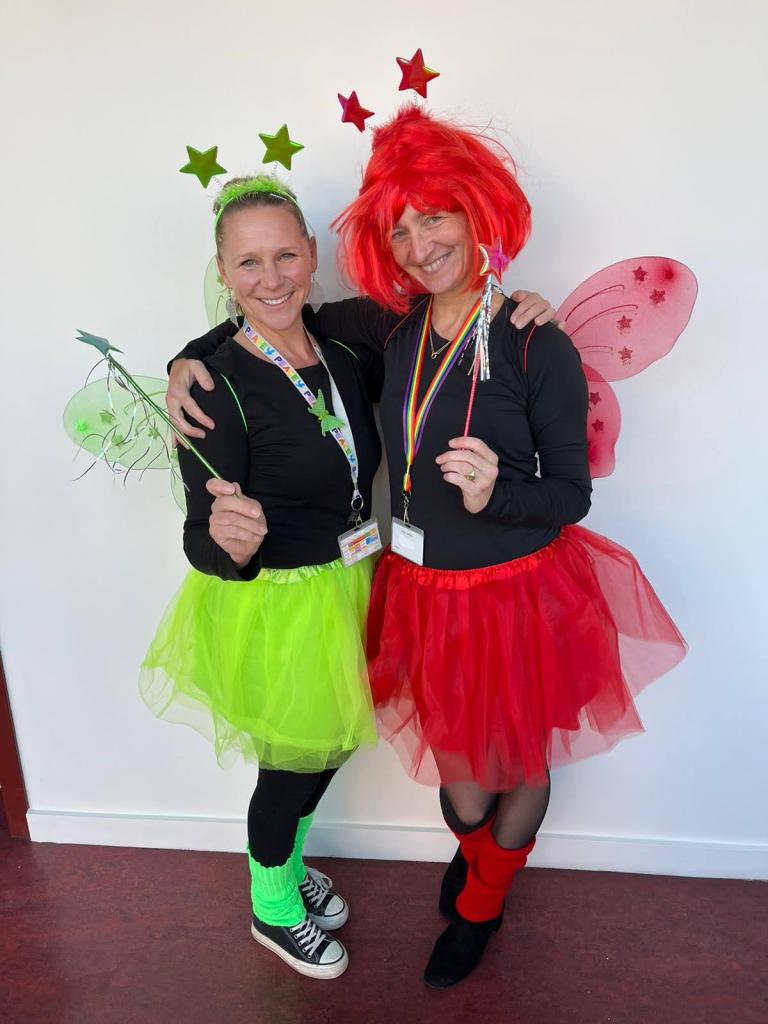
Dressing up for Book Week, joining a new neighbourhood book club, and of course, our class trip to Sydney Harbour Bridge. A perfect day of being outside with the kids all day, exploring the city, and experiencing what we had learned about bridges in class in real life. My favourite moment – watching my students sit quietly on the grass of Observatory Hill Park, a scrapbook in their labs and a pencil in their small sticky hands, trying to draw this iconic structure. Even after all these years, teaching sometimes still gives me butterflies.

Observatory Hill Park, Sydney

However, my biggest stars – my hypergiants- the thing I am most grateful for are the people around me: my friends.

“When you’re in middle age, which I am, you start to realize how much you need your friends. They are the flora and fauna in life that hasn’t had much diversity because you have been so busy – so relentlessly, stupidly busy – with middle-age things: kids, house, spouse, and everyday life. The more hours you’ve put into this chaotic business of living, the more you crave a quieter, more nurturing third thing. Friendships are the rare kind of relationships that remain forever available to us as we age.”

Jennifer Senior. It’s the friends that break your heart.
Two stars. Book Week

Moving back to Australia may have cost me a few friendships. Other friendships are just not the same anymore. But while I was lying in bed, quietly drooling onto my boss’s pillow, I realized that my friends are my two stars and my wish: I like my friends. I wish they were always around. And I am grateful for each one of them. Near and far.

Cheers!

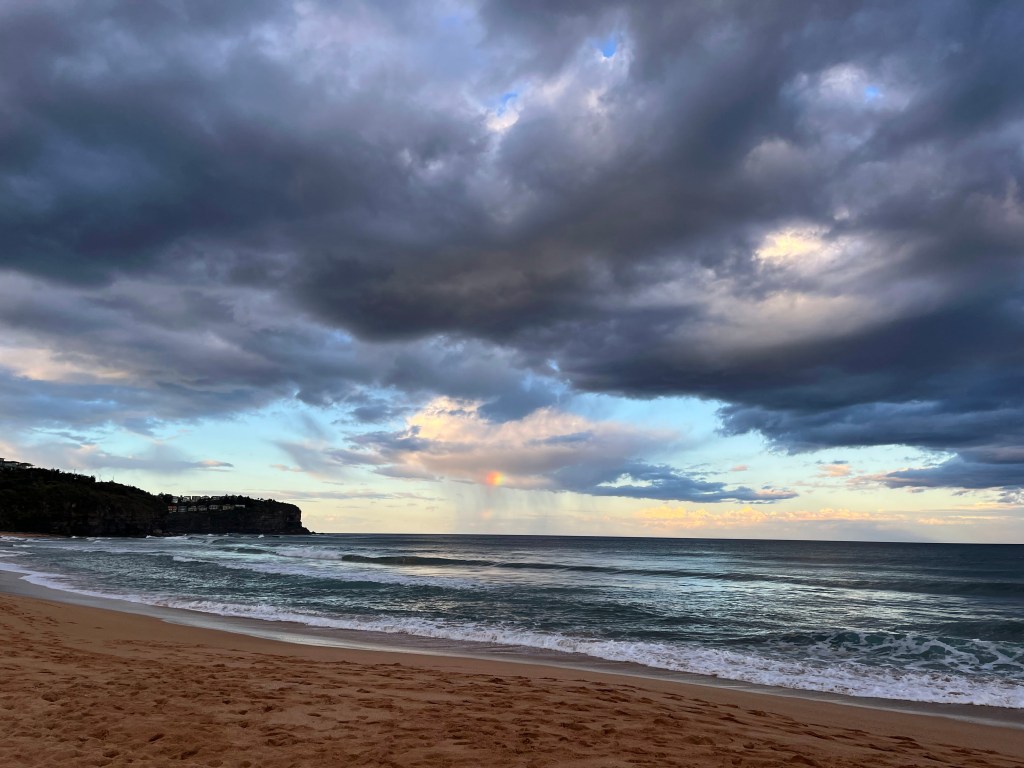
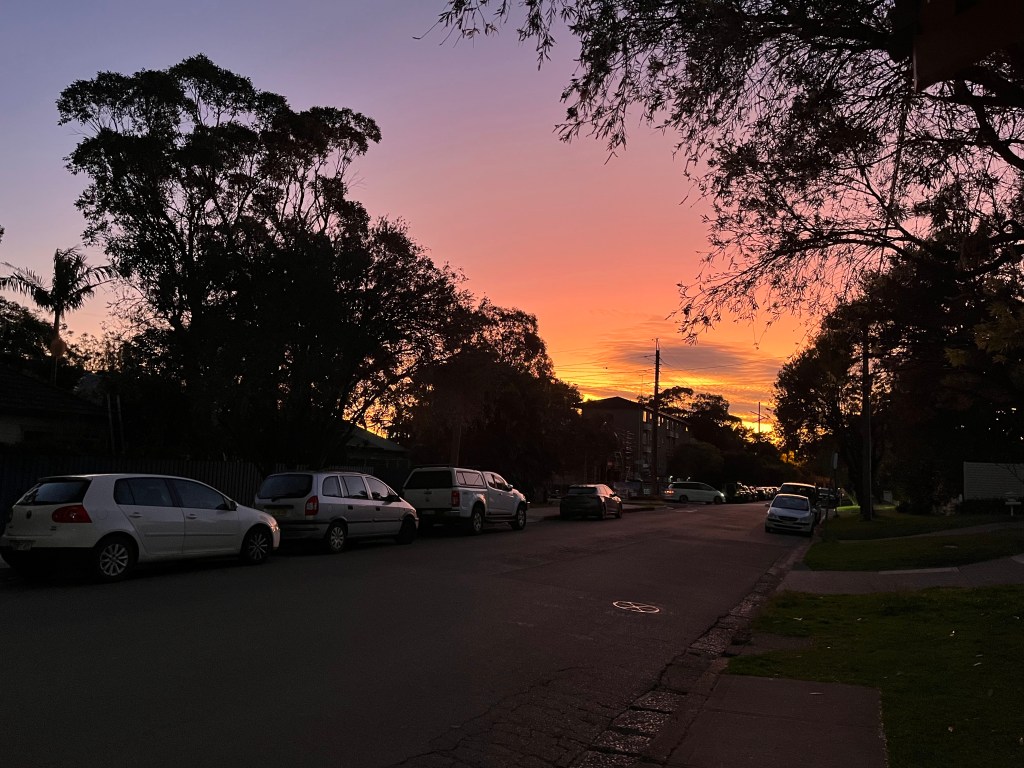
A rainbow star in the evening sky. Newport Beach.

The Unfamiliar Familiar

It’s not the same as before
It’s not the same anymore
And it’s fine because

I’ve learned so much from before
Now I’m not sure on advice
There’s no excuses at all
No point in feeling upset

Won’t take my place on my floor
I’ll stand up straight like I’m tall
It’s up to me, no one else
I’m doing this for myself

It’s not the same anymore
It’s better
It got better
It’s not the same anymore
It’s better
Yeah, yeah

Orange Rex County

“Everything has changed, but nothing has changed.” (Mark Hamill)

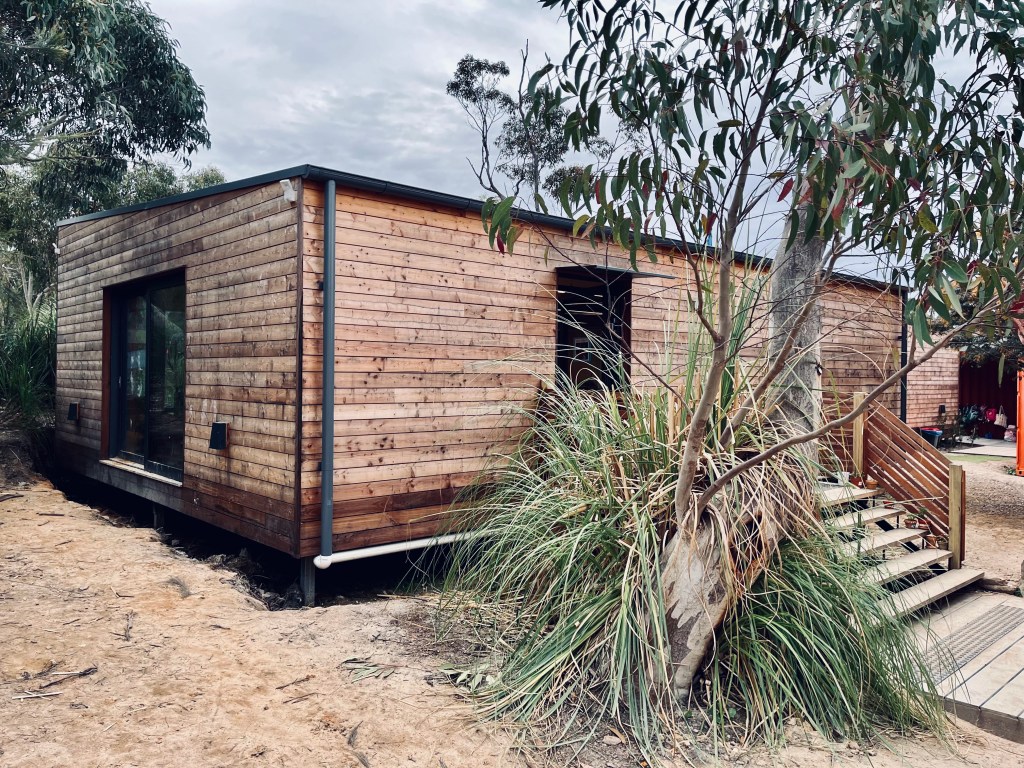
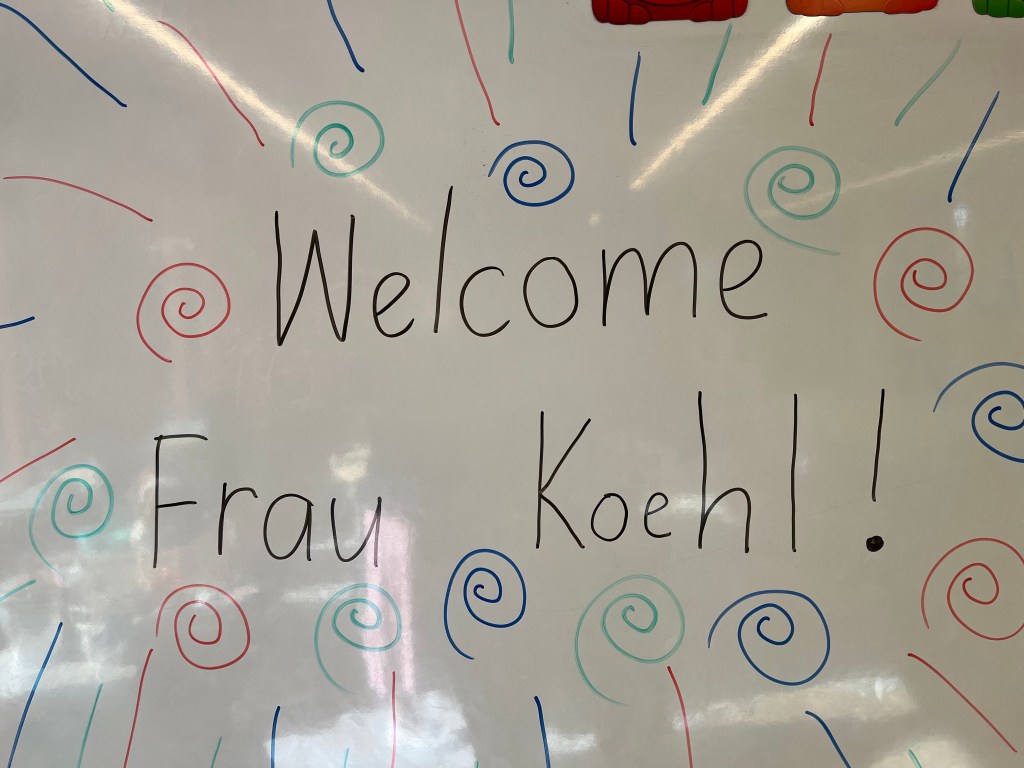
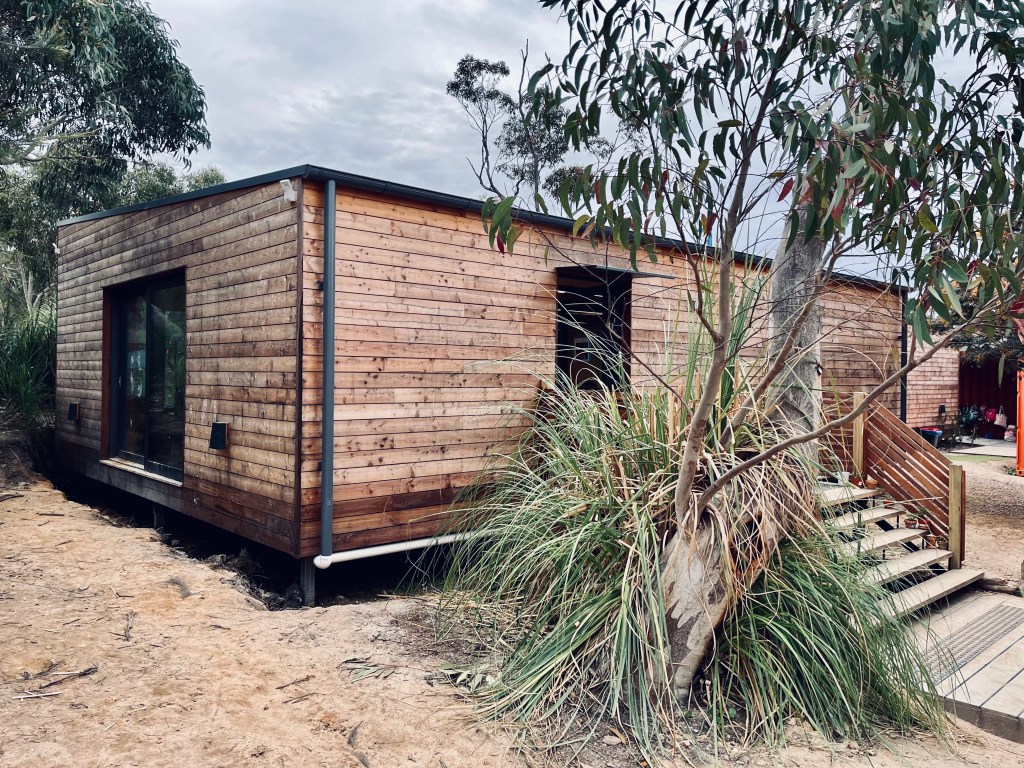
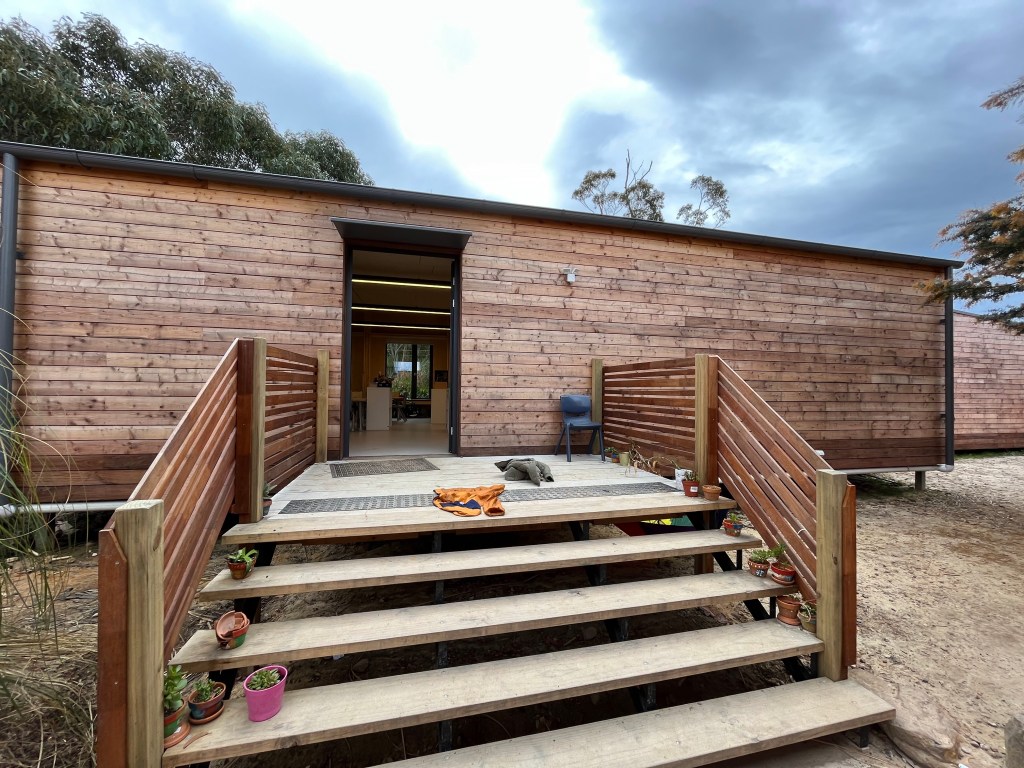
Grade 1 is now Year 2. I teach in German instead of French. My classroom isn’t a shipping container anymore but a wood-cladded portable. The bush next to the school has turned into a gigantic construction site for a state-of-the-art hospital. I live in my boss’s apartment instead of my little blue house. Drink cappuccino instead of a weird long black. And the Queen is now a man.

My classroom
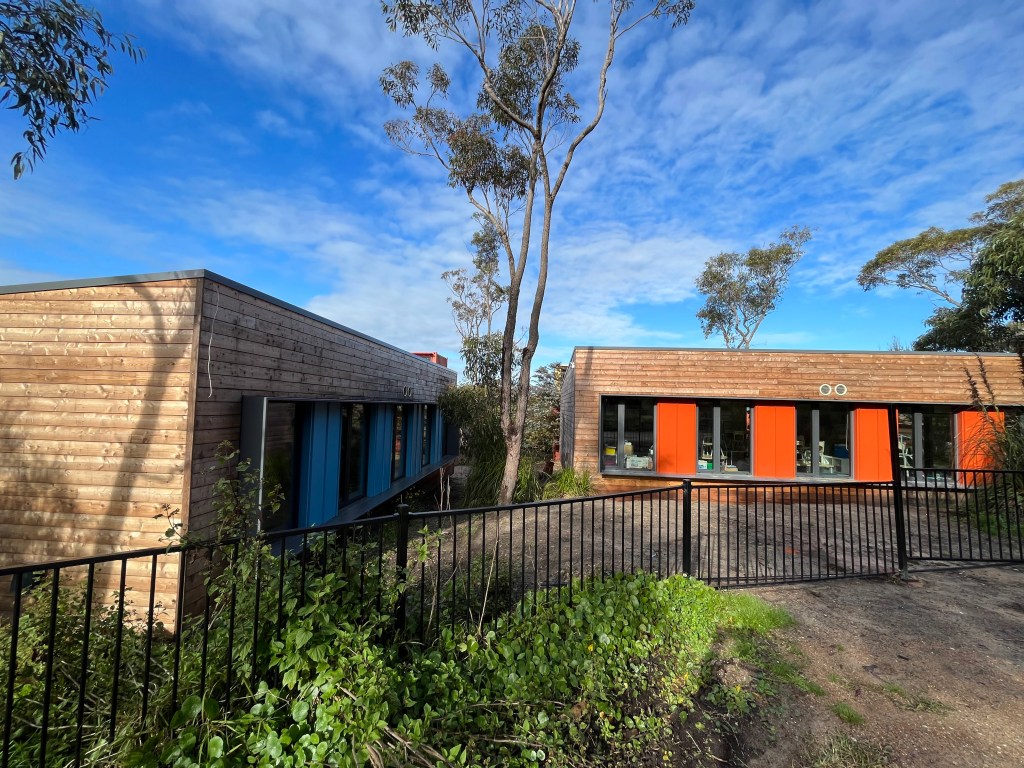
The Primary Village (GISS)

Everything has changed, but nothing has changed.

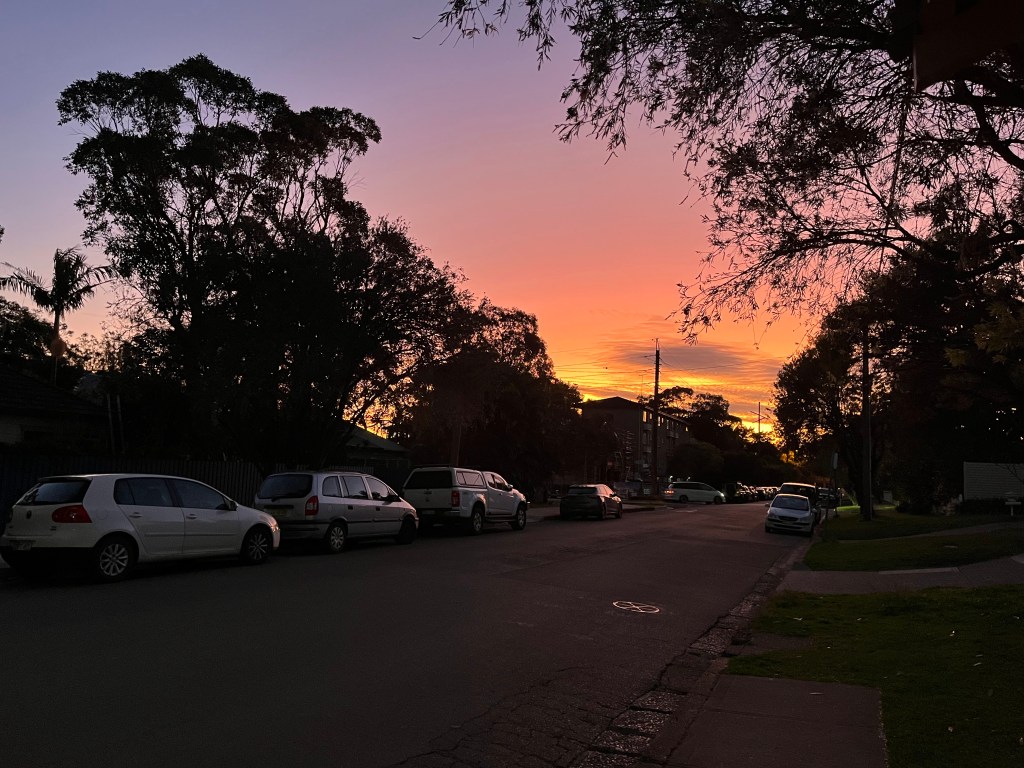
It’s been almost a month since I returned to the Northern Beaches of Sydney, and the strangest thing is that it’s not strange at all. I take the same bus to work, greet the same people (now hidden behind mandatory face masks), and make my way to school, where I am still always the first to arrive. Turn on the light in the staff room and the heat (yup, still chilly in the mornings) and start my day. Get my coffee at the same café across the street, shop at the same shops, buy my bread at the same bakery, and watch the same sun rise in the morning and set at night.

New old Saturday morning routine
Waiting for the bus in the morning (Newport)

It feels the same, and it doesn’t.

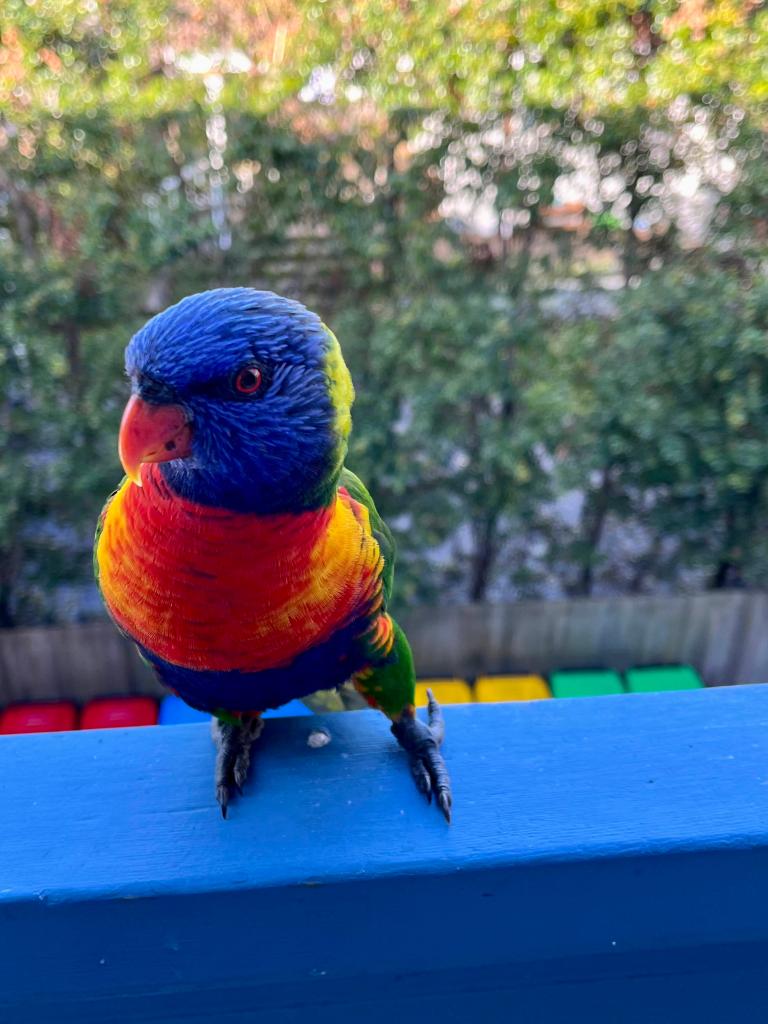
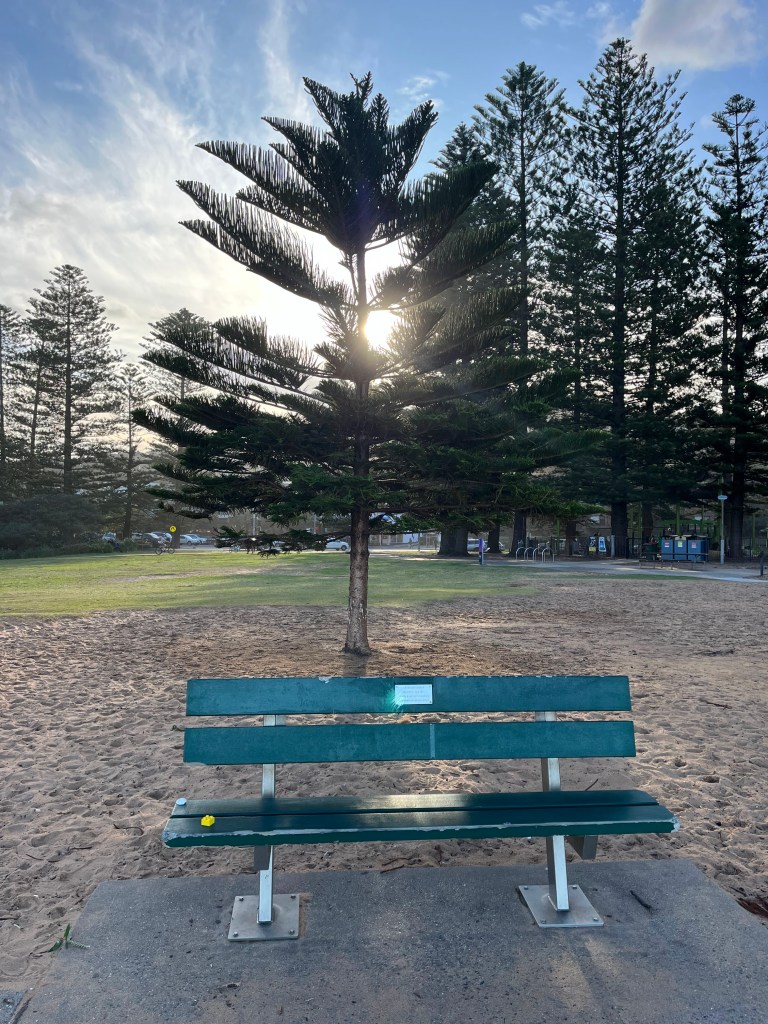
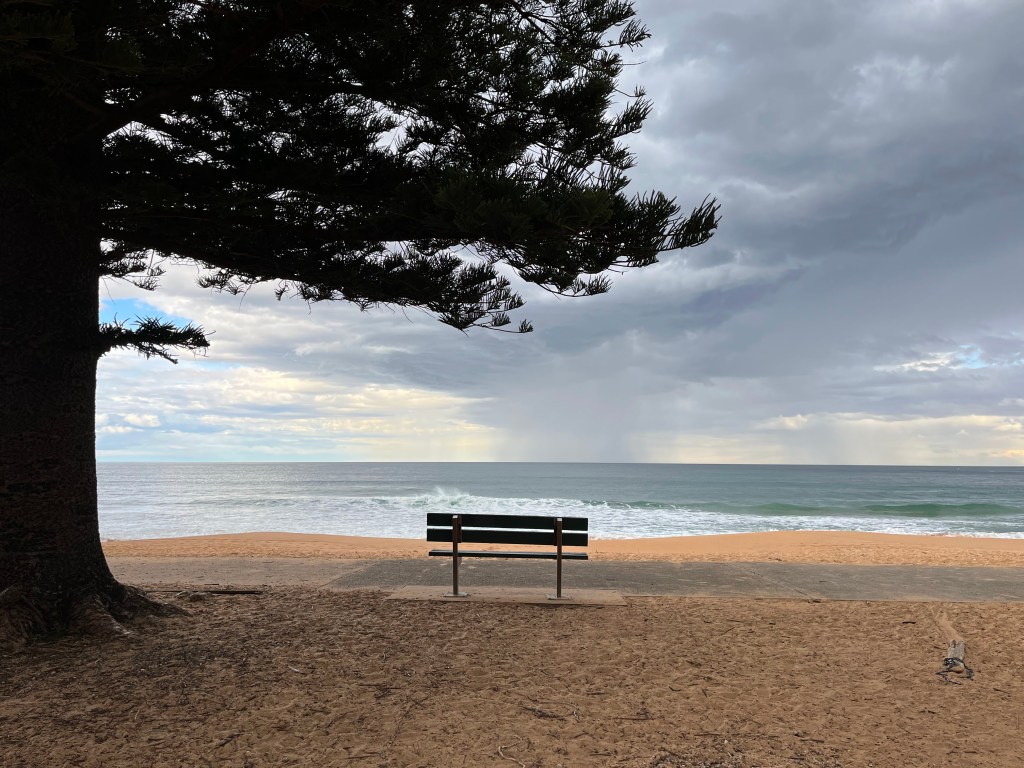
There are new colleagues at school. New people I meet. New friends and old friends. My favourite Italian restaurant is now a falafel shop, and my local coffee place moved to the other end of town. In the morning, it’s the lorikeets that wake me with their ruckus instead of the kookaburra. The only thing that is still the same is my green wooden bench.

My own private lori
My green wooden bench (Newport Beach)

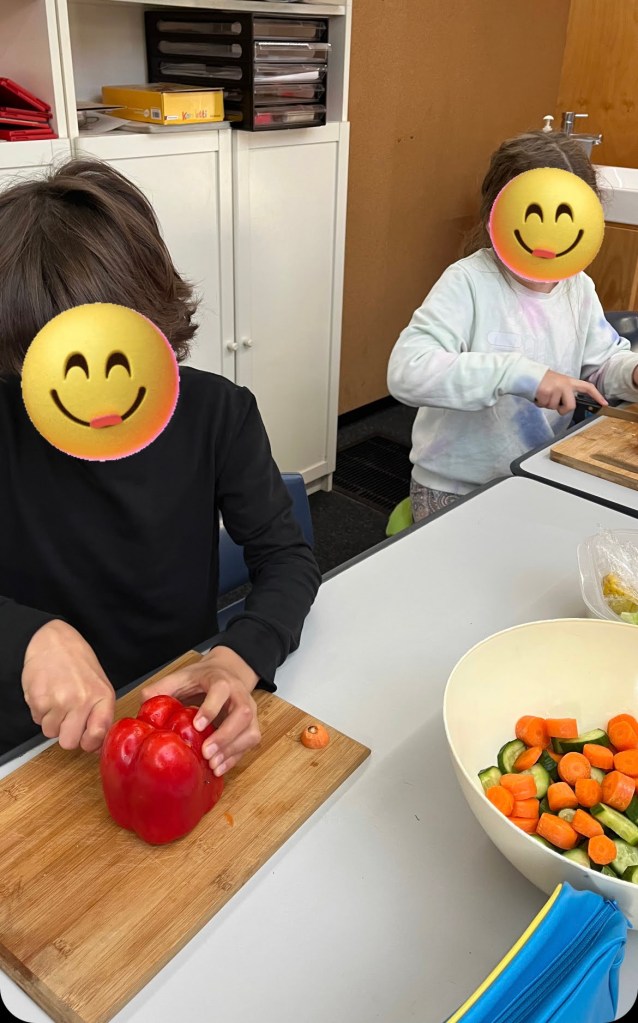
The unfamiliar familiar. In teaching, we often try to make the unfamiliar familiar. Using familiar objects to explain new and unfamiliar concepts is the key to constructivist teaching. We explain volcanos by building a volcano model, the time of dinosaurs by displaying dinosaur toys. However, many concepts cannot be made familiar by passing around plastic toys.

Unfamiliar ingredients in a familiar salad

I was trying to teach the Creation Story to my Grade 2 Religion class this week (On Day 1, God created…, on Day 2,…) when one of my students – clearly distraught and confused – kept interrupting me by shouting: “But what about the dinosaurs? But what about the dinosaurs?” The concept of God creating ALL animals on the same day was not something that made sense to him. And it doesn’t. Trying desperately to teach an eight-year-old the difference between Creationism and Evolution, my attempt to make the unfamiliar familiar failed miserably.

Aboriginal Wall painting (Red Hans Cave, West Head)
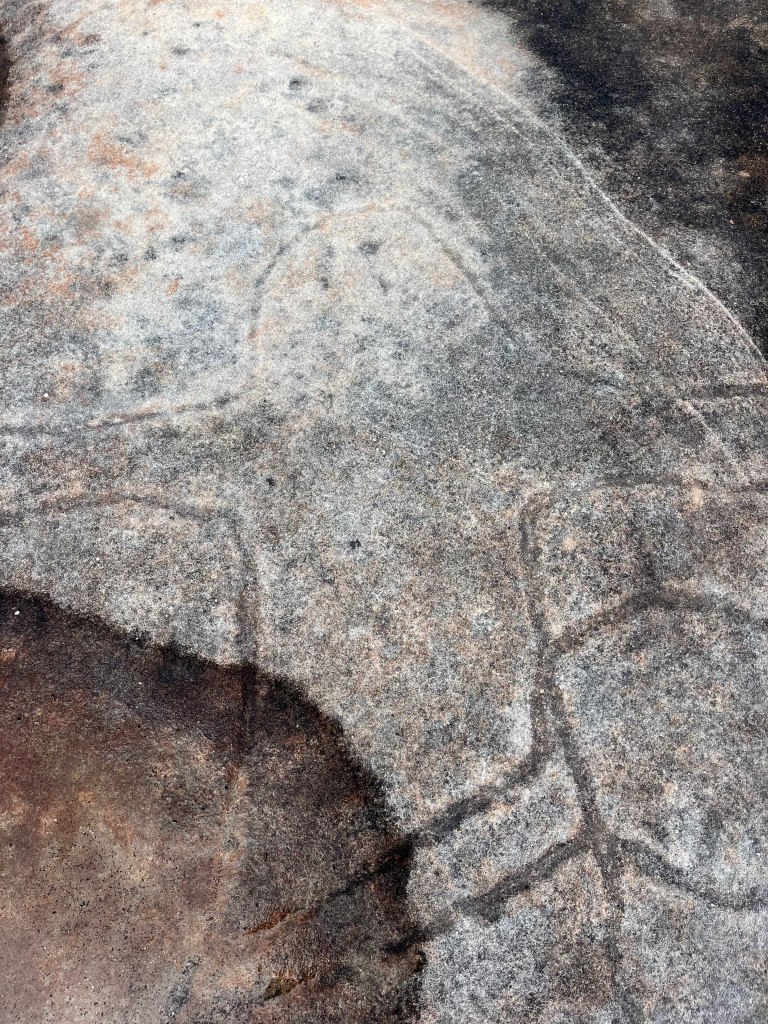
Aboriginal Engravings (West Head)

Or maybe it didn’t. Meaningful learning, so they say, takes place when the learner (my bewildered Year 2 student) tries to make sense of what he or she is being taught by using all the resources they already have available, what is already familiar to them. Only in this case, knowing that dinosaurs lived way before most of the other animals, didn’t make sense to this boy at all. Teaching and learning abstract ideas isn’t always straightforward, I guess.

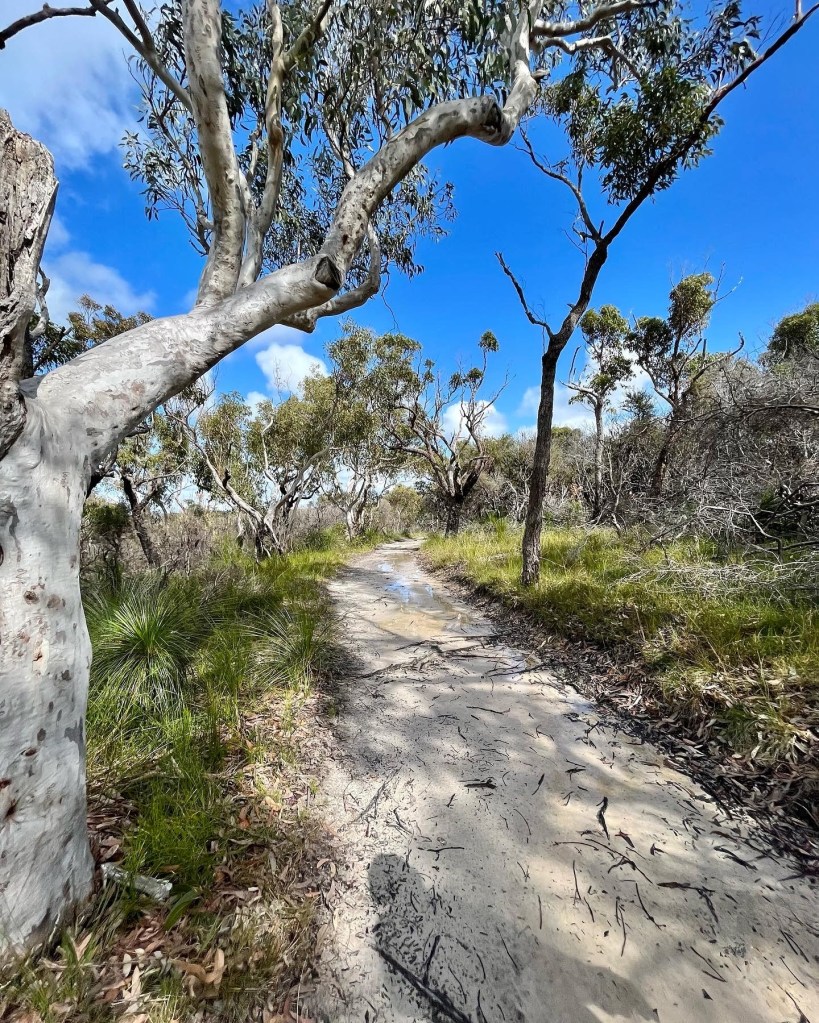
A windy path through the past and the present (West Head Trail)

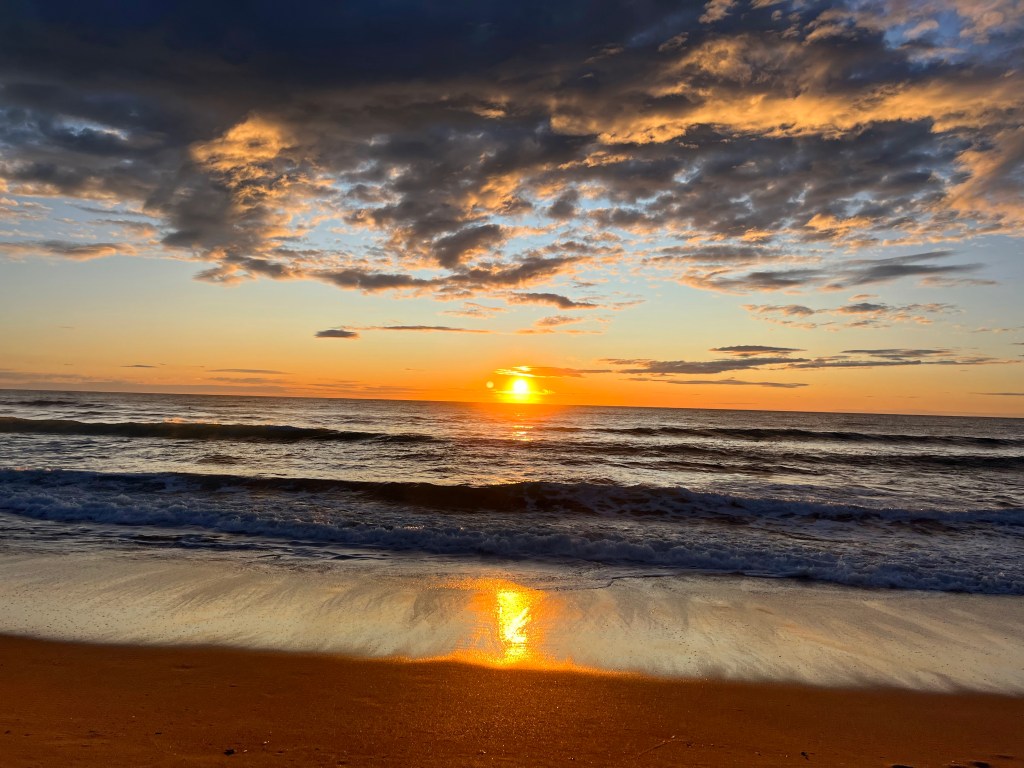
I finally made it to the sunrise at the beach: no rain, no work, but a familiar display of Nature’s beauty. And while I was sitting on the golden sand, still slightly wet from this week’s heavy downpours, watching the waves roll incessantly towards the shore, I realized that things are different and the same. Familiar and unfamiliar at the same time.

Sunrise at Newport Beach

It’s not the same anymore. It gets better.

Cheers!

It’s Friday Night!!!


Teacher

And teacher

There are things

That I still have to learn

But the one thing I have is my pride

Oh, so I don’t want to learn

How to hold you, touch you

Think that you’re mine

Because there ain’t no joy

For an uptown boy

Who just isn’t willing to try

I’m so cold

Inside

Maybe just one more try.

One more try. George Michael

“Good morning, teacher!”

Picking up my morning coffee at the café across from my school, is how I am greeted daily. No name, no Miss (and thank goodness no Ma’am), just Teacher! Sometimes I get a compliment: Looking good, teacher! You look cool today, Teacher! But usually, I just get a large cappuccino (no more weird long blacks for me. Had to switch it up a bit).

Teacher. A good teacher. A cool teacher. My friend’s daughter calls me “a cool old teacher”. Talking about a backhanded compliment. Or an upside-down one, more like it (sorry, but I had to).

It’s another cold and rainy day here in Sydney. This city is determined to break the record of the wettest year on record. This morning, I was chatting with a coffee shop owner who talked about the past two years in his business. First came the pandemic, and then came “the rain”. While he was closing up his shop due to another day of wet, cold weather, he was telling me that his business wasn’t going so well. He’d seen Fire and Rain, and a global pandemic in between.

I don’t mind the rain. It gives me time to think. To organize my thoughts. To ask questions and try to figure out an answer. And maybe write about it. A German author that I follow put it well in his newsletter this week:

My writing always begins with questions that I feel I really don’t want to ask myself, and more importantly, that we as a society don’t want to ask ourselves. It’s in the nature of these questions that I don’t know beforehand what answers I’ll come across, if I’ll come across any answers at all. I just know that there is something I would like to say or tell. That I have something to tell. If that feeling isn’t there, I don’t write either.

Daniel Schreiber (translated)

And so I have been asking myself: What is a good teacher? What makes a good school? And what am I doing here?

And to answer my own questions right away – I don’t know. But I’d like to find out. And this week, I had plenty of opportunities to discover different kinds of learning and teaching thanks to the girl that calls me ‘the old cool teacher’!

I left a good teaching job back in Canada. Had a nice Grade 1 gig. Had my routine established and great resources collected over the years. Had a great boss, wonderful colleagues. The school was close to home. I had safety and stability. So why did I leave – again?

The short answer would be…because I am curious. I want to learn. I want to see how things are done in other schools. In other places. In other countries.

The German International School in Sydney is one of over 140 German Schools abroad. I teach the Grade 2 class in German. Well, in theory, I do. In reality, I teach a mix of German and English. Sometimes a French word slips out. The kids don’t seem to mind. My class has 23 students in my class and I teach German, Math, Science, Art, Religion, and Ethics.

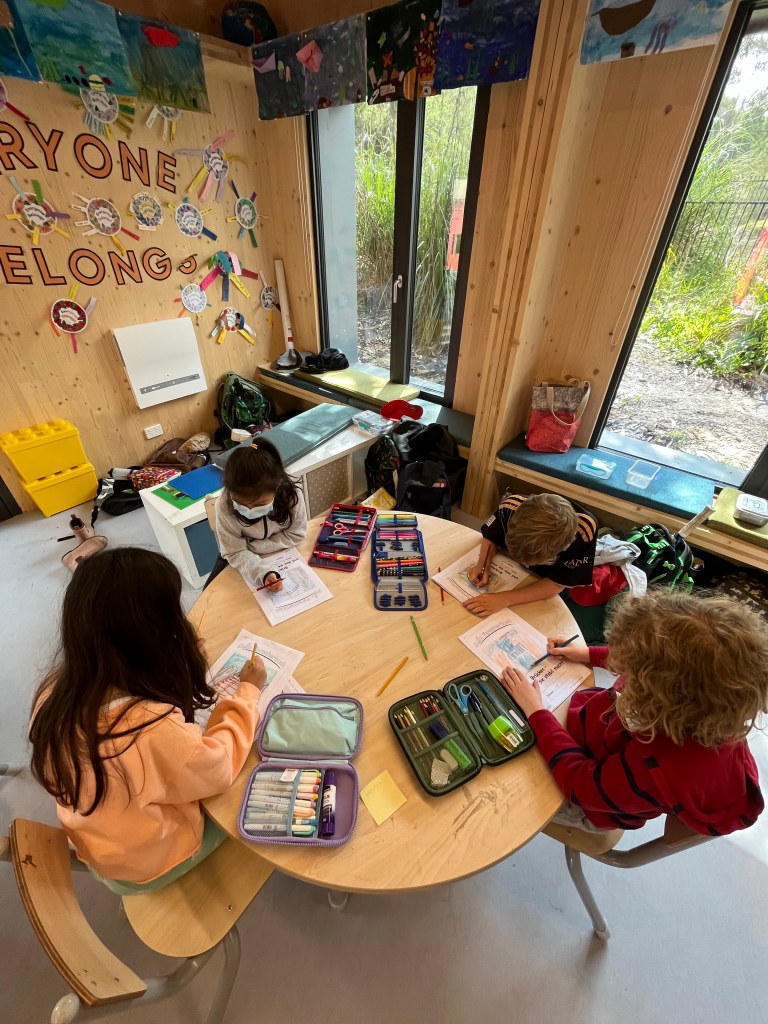
The classroom is one of several wooden portables that were built this year. Wood on the outside, wood and felt covered walls on the inside. Cushion-covered window seats, large classroom windows with a view of the green bush around the building. Shelves and cupboards full of teaching materials and resources – which reminds me that I have to organize the room and swipe the floors and wipe the tables! But that’s for another day. Students have a 5-minute break between classes to play outside in the yard or the forest. Five minutes sometimes turn into 10, but they always return. So far!

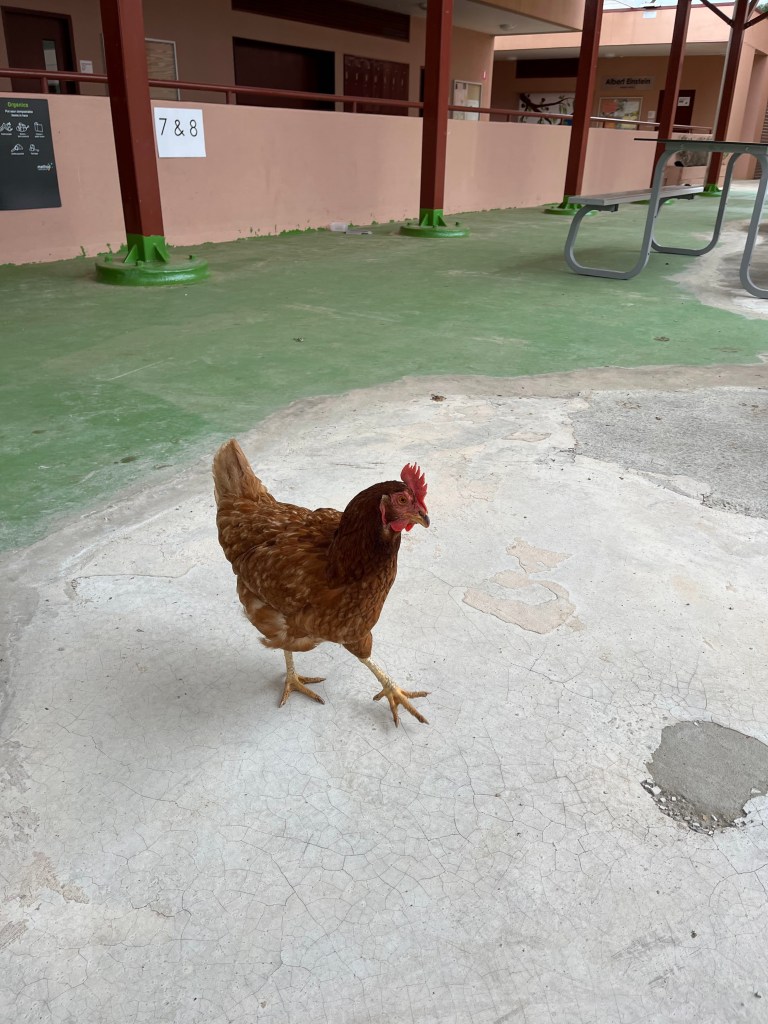
There’s an open library before school and during lunch. Afternoon activities where we go on excursions to the beach or the park. Four chickens roam the school grounds. And my own workspace with a desktop in a roomy staff room. It’s the little things I get excited about!

And just like any school, other things are missing. Being a small, independent school, it cannot offer what large public school boards can provide. Or with a lot of personal commitment by teachers and staff. And resources !

And so I was very excited and fortunate to experience two fantastic Public School Events this week that helped me to get yet another impression of Education in Australia.

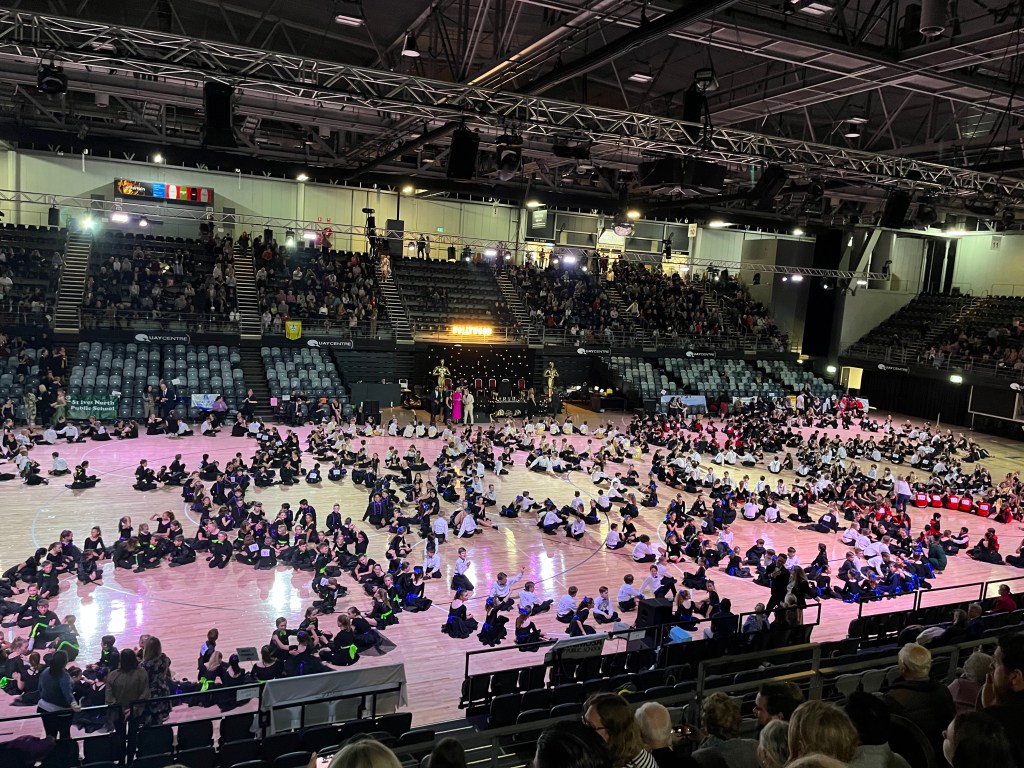
The first one was the “Metro-North Dancesport Confidence Gala Event”. A ballroom dancing event for over 600 students in Grade 5 and up. Taking place at the Olympic Park, 11 schools from the area had sent their Grade 5 students to participate in a showcase event, presenting the Salsa, Tango, Cha Cha, and Jive dancing skills they had learned at school. While it was fun and impressive to see hundreds of eleven-year-olds dance, alone or with a partner, the educational concept behind the event impressed me.

Intended to promote student wellbeing, the goal of the event was to nurture self-confidence, connections between students and staff, and collaboration within the schools and the community. The glittery costumes and quirky dance judges were a nice cherry on top of an ice-cream-sundae kind of event.

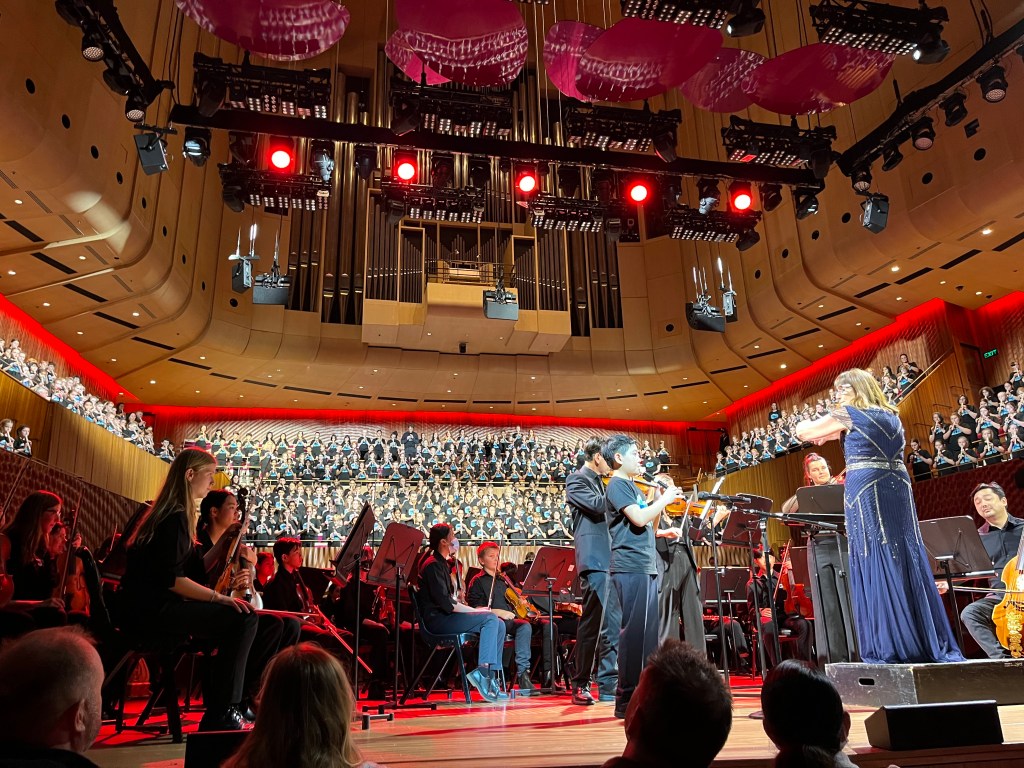
Two days later, it was time to go to the city to attend a concert at the Sydney Opera House. And not just any concert, but THE MIMOSA CONCERT! Not sure why a public school event would have the name of an alcoholic beverage, but it was short for The NSW Department of Education Festival of Instrumental Music. Five hundred students playing the recorder (what could possibly go wrong?) and 220 violinists from all over the State of New South Wales gathered in the beautiful, newly renovated Sydney Opera House to play together. And it was perfect (and I am not a biased parent, obviously). Not a single tone was out of place. I was very impressed by the organization of the event and the scale of it. Some students had travelled by car, plane, or bus for hours to make it to Sydney and perform with their student peers. Impressive soloists like the ten-year-old boy playing the piano, the harmonica and singing Billy Joel’s Piano Man, a girl playing the Mongolian flute, and others made this concert very special.

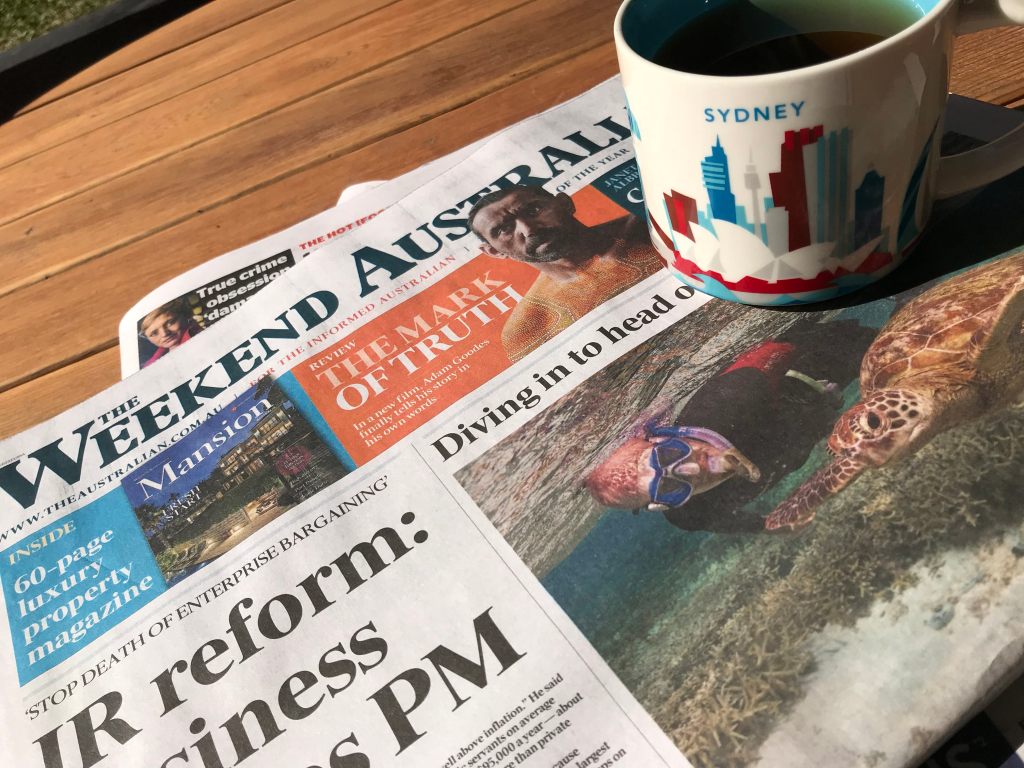
Like many other countries in the world, Australia’s Public Education System has its struggles and challenges. An article in today’s Australian newspaper read: One million left behind – Inequality has become alarmingly entrenched in Australian Education System. And I will not pretend that I am an expert in the local Education system, public or private. But attending these events showed that all schools and Boards have something unique to offer. No school is perfect, and there is always room for improvement – indeed, often there is a bitter need for it. Being able to experience different teaching styles and school forms, education systems, and methods allows me to take the best, and leave the rest, and maybe take a few of these great new ideas home with me.

So to come back to my question, what is a good teacher? What is a good school? In my eyes, one that doesn’t stop learning, that doesn’t stand still.

And one that has a good heating system is this cold, windy Sydney weather.

Cheers!

Xanadu

A million lights are dancing and there you are, a shooting star.

Olivia Newton-John. Xanadu
Sydney

I grew up in an age without internet and mobile phones, music apps, or playlists. I grew up in a time when culture was passed along through objects: tapes, records, comic books, and books. They were interesting because we could live among them. We could pick them up and hold them. Collect them. And remember them…even decades later.

One of the first music tapes I owned was the soundtrack to the movie Grease. Olivia Newton-John and John Travolta. I can close my eyes and see myself in Grade 4, the quiet school hallway, my old tape recorder sitting on the grey linoleum floor. And I can still recall every damn word of each song on that soundtrack. 

We go together

Like rama lama lama ka dinga da dinga dong

Remembered forever

As shoo-bop sha wadda wadda yippity boom de boom

Chang chang changitty chang sha-bop

That’s the way it should be

Wah-oooh, yeah!

We go together. Grease Soundtrack.

I was such a big fan of these two that I had written their names in black permanent marker on my yellow bedroom wall: Olivia & John.

I watched Xanadu in the movie theatre in Grade 5 and had to get myself a pair of rollerblades to look like Olivia at the roller disco. Sadly, I never made it there. I tried rollerblading to school the next day in my brand new, very tight jeans – tripped, fell, and tore the knees of my pants, which was the end of my rollerblading career. 

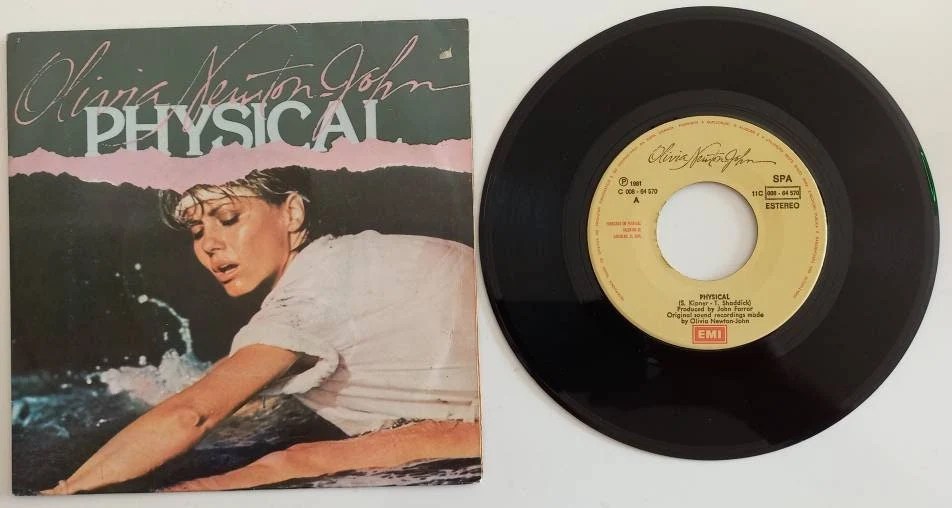
Once a month, my dad would take us to the record store in the city. Five dollars for a vinyl single record, and there she was: Olivia with her terry headband, stretching in the soft ocean surf (I never questioned why she would be sitting in the water in her aerobic outfit).

The first time I danced with my soon-to-be husband was at a uni party to the tunes of “You’re the one that I want” (until I went to the washroom only to find him dancing with another girl when I returned). The song became our wedding song two years later.

We watched Grease at a campground’s open-air movie theatre with our kids. And while we were busy covering our young children’s ears and eyes, as this movie was definitely not age-appropriate, a tree limb came crashing down on our campsite and destroyed our van. I like to think that it was Olivia who watched out for us.

And then Olivia Newton-John suddenly died. And with her, a part of the memories and emotions that I connected with her and her music, died as well. I learned that she had been a great Australian icon, which I thought was interesting because here I was, sitting in Canada, waiting for my visa to Australia.

Two days after her passing, my work permit arrived, and I could finally start the process of moving to Sydney, Australia. I booked a flight, said my goodbyes for the hundredth time, and got on the plane. I have to admit, it felt a bit like Olivia was sending me a sign. 

Suddenly the wheels are in motion

And I, I’m ready to sail any ocean

Suddenly I don’t need the answers

‘Cause I, I’m ready to take all my chances with you

Suddenly. Olivia Newton-John

It’s already been a week since I arrived, and what a week it has been! 

I started teaching on Monday, and I am trying hard to remember all the names, timetables, procedures, and resources at school. Some of it is still familiar, but a lot is very new to me. The fuzzy brain from being jet-lagged doesn’t help. To make things worse, my teeth decided to act up, so I had to see the dentist twice since my arrival to have a root canal done and a large filling replaced. Needless to say, my travel insurance does not cover the expenses. A trip to the dentist instead of the Sunshine Coast.

My classroom

But then there is the familiar, the beauty, the magic of this place that I remember so well: my bench at the beach, the kookaburra calling in the early morning hours, the sunrise over the ocean. My friends at the pub on a Friday night, my colleagues at school welcoming me back, and even the people on the bus to school are still the same. 

The strange thing about being back here in Australia is that it isn’t strange at all. It feels almost like I never left – familiar but still fun. Of course, some things have changed: I no longer live in my little blue house but in a colleague’s empty apartment, Covid has left its mark with some people wearing masks on the bus or at school, and the weather seems much, much colder than I remember (I even have considered wearing gloves in the morning, but I refuse to do so. This is Australia, after all!)

Waiting for the morning bus

But no matter how familiar everything seems, this place is still very magical to me. And while I’m sitting on my green bench at the beach, sipping my weird long black, I think I can see Olivia stretching in the far distance in the soft ocean surf, gently singing to me.

Building your dream has to start now

There’s no other road to take

You won’t make a mistake

I’ll be guiding you

You have to believe we are magic

Nothin’ can stand in our way

You have to believe we are magic

Don’t let your aim ever stray

And if all your hopes survive

Destiny will arrive

I’ll bring all your dreams alive

For you.

Magic. Olivia Newton-John

Sitting here in Limbo

Sitting here in Limbo

But I know it won’t be long

Sitting here in Limbo

Like a bird without a song.

Well, they’re putting up a resistance,

But I know that my faith will lead me on.

Sitting here in Limbo

Waiting for the dice to roll.

Yeah, now, sitting here in Limbo,

Got some time to search my soul.

Well, they’re putting up a resistance,

But I know that my faith will lead me on.

I don’t know where life will take me,

But I know where I have been.

I don’t know what life will show me,

But I know what I have seen.

Tried my hand at love and friendship,

That is past and gone.

And now it’s time to move along.

Jimmy Cliff. Sitting here in limbo.

It has been almost two months since I applied for my work visa in Australia, and according to the immigration lawyer, it could take another couple of months for it to be processed. My contract starts this week – I don’t think I will make it on time. 

Some call it karma, others fate. “Who knows,” my yoga instructor said, “maybe there is a reason why you are not meant to leave just yet.” Well, the backlog at the Australian Immigration Office is definitely one of them. 

One of the benefits of sitting in limbo, waiting for my visa, is that I get to spend time with friends and say goodbye…again and again. Until they get tired of it and tell me to get out of here.

On one of these visits, a friend gave me a farewell gift over poutine and ice-cold coke. Small in size, but immeasurable in value and meaning to me.

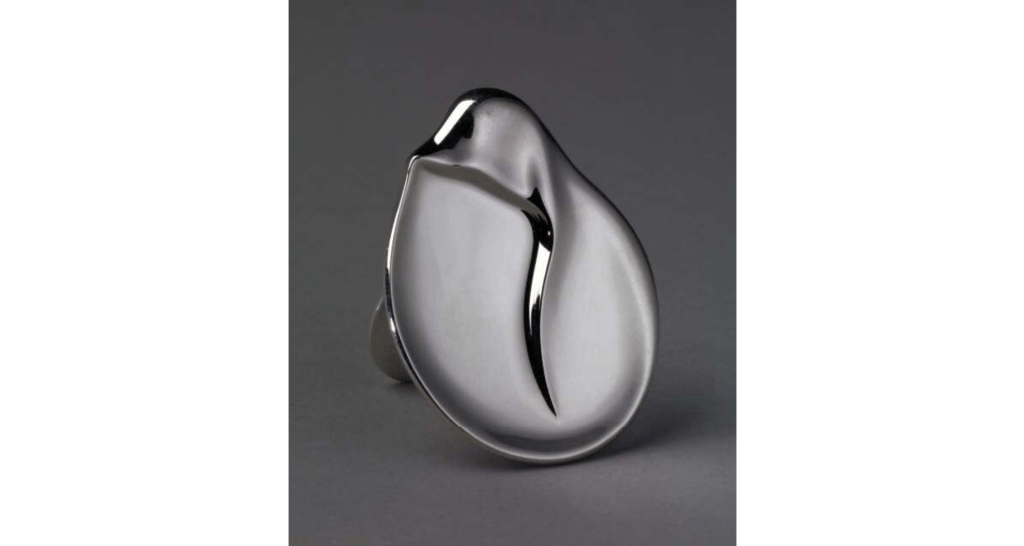
In a small turquoise velvety bag, I found a silver medallion shaped like a teardrop. Simple in design, a silver line draws the shape of a veiled woman – the Madonna. I turned the pendant around, where I saw a silver clasp that could work as a small stand for the piece or a clip to attach to a necklace. Almost invisible to the eye, I read the words Tiffany and the designer’s name, Elsa Peretti. 

Elsa Peretti, Madonna, British Museum 2009

Overwhelmed by the simple beauty of the piece and its apparent value, my first reaction was to return the gift to my friend, as I did not feel like I could accept it. The little story my friend told me then, the meaning this medallion had for her, made me accept the gift and what it symbolized to her.

“It is a form of a guardian angel. Someone to watch over you. Because if anyone needs protection right now, it is you!”

Originally designed as a First Communion present, the Madonna was created in 1990. The designer Elsa Peretti wrote about the piece: 

‘Maybe it was a feeling of being protected that gave rise to my need to design a Madonna. As a child, I had a little gold chain, given to me by my grandmother the day I was born. But then I lost it and wore no more symbols of religion around my neck. When I decided to design a Madonna, I visualized the little medal lost such a long time before. Bit by bit, as I carved the wood and ivory, a line began to emerge, giving me a feeling of protection which symbolized my Catholic religion……The true meaning is the soul of the small object you wear, whatever your religion.’

Elsa Peretti. ‘Fifteen of my Fifty with Tiffany & Co’, New York, F.I.T. 1990

I received a golden bracelet with my name engraved on it when I was born. For my First Communion, I got a soccer ball. I have lost both of them since.

However,  I still have small items that mean very much to me because they tell a story. Someone else’s story. And now my story. We fall in love with the little things somebody loves about the world: a song, a book, an object.

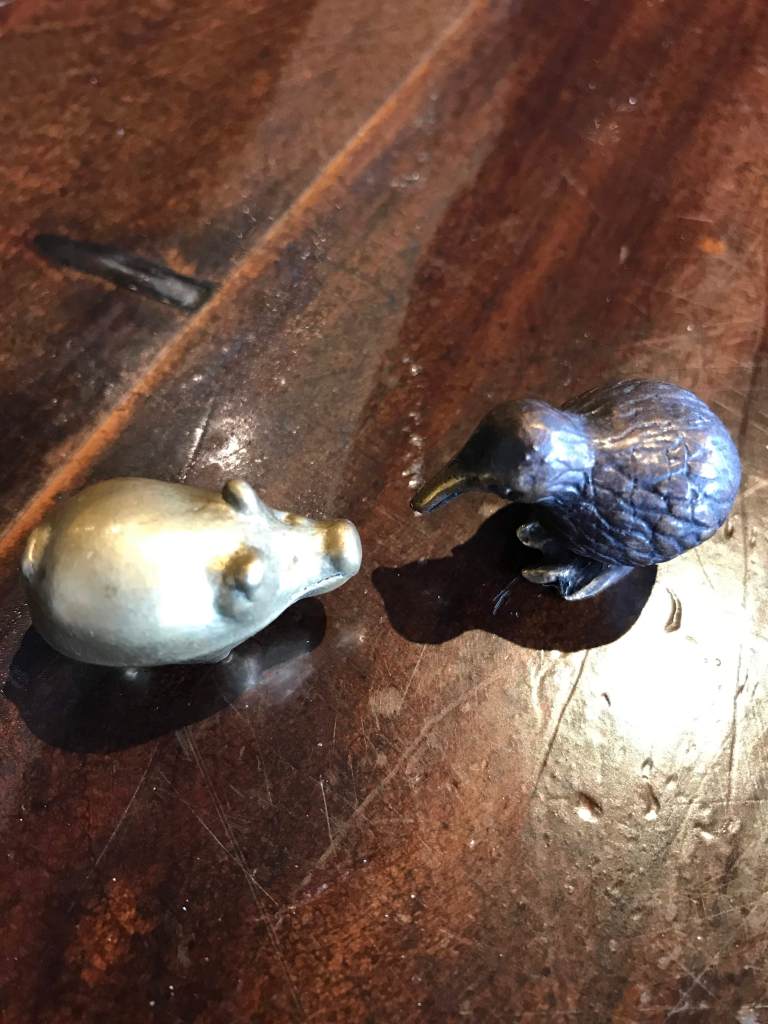
The first time I left home to live abroad in 1985, my mother gave me a little pig made of solid gold metal. No Madonna, by all means, this little figurine stood for just the same. It was meant to look over, protect, and be with me when my mother couldn’t. I have carried this little golden pig with me all over the world. Had in my wallet in four different continents. Recently I got it a little friend – a small golden kiwi from New Zealand. The two get along great in my wallet. At least, that’s what I hope. 

Pig and Kiwi in Rotorua, New Zealand, Oct 2019

They symbolize the place I come from, my mother’s love, and her protection no matter where I am at the moment. And my love and desire for new places and adventures. The Ying and the Yang of life. The pig and the kiwi of mine.  As Elsa Peretti put it so well, “the true meaning (behind anything) is the soul of the small object you wear”. 

Another farewell gift I received from a dear group of friends this summer was a necklace with two rings interlinked. “Connections big and small, new and old” the description of this beautiful piece of jewellery read.

To me, the true meaning of these two golden rings, however, is the push and pull of life. One ring symbolizes what I am doing now and here (other than waiting), the other my desire to do something new.

“When I look around, many of my pulls have somehow turned into pushes and I haven’t learned to let them go in time. I have been hanging on for dear life onto things that were no longer making me happy. But I didn’t want to let go, because I had been planning them and wanting (the idea of) them for a long time. I didn’t want to let go, because that would have meant defeat, admitting I had possibly made a huge mistake, a wrong turn, and the thought of that was devastating.

So instead I kept on pushing, while I was getting more and more exhausted, irritated and frankly intolerable in the end.

Time to reevaluate. I very well know the difference between the push and the pull, and I know you do, too. Push is heavy and sticky, and pull is exciting and joyful. Pull is something that has most likely been with us for some time now, something we keep brushing off because “it doesn’t pay the bills” or “it’s plain silly.

But the truth is, if we want to become truly successful at anything we do, there needs to be this pull -energy behind it. There has to be joy,  excitement and motivation from within.

Otherwise, what’s the point?”

(Life as we know it. Do you feel a push or pull?)

The other day, a friend of mine asked me what exactly I was looking for? Why I wanted to go back to Australia. After a moment of silence, she answered her own question: Because it makes you happy, right? Bingo!

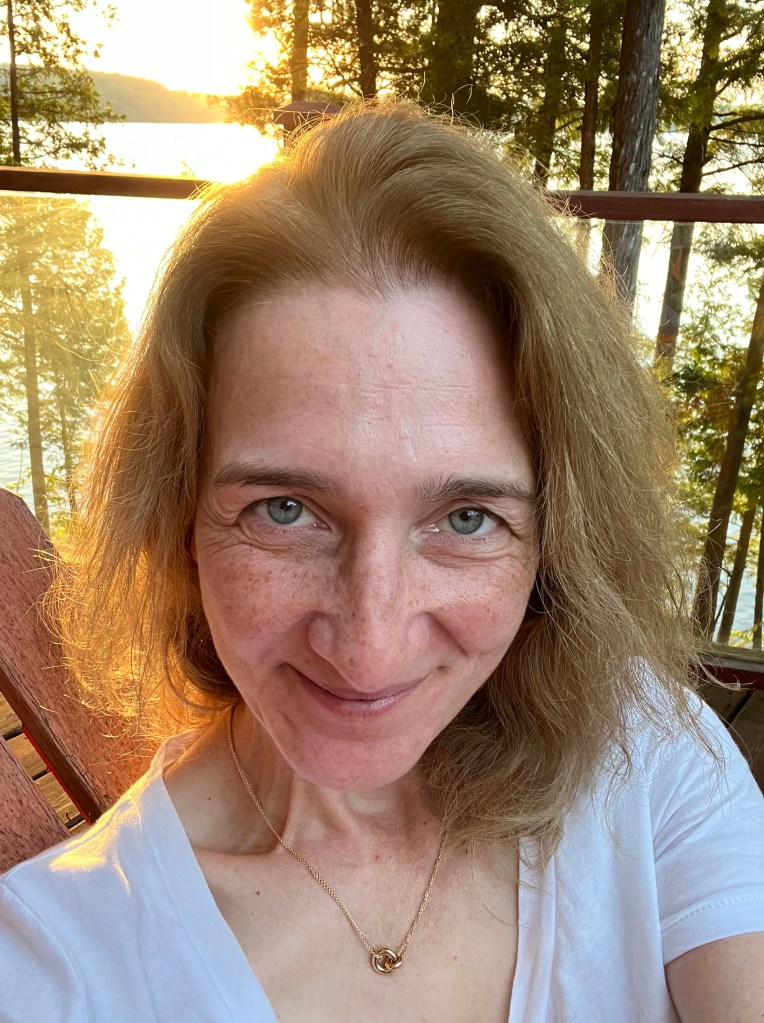
Drag Lake, Ontario 2022

And so I have replaced the Chinese Happiness pendant that my mother bought for me at the Bird Market in Hong Kong in 1997 with a new story to wear around my neck. 

And I added the silver medallion to my collection in my wallet –  I think the three will make a great team! I just hope they don’t get bored waiting for that visa with me!

Cheers!

We fall in love

With the little things

Somebody loves 

About the world

Like music,

Rainy days,

Or peanut butter sandwiches – 

And it doesn’t matter

What they are,

It’s just that they love them

And that makes us happy.

Atticus

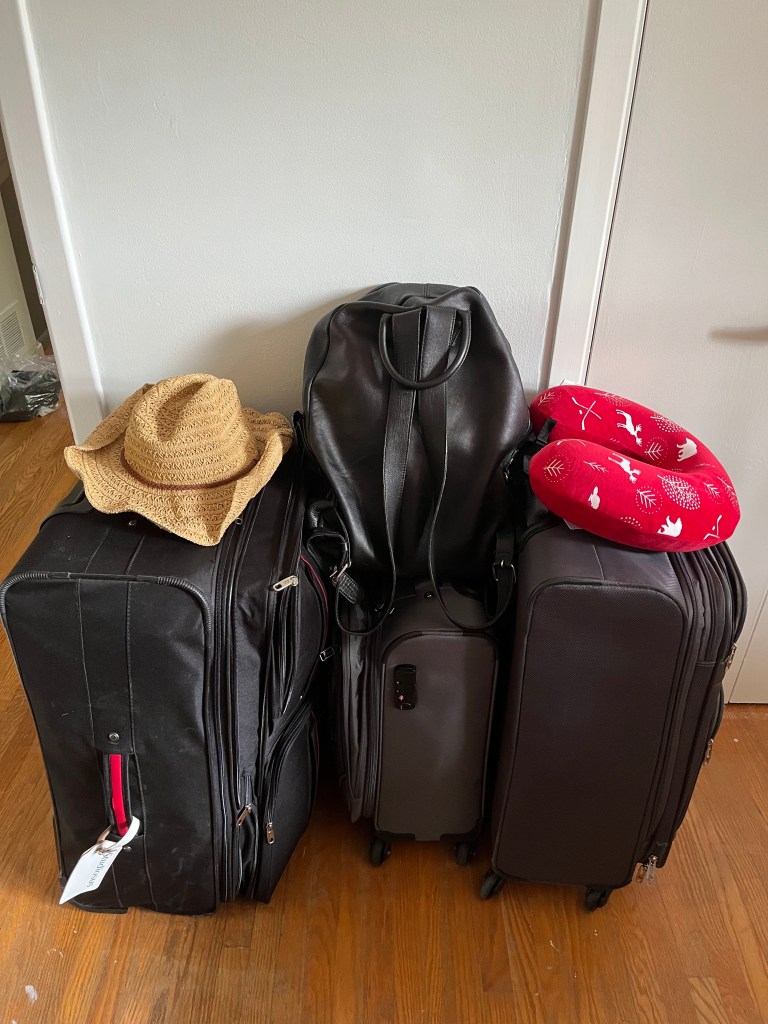
“Sitting on packed suitcases”

All my bags are packed.

I’m ready to go

I’m standin’ here outside your door

I hate to wake you up to say goodbye.

John Denver. Leaving on a jet plane

Day 44. The minimum processing time for a work visa in Australia these days. Average time: 3-6 months. Yikes! What took four weeks last time I applied, can now take up to 12 months: obtaining the permission to enter the land down under and start my new/old job in Sydney, Australia. Since Covid, everything is backlogged: visas, passports, medical procedures… I really shouldn’t complain. 

Day 44. Sitting on packed bags. Looking at my ready-to-go luggage, my mind starts wandering, and a memory pulls me back to 1997.

It is Christmas Eve. A roasted turkey sits on the small dining room table in our tiny one-bedroom apartment in Hong Kong. It is hot and humid. The air condition unit in the window is rattling, drowning out the traffic noise sixteen floors below.

Swiss scalloped potatoes with cheese, German red cabbage, Canadian gravy sauce and cranberries, and Cantonese sweets for dessert. In the background, the illuminated Hong Kong skyline provides some sort of festive holiday lights.

One Christmas dinner, four guests, five nationalities, and two babies on the way. Both my Swiss neighbour and I are pregnant with our first child. Both are due at the end of January – until I am no longer. Thrown off by the measurements of my enormous belly, my doctor decided to move my due date ahead by a month and declared that this would be a Christmas Baby instead! Hallelujah!

So here I am, sitting on packed bags on Christmas Eve, ready to enjoy my last supper and await the arrival of our firstborn child. Except that it doesn’t arrive  – at least not on Christmas Eve. Or the day after.  Nor the week or even month after that. While my Swiss labour partner gives birth to a healthy baby boy at the beginning of January, I am still sitting on my bags until I start unpacking them again. I need fresh underwear. I am looking for our Scrabble game. Eventually, I even consume the snacks I had packed for extra energy.

In the end, Calvin was born on February 2, six weeks after the newly proclaimed due date – a whopping 10-pound baby. I blame it on the turkey!

Almost twenty-five years later, I am sitting on packed bags again. Suitcases this time, as I am not leaving only for a few days to go to the hospital, but for a few months to go back to Australia. My job with the German School Sydney starts on July 21.

It has been 44 days since I applied for a work visa, and so far, the whole experience has been rather anticlimactic! The joy of being offered a job in March, the excitement to sign the contract in May, and my flight booked for July 1. And since then, a lot of waiting. Eventually, I had to cancel my flight. Packed my suitcases and unpacked them again. Purged, rearranged, added items, and took out others. Not much longer, and I’ll unpack the whole damn lot.

Sitting on packed suitcases – a word-by-word translation of the German idiom, meaning you are ready to leave. Having done all your preparations, but are still waiting for someone (the Australian Immigration Office) or something (my visa) to signal that you can go now. 

I grew up on meaningful sayings like this one. The German language is full of them, and so was my childhood: “Mit dir muss ich ein Huehnchen rupfen!” (I have to plug a chicken with you – meaning, I was in trouble). “Kleinvieh macht auch Mist!” (Small animals poop too, meaning small things add up, so don’t be wasteful). And my all-time favourite (though much dreaded as a child as it meant even more trouble): “Komm du mir noch mal auf mein Klosett Wasser trinken!” (which translates roughly to “Don’t you dare come and drink from my toilet water again”!??? Why anyone would want to do that? And what does that even mean?)

So, concerning my visa application – I only understand train station! I am done and ready, sitting around, waiting for the commando. And if that Lappen doesn’t arrive soon, we will have the salad! But I will stay at the ball – you can take poison on that! Sooner or later, I will make myself off the field. Because everything has one end – only the sausage has two!

Press me the thumbs! Wish me luck!

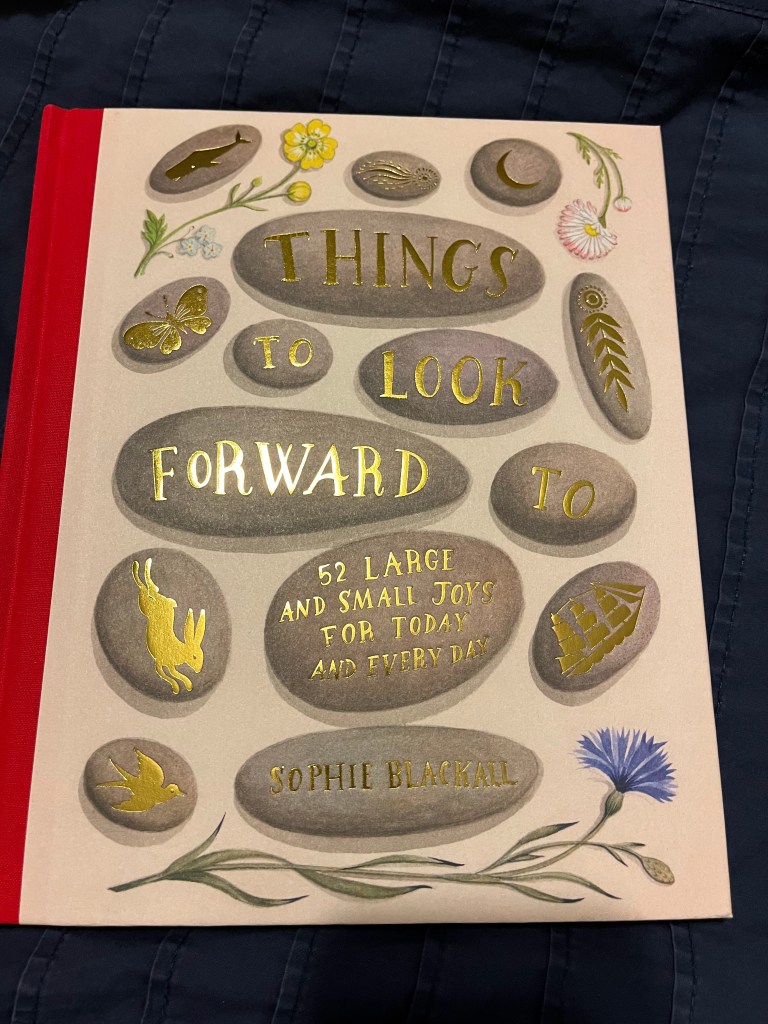
Things to look forward to

Morning has come with the first rays of sun

Breaking through our windowpane

Songs fill the air but there’s no singer there

Just an old wooden guitar playing

Writing this song won’t take very long

Trying not to use the world “old”

Thinking about taking chances and doubts

That still linger in the cold

Looking forward, all that I can see

Is good things happening to you and to me

I’m not waiting for times to change

I’m gonna live like a free-roaming soul 

(Looking forward. Crosby, Stills & Nash)

Looking forward to summer? Or winter (for my friends in Down Under)?

I am looking forward to a slower pace – a break in the daily routine. To endless coffee mornings, reading a book in the dappled shade of my backyard, netflixing ad nauseam (how many episodes of Stranger Things can I watch before turning into a shadow monster? And since we are on the topic – there’s another Upside Down? I didn’t know! Do I have to change the name of this blog?). To sunny patios and long summer nights. To running, resting, and writing.

For the last 91 days, I have been participating in a creative writing assignment called “The 100-day Project”: An act of creativity each day.

My goal was to follow a writing prompt daily, and I did – though it was more of a half-a-100-day Project for me. While I can think of a few reasons for my lack of productivity, I am going to blame long Covid for it. Feeling sluggish and fuzzy, brain fog is definitely a thing (or has the Mind Flyer taken over my mind?). Add an unhealthy dose of self-doubt, writing hasn’t come easy in the last couple of months. 

Except for when it did. 

Day 74. Writing prompt # 37: Things to look forward to. Make a list of things to look forward to. Include big things if you’d like, but also the small everyday things that buoy your spirits, make you laugh, make you feel alive.

During my last few weeks in Sydney, when Corona came closer and closer – no longer a thing that happened elsewhere but right in front of my little blue house. When everything seemed to stand still, the air heavy with uncertainty and fear. When even the kookaburra in that ol’ gum tree wasn’t sure whether it should laugh or cry.

During those days, and many more before and after that, getting out of bed wasn’t always easy. During those days that lay big and empty ahead of me, I developed a sort of mantra that would get me up and going and give me something to look forward to: There ain’t nothing a hot shower and a cup o’ coffee can’t fix!

  1. Hot showers

I admit it – I LOVE long hot showers! Not good for the environment, I know, but great for me! I love the delicious goosebumps it gives me, turning my pale skin scarlet red – how it fogs up the bathroom and swallows me with it. As a child, I would spend hours in the shower stalls of the public pool, scalding hot water raining down on me and my best friend in the shower stall across mine. We would sit there for hours, talking, laughing, and sharing secrets. I don’t remember ever actually going for a swim.

  1. A cup of coffee

I’m not a coffee drinker – I am a coffee lover, bordering on coffee snob! I love everything about it: the smell of fresh ground coffee beans, the gentle gurgling of the percolator (though my coffee maker sounds more like it’s choking – remind me to descale it!). I love choosing the perfect coffee mug, adding just the right amount of cream, and wrapping my cold hands around that warm coffee cup. Most of the time, I don’t even finish my coffee – I just like to hold on to it. I am not a coffee drinker – I am a coffee lover!  And I am looking forward to walking down to the local coffee shop near the beach to grab “a weird long black with a splash of white”.

  1. Saturday Mornings

On my list of favourite-things-to-look-forward-to, Saturday mornings come right after Friday nights. The quiet of the early morning hours, a cup of coffee (of course), a newspaper (not one but two!): pouring over interesting articles, checking out new books, and sharing good posts. 

They say summer is just a really long weekend: June is like Friday, July is like Saturday, and August is like Sunday. I look forward to the Saturdays of life.

There are many more little things I look forward to: Going home after a long day at work. Finishing a good book – and starting a new one. Writing with a fountain pen on expensive paper. Blasting my favourite song on the stereo. A friend checking in. I always look forward to going for a run. To hanging out with my boys. I look forward to planning trips and travelling.

Have I mentioned Stranger Things? 

Going back to Australia is a BIG thing to look forward to.

While I always say “Don’t go back to where you once were happy!”, I also say “Always finish what you started!”

I look forward to the beach and green bench. To watch the sun rise and set every day. 

The light. The colours. The sounds. Everything seems more intense in Down Under – but maybe that’s just me.

I look forward to the people. Covid did not allow for a proper goodbye from many of the great people I met in Sydney. So let me go back to say hello again before I say farewell. 

I look forward to myself. To the way I was. I am. And the way I might be.

I look forward to reliving some of my memories and creating many new ones.

I look forward to what’s to come. Especially my visa!!!

(Gotta run! A new season of Stranger Things is being released TODAY, and I still have twelve episodes to watch! And I wonder why my brain feels fuzzy? 🤪 Cheers!)

Benched

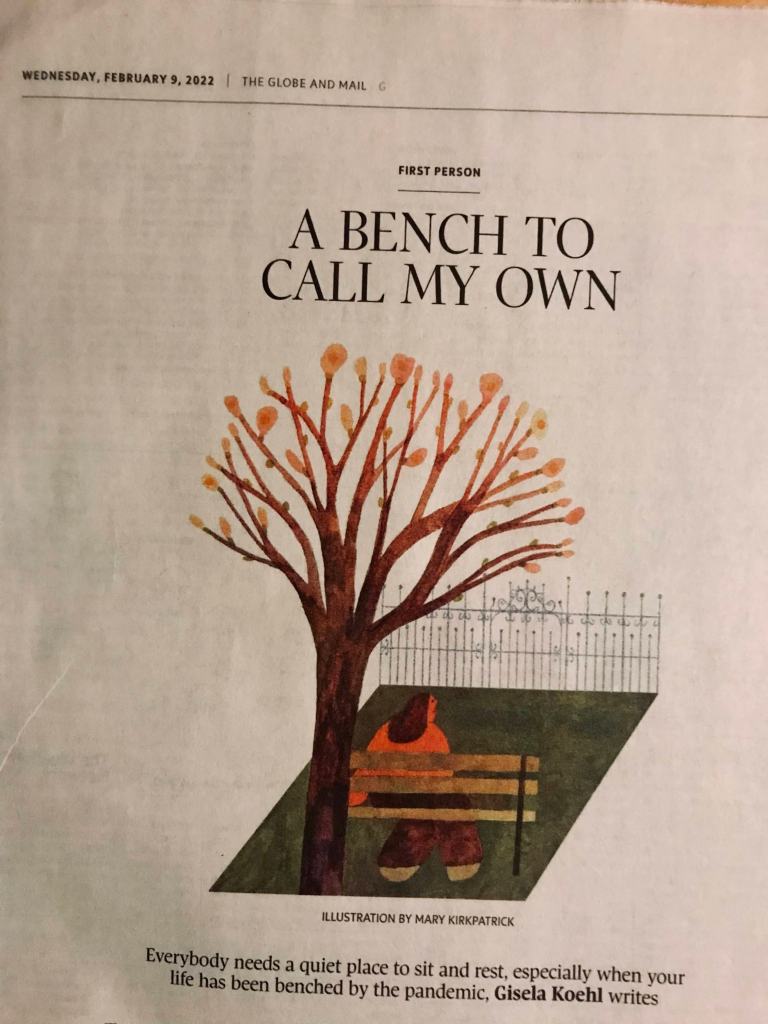
A Bench to Call My Own (Globe and Mail, Feb 9, 2022)

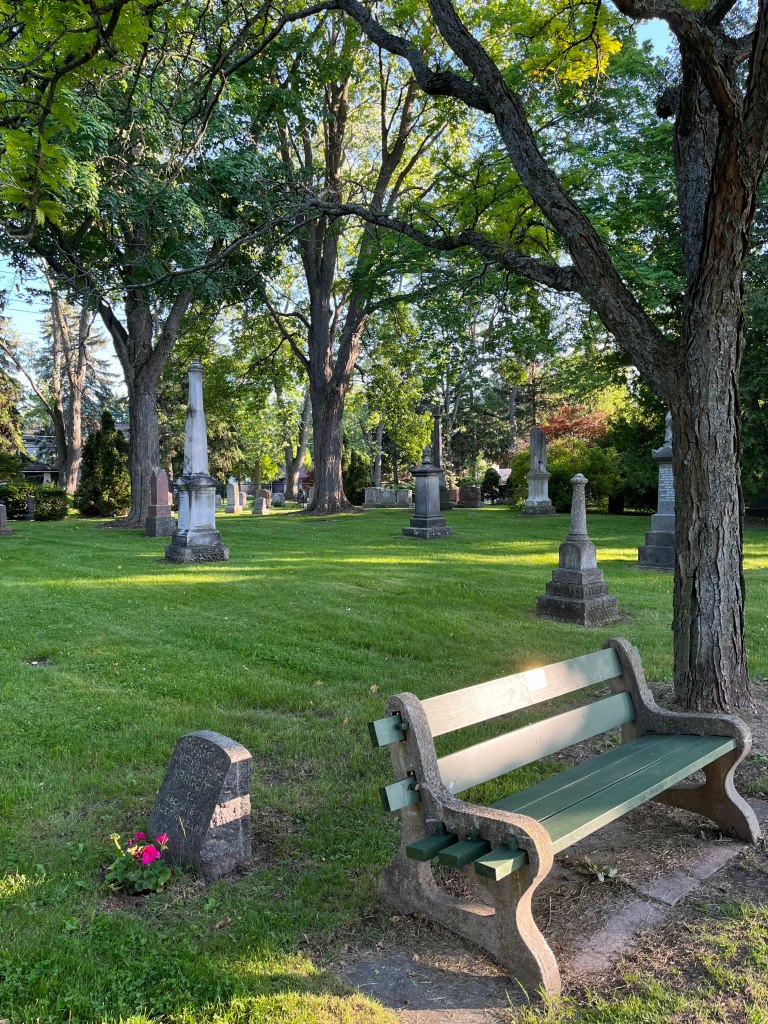
My bench is in the little cemetery near my house. I sit quietly on it and take a break from the COVID craziness around me – a wooden bench underneath a gnarly old tree, surrounded by overgrown bushes and historic tombstones. Cemeteries are a place of memories, they say.

For almost two years now, this secluded little graveyard in the heart of the historic part of my hometown has been my refuge, my safe place – a resting spot on my daily walks, a small oasis with beautiful old trees and shrubs. I see the cemetery’s black, heavy iron gates as I turn the corner on my daily loop. Beyond the gates, a straight, narrow path leads through this small resting place for the dead and the living.

On both sides of the walkway, at a safe distance from each other – as if they had known about social distancing long before that was a thing – wooden benches offer a welcoming spot to stop and sit. I never counted them all – there are maybe 10 benches on each side of the path. Weathered grey wood, rough from the snow, sun and rain. Each one sits on heavy stone legs, covered with green moss. The fourth bench on the right – the one with the golden plaque that remembers a boy who died too young – is my bench.

my bench

I have had other benches before. Benches in gorgeous parks and on peaceful lakes. Benches to remember friends that have passed. The cold metal bench at my mother’s grave. The long wooden Ikea bench in our kitchen with my children sitting on it, having dinner. More food under the bench than in their bellies. One time we found a whole pork chop underneath it. But that’s a whole different story.

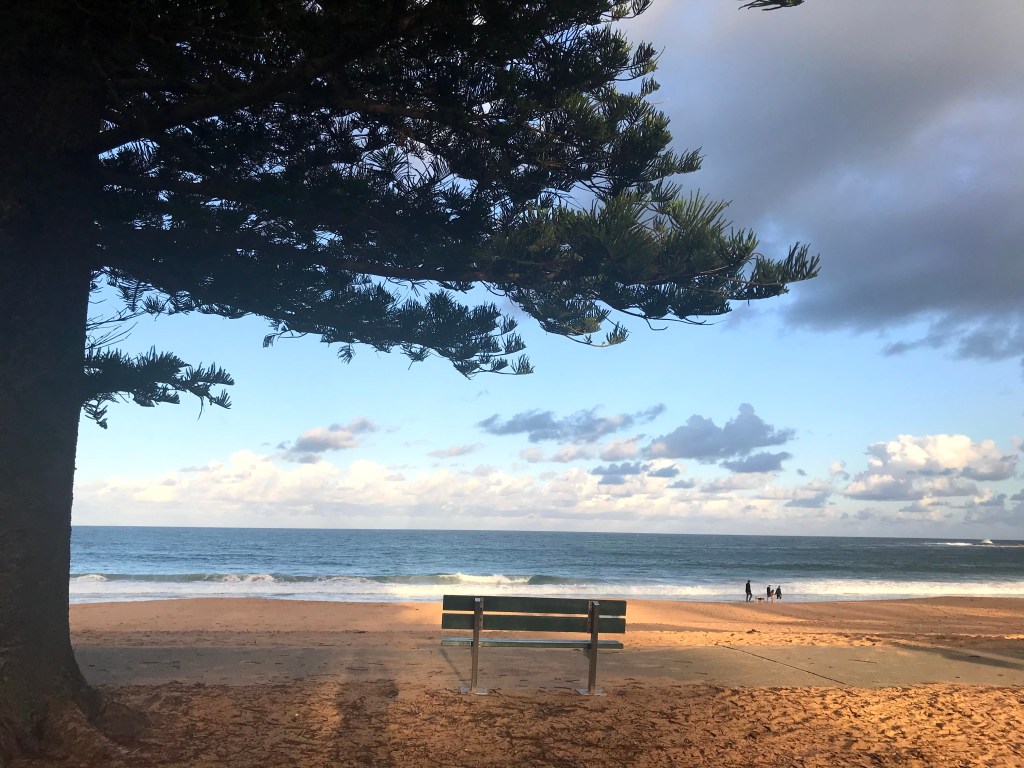
There is also that green bench on the other side of the world. My bench on Sydney’s Northern beaches, the place I called home for a while. My spot to have a coffee in the morning and watch the day unfold: the rising sun bathing my dark surroundings in a sea of brilliant colours. Yellows and purples, pink and orange. Tiny white-capped waves rippling toward the shore, clouds like cotton candy puffing along the sky. Morning haze, ocean glaze. The colour of the morning. The colour of the sea. The colour of the coffee standing next to me. I watched ocean-swimmers, beach-runners, sunrise-watchers and downward-doggers. And me on my raggedy green bench.

my green bench in Newport, NSW

It was withered, paint peeling from years of ocean winds and the hot Australian sun. Heavy branches of a single pine tree hang above it, offering dappled shade from the breaking light. The never-ending roll of the calm, deep blue sea, the sound of waves gently breaking onto the shore would offer me peace. It calmed my mind, body and soul. Oblivious to the crazy times that were ahead for us.

And then COVID hit. I had to leave and return to Canada. One bench got replaced by another. They told me my bench on Australia’s shores got taped off. In other places, they dismantled them all together.

And so, gravestones replaced ocean views. The golden beach sand was exchanged for mossy green grass – tropical plants by maple trees. COVID locked us in. Locked us down.

The daily walk to the cemetery became my new routine. The bench in the graveyard my newfound friend. My COVID companion. My guardian of grief. Grief guardians are as abundant as grief itself. They can be found in the most unexpected places – we just have to look for them: a hot shower, a good book, a friend, a spot in the sunlight, art, pets, the change in the seasons. Or a bench.

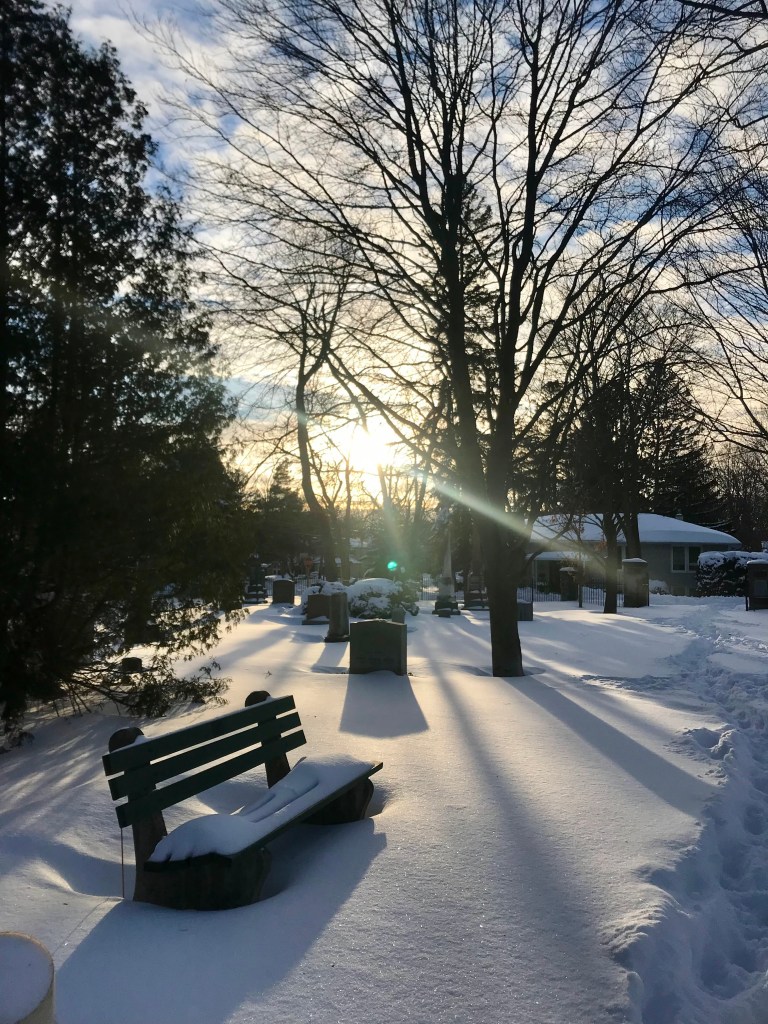
I spent a whole year on that wooden bench in the old cemetery. Summer turned into fall and leaves changed from green to blazing red. Snow began falling, and the stony gravel path turned into a long icy track.

Day after day, I spent time sitting on my bench, watching the time pass. Resting, remembering, ruminating. Wondering, waiting, wishing. I’d watch people go by. Faces covered by masks, eyes smiling at me. I’d greet people. I’d talk to people. Sometimes I’d do all I could to avoid them.

I’d sit on my bench early in the morning or late at night. I’d see familiar faces, cemetery regulars: old couples, families, single people, lonely people like me. I’d see walkers, dog owners, groups of friends walking by, all of them trying to get out, trying to find some space, trying to breathe.

Winter turned into another spring. The tree above my bench sprouted tiny pink blossoms. More people returned to the cemetery: running, jogging, sitting on benches like me. Sometimes I arrived only to find my bench occupied by someone else. How could they? I’d choose another one close by. It didn’t quite feel the same.

One day I found a sign taped to my bench: CAREFUL WET PAINT! Once old and worn, my bench was suddenly covered by a coat of fresh paint. All shiny and new. Yet, a hundred coats of paint wouldn’t hide what this bench had seen. I hesitated for a moment. I looked around, unsure what to do. And then I turned, continued on my way, and left my bench behind me. Until the next lockdown.

Everybody needs a good bench in life – green, brown, withered, new. At the ocean, on a lake or in a cemetery. Alone or to be shared. A place to sit and rest. To listen to music and sing along. Or have a chat. A place to quietly contemplate what life is all about. A place to laugh, to cry and to smile. Or simply have a cup of coffee and watch the world go by.

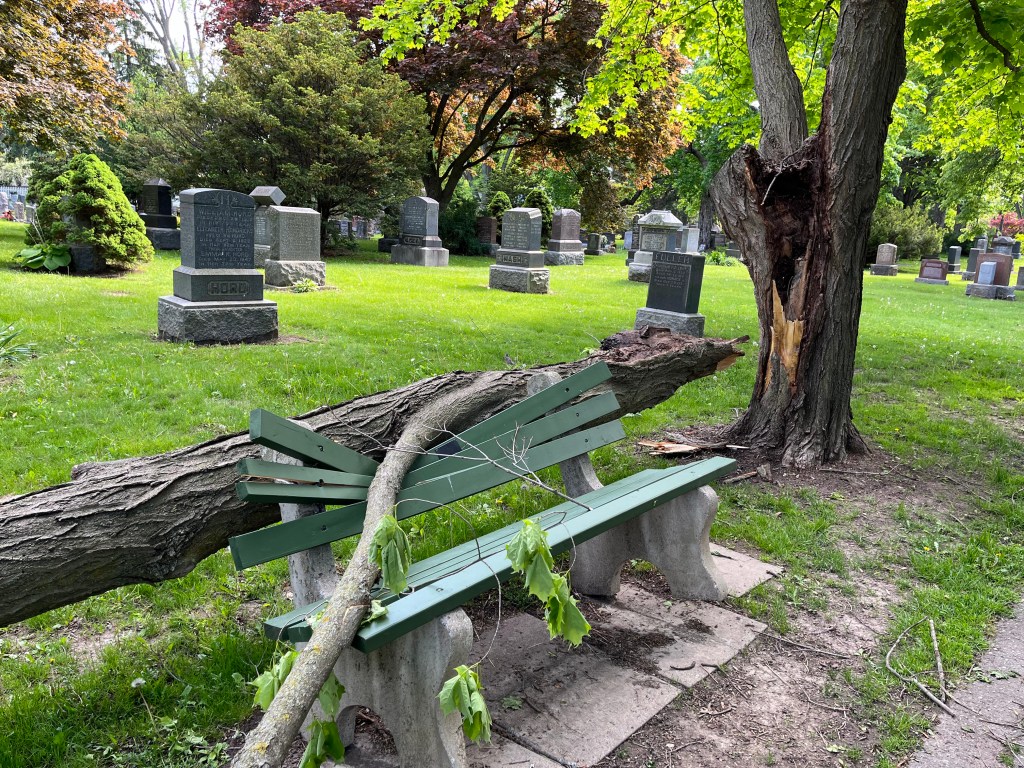
my broken bench (May 23,2022)

The Land of Confusion

Oh, Superman, where are you now?

When everything’s gone wrong somehow?

Men of steel, these men of power

I’m losing control by the hour

This is the time, this is the place

So we look for the future

But there’s not much love to go around

Tell me why this is the land of confusion

The Land of Confusion (Genesis)

“Madame! I am so confused!”

The little boy in row two stares at me through his round Harry Potter style glasses, eyes wide like a deer caught in headlights, bewilderment written all over his face. Not sure if the French words on the board are causing his confusion or the “new normal” of school in a pandemic,  so I try to reassure him. 

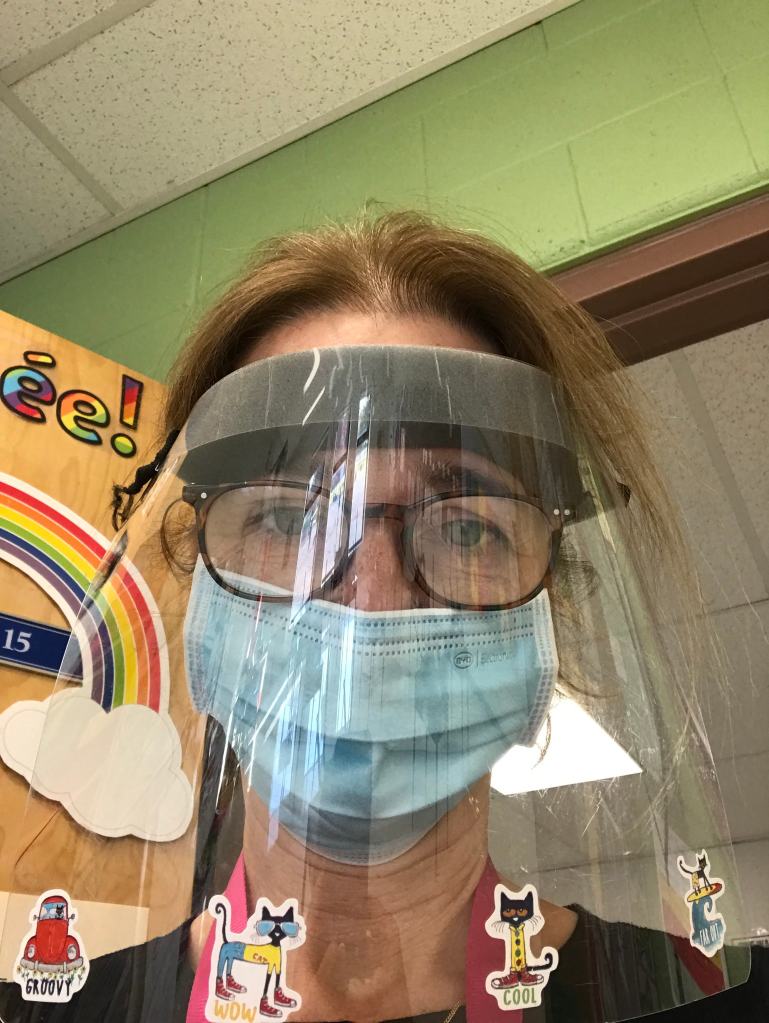
From a safe two-meter-distance, I look at him through the glare my face shield and send him an encouraging smile hidden by the mandatory mask, my sweaty hand in blue plastic gloves tentatively reaching out towards him to comfort him. 

I utter a lame “Ca va bien aller” …. It’s going to be alright! 

Muffled by fabric and vinyl layers, the French words are even less comprehensible to the confused child sitting in front of me. 

Behind all the PPE I agree: I’m confused too. And no, nothing is alright!

Welcome to Back to School in my Grade 1 French Immersion classroom. One of the thousands of elementary classrooms in Ontario which reopened their doors in September to the over one million students in the province to offer face-to-face learning. One third of these students chose online learning in separate classrooms right away, and their number is growing every day—the never-ending exodus of students to the virtual world of learning.

For example, take my class: what started with 23 six-year-olds on my class list four weeks ago is now an intimate group of 12 learners in the room. Eight of them opted for the virtual classroom right at the beginning—three more students left within the first four weeks of COVID school. 

And what four weeks it has been.

Week 1

Empty classrooms wait patiently for the arrival of yet another year of children ready to learn (or not). Shiny waxed floors, pristine whiteboards, and polished students desks neatly arranged precisely one meter apart. There isn’t more room for distance than that. 

Gone are carpets and bookshelves, computer stations, and listening centres – everything that makes an elementary classroom, especially in Grade 1, so unique. Learning in a safe environment just took us back 100 years in time. “I miss the old school!” the boy in row two said to me the other day. I know exactly what he means.

We spend week one learning how to line up with your arms stretched out (Garde la distance!), sanitizing coming in (Du gel!), sanitizing going out (Du gel!), walking on the right side (A la droite!), staying at your seat (Reste a ta place!), washing hands (Lave les mains!). 

Don’t talk! 

Don’t touch! 

Wear your mask! 

Breath (as much as that’s possible through a mask)! 

Lately, I feel more and more like a drill sergeant than an educator.

Week 2

Masks. Reusable masks with superheroes and cartoon figures on them. Paper masks with pink unicorn and cute little koalas. Smiling masks and scary ones. Masks in black and grey and pink. 

Full of hope and enthusiasm, we had decorated paper bags to keep each mask safe and clean on the first day of school. By week 2, most of these bags have ripped or disappeared into the students’ desks’ endless abyss. Masks are anywhere but safe and clean: on the floor, under chairs, in the hallway, in the yard. They hang off children’s chin or dangle around their necks. A mask makes for a great slingshot – it’s astounding how far these things can fly, especially when soaked in a day’s worth of spittle! One of my students pulls down his mask every time he sneezes – he doesn’t want to get his mask all wet and nasty! I get it – there is nothing worse than the smell of a moist and stale breath inside that thing.

Week 3

Week three brings an added layer of safety to or teaching: the face shield is declared mandatory for all teachers in addition to wearing a mask.

Learning a new language is difficult enough for a grade 1 student. With my mouth and most of my face covered by a mask, and the sound of my voice muffled by the added plastic barrier, understanding and repeating what I say in French becomes very difficult for my students. 

  “Bonjour mes amis!” I articulate as clearly as possible.

“Monmour me mami!” they repeat.

I am beginning to sound like Miss Othmar in Charlie Brown.

“Wah wah woh wah wah!”

At least I can blame it on COVID if my students’ language skills do not progress as they should!

Week 4

“Playdates are cancelled! Thanksgiving cancelled! And so is Christmas!”
Horror written all over their partially visibly little faces, my class is listening to a classmate announcing what sounds like the end of the world! 
“Well, not really!” I try to calm down my students who are now verging on hysteria. 

“There is still so much to be grateful for!” I explain lamely! “And there definitely will be Christmas – just different.” 

What does get cancelled are all virtual classrooms in our school board. Online learning is still a thing, and so is in-class instruction. But someone had the great idea that both could be done by one teacher instead of two. Gave it a fancy name and called it hybrid learning, laid off the online classroom teachers or sent them back to their homeschools, restructured all classes, and all that within a week. 

I won’t even have digested my turkey dinner, yet, when my class will have doubled in size by Wednesday, with half of the group sitting in front of me and the other half joining us via Google Meet. Watching every step I make, every breath I’m trying to take, every muffled French sound I make. “Wah wah woh wah wah!”

“I am so confused, Madame!”

“So am I, my friend. Welcome to the land of confusion!”

Crossing the ocean of grief

Ping. ‘We look forward to seeing you soon in Byron Bay, Australia!’

The sound of the incoming mail wakes me up rudely, tears me out of my dreams. With eyes full of sleep, I fumble for the phone on the nightstand next to me. The quiet hush of the morning draped over our house like a snuggly blanket. Like so many other “quaranteens” these days, my teenage children are asleep for at least another couple of hours.

In the dim light of dawn, the screen’s bright glare blinds me and forces my tired eyes to adjust: Your upcoming stay in Byron Bay, Australia.
What the hell?
I sit up straight in my bed, the sleepy feeling gone instantly, a slight sense of dread washing over me. A reservation I had made what seems like a lifetime ago and forgot to cancel.
The Gold Coast of Australia. Sounds wonderful. The only problem: I am no longer in Australia. Instead, I am on the other side of the world.

A teacher and mother of five, I recently returned to my family in Toronto from what was supposed to be a year of living my dream of teaching in Sydney, Australia.

A year of running along beaches, drinking with the locals, listening to the stories of the Indigenous.
A year of living in paradise with its technicolour flowers, ruckus causing birds, salty ocean air mixed with the acrid smell of fires burning.
A year of record heat, bush walks gone wrong during catastrophic wildfire warnings, school gyms flooded in torrential rainfalls, hugging rescued koalas.
A year of travelling along the coast of this beautiful continent and experiencing the magic of the Australian Outback. Of visiting metropolitan cities like Melbourne and Sydney, foreign fauna and flora, and mystical creatures in Middle Earth.

A year of living the dream, teaching the dream, learning how to dream.

In March 2020, nine months into my one-year sabbatical, the Coronavirus turned our lives upside down. The world got put on hold and with it all dreams and hopes, including mine. With Australian borders closing to all non-residents, I had to return early to my home in Canada.
Not the end of the world, but the end of my dream.

There are so many big disappointments, results of the virus, but it is important to remember the small ones as well: my time in Australia ending much sooner than planned. My children were not able to visit me in Downunder. The cancellation of our planned trip along the Gold Coast to see the Great Barrier Reef. Our hotel in Byron Bay, Australia. Booked. Paid. Never stayed.

This is not death, of course. Nor is it losing your business or losing your job. And it doesn’t compare to the story you hear so often: families separated by quarantine and travel bans, unable to see each other. I was able to leave on time and return to my family in Canada. I am grateful for being with them during this time of uncertainty. But still.

We don’t need to rank our disappointments. For each of us, the virus has taken something away – something that is important to us.

I think of my oldest who graduated from University this summer and had to celebrate his achievements in front of a TV screen. Surrounded by his social bubble of family and close friends, he made the best of the situation and even gave a typed up speech for his small but appreciative audience. Throwing your graduation cap in our tiny living room only to hit the ceiling, though, just isn’t the same.

I think of my high school kids who want to go back to class to be with their buddies. Or the university students that won’t return to campus this fall, but continue having to live with their parents (or their parents with them) to carry on with their studies online. Or the parents and teachers and kids that are sick and tired of the distance in distance learning.

I think of my pending hotel reservation in Byron Bay, on the other side of the world, that I forgot to cancel. Having to pay for a journey you can’t even take, doesn’t only disappoint – it stings. Like the salt of the ocean water I was supposed to swim in right now.

In a world of millions of people, there must be millions of disappointments: big and small. We are all learning to swim across the ocean of grief and disappointment.

I once read that if you swam non-stop at record-breaking speed, it would take you roughly four months to swim from Australia to North America. From Sydney to home. 120 days. And only if you would not have any trouble with the strong current, rough weather, and had a GPS to help you navigate. If you weren’t eaten by a shark and could maintain a world-record pace for seventeen weeks without any rest.
However, with adequate rest and a support boat, perhaps, the journey would take over a year.

Grief is water. Grief is a wave. It is the sea and the current. Grief is the undertow. You can’t swim away from it, and you definitely don’t swim into it. You find a way to keep going. To keep swimming in whatever direction you choose, with your strongest stroke. Even if your goggles leak or you swallow a big gulp of salty sea water. Eyes facing forward, you keep watching for that point in the distance, where the endless ocean in front of you turns into land that leads you back to life.

One hundred twenty days ago, I had to leave my dream behind, got thrown in the ocean and started to paddle like a drowning dog. I went through all stages of any grief: the denial (I’ll be back in a few months), the anger (I am mad at the world for messing with my dream), the bargaining (If I am patient, I surely can return soon to finish my year), the sadness, and the acceptance (still working on that). And I realized that while I might have to swim a little while longer ( I am not a world-record swimmer after all), I will always have a support boat of family and friends right next to me, cheering me on and helping me get across my ocean of grief.

And I’ll hold on that hotel voucher just in case! Looking forward to seeing you soon, Australia!