
I cast my pebble onto the shore of Eternity.
Edge of the World by Brian Inder
To be washed by the Ocean of time.
It has shape, form, and substance.
It is me.
One day I will be no more.
But my pebble will remain here.
On the shore of eternity.
Mute witness from the aeons.
That today I came and stood
At the edge of the world.

I’m in the bathtub. Which is quite unusual as I don’t do bathtubs really. Too hot, too cold, too boring. I like the idea of it, but I never last longer than a few minutes. Restless by nature, I’m out before the bubbles have disappeared.
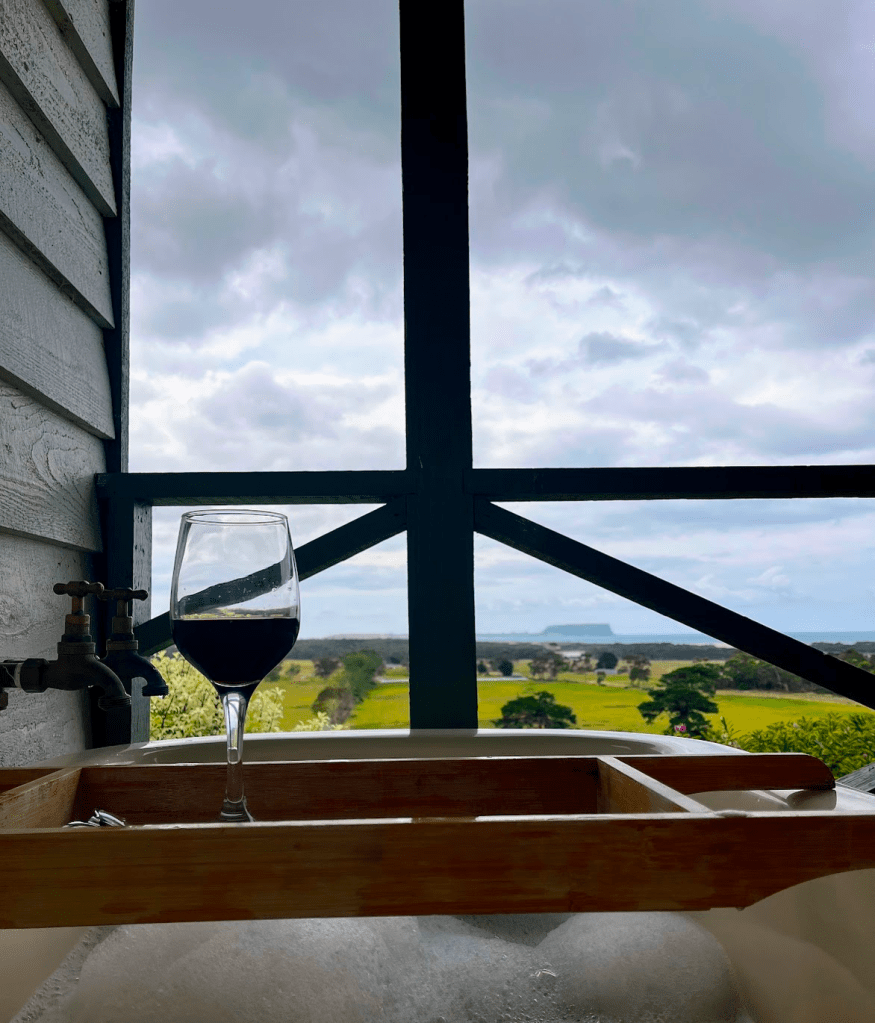
I’m in the bathtub. Not just any bathtub! But one of the best bathtub that I’ve ever been in. A vintage claw-foot bath, red and white, the four golden claw feet strangely resembling the feet of the chicken roaming the grounds. Clean, hot and…on the verandah of our rental house in Black River, Tasmania. A soak with a view!
I’m in the bathtub. To ponder. To relax. To take in the last precious moment of my summer holidays. (It still feels strange to call it that in the month of January.)
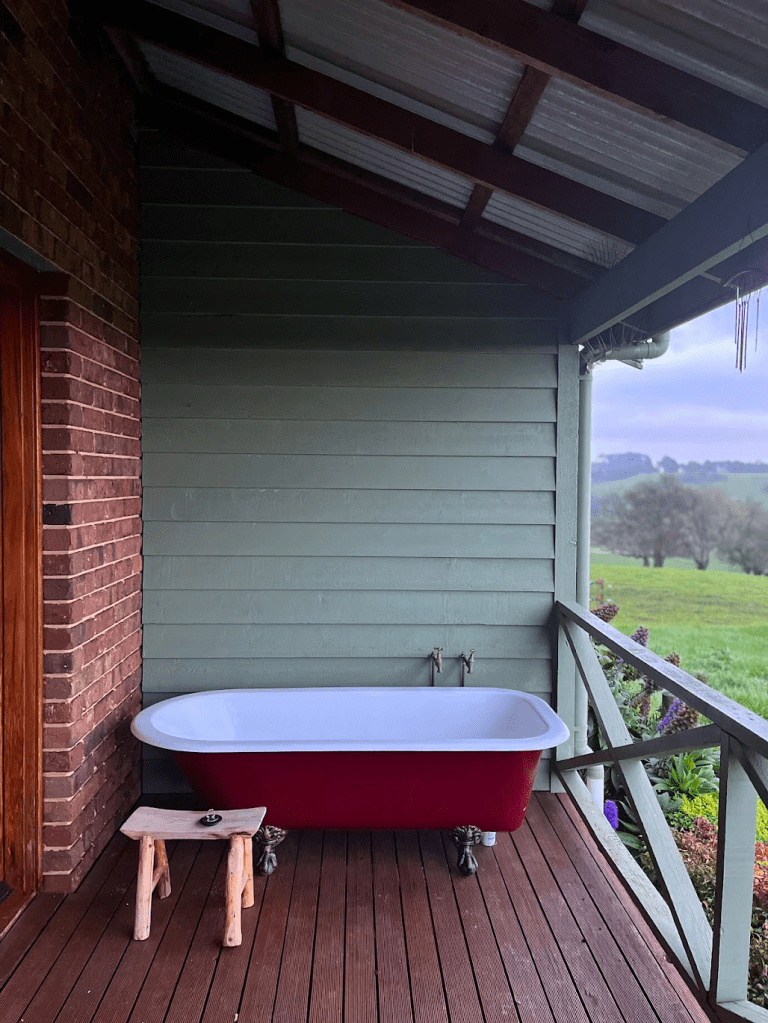
The Mayura Farm in Black River, Tasmania. Located in the north-west of the island, it is the second time that I am staying here in only a few months time. While I fell in love with all of this beautiful part of Australia the last time I came to do a circle tour of the island, it is this remote corner of Tasmania that appealed to me especially. Off the beaten path, away from tourists and big coach buses, the area is quiet and relaxed, even in the summer, even on the eve of a long weekend. Nothing but the wind, the cows, and my bathtub.
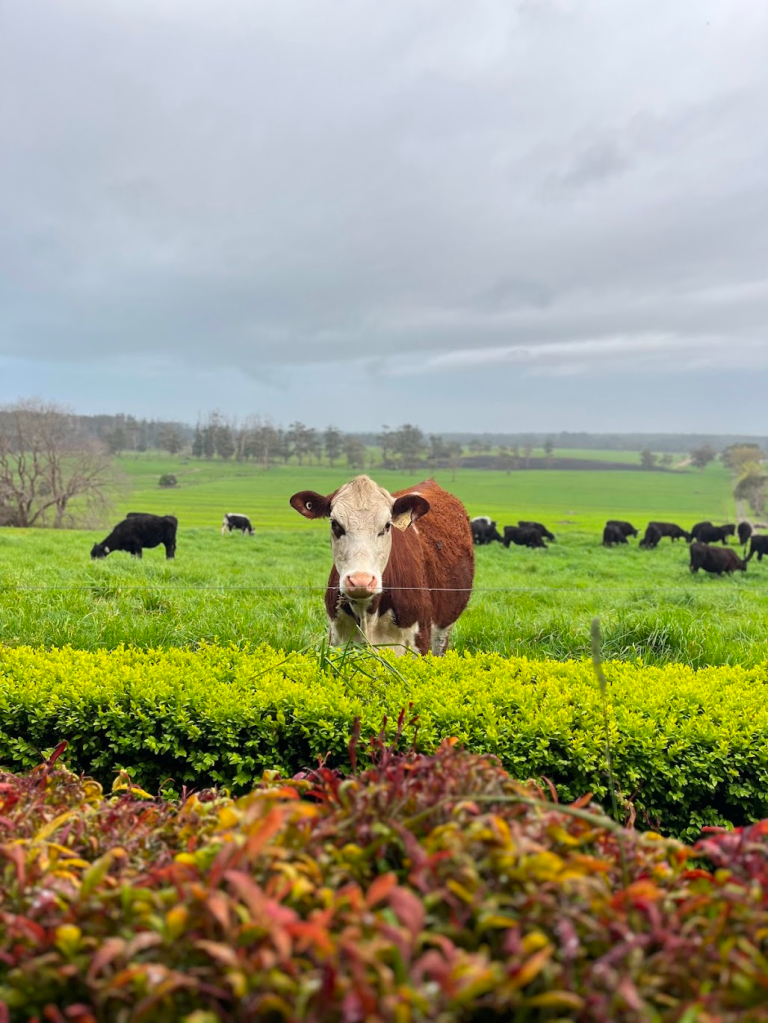
The cows. Huge herds of cattle wherever you look: black and brown, menacing-looking bulls and rambunctious calves. Beef cattle, dairy cows, and rustic Scottish Highland cattle with their long hair and even longer horns.
There are about 540,000 people living in Tasmania, one fifth of them here in the north-west, and 35 of them here in Black River. Compared to that, there are 800.000 cows on the entire island, about 300.000 in this part of Tasmania. That’s three cows per person here in the North West. Not to mention the 2.4 million sheep!
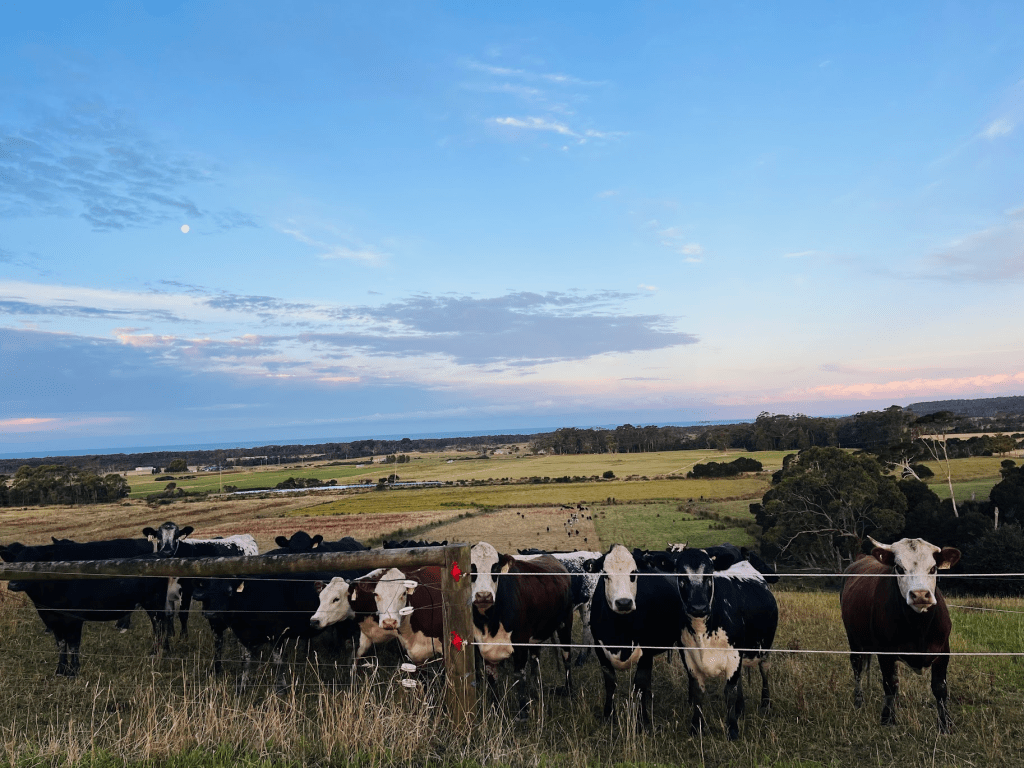
Our farm breeds Angus cattle – black, strong, and very intimidating. That I have not gone for a regular run in the evening, I excuse with the fact that these cows scare the s*** out of me. You walk past their pastures, eyes on the ground, quiet as a mouse, with only a thin electric fence between you, and I swear – they can smell your fear. One catches a glimpse of you, snorting and grunting, and starts walking towards the flimsy fence and me. Slowly but steadily, never ever taking its dark eyes off me. And then the next one follows. Ten more. Twenty. A whole stampede in slow-motion. I am sure the other 99 cows have no idea what they come running for, but they do. And so am I. Slowly backing up and getting back to my cottage and my bathtub as fast as I can.
The first record of black cattle imported into Australia was of 8 black cattle that were unloaded at the Hobart Town docks in Tasmania 200 years ago, on the 20th January 1824. After three months at sea, they brought with them meat, milk, and money making opportunities. But also a lot of problems: as cows are not native to this part of the world, there was no insect to break down the cow poo. But tons of bush flies that love to breed in it! This did not matter much when there were a few cows, or a few hundred, or even a few thousand. But there were real problems when there were over 20 million cows spread all over Australia, each pooing 10–12 times a day, and with every pat able to produce up to 3000 bush flies every two weeks. Bring in the dung beetle, to deal with the problem. What could possibly go wrong?

Deforestation is an even bigger problem in Tasmania, as cows need space to graze. While I am sitting in my outdoor bathtub, overlooking the green farmland stretching all the way to the ocean shore in the distance, I try to imagine the former native Eucalyptus forest that once covered the entire island. Land clearing for livestock accounts for 75 per cent of forest lost, while native forestry logging is responsible for a further 16 per cent.
“Australia’s largest temperate rainforest is under threat! The Tarkine or takayna (as it is known to the Aboriginal people) in North West Tasmania, is one of the last strongholds for rare and endangered species. It is one million acres of wild country that harbours some of the richest Aboriginal heritage in Australia, and it needs protection.
A staggering 90% of this remarkable wilderness is under threat from logging, mining, and off-road vehicle damage. The Tasmanian government views it as a resource to be exploited, while to the people, it is a place of immense Aboriginal history and one of the last intact wilderness’s left on earth.” (https://wildark.org/journals/australias-largest-rainforest-under-threat/)
I take a sip of the wine that rest conveniently on a little bamboo tray across the tub (I don’t even want to know where that wood came from), to wash down the bitter taste in my mouth. My eyes focus on the big rock sitting in the ocean in the distance: Moo-Nut-Re-Ker in the Aboriginal language, or simply The Nut.
The shape of a giant bar of soap, the Nut is what is left of a volcano that was active 25-70 million years ago. Even the top of the Nut once had been cleared off trees to make room for grazing cows. Today, a gondola takes you up to the top of the plateau to enjoy the view of Stanley town and the white beaches reaching out into the ocean of the Bass Strait. At dusk, tiny fairy penguins waddle ashore, they say.
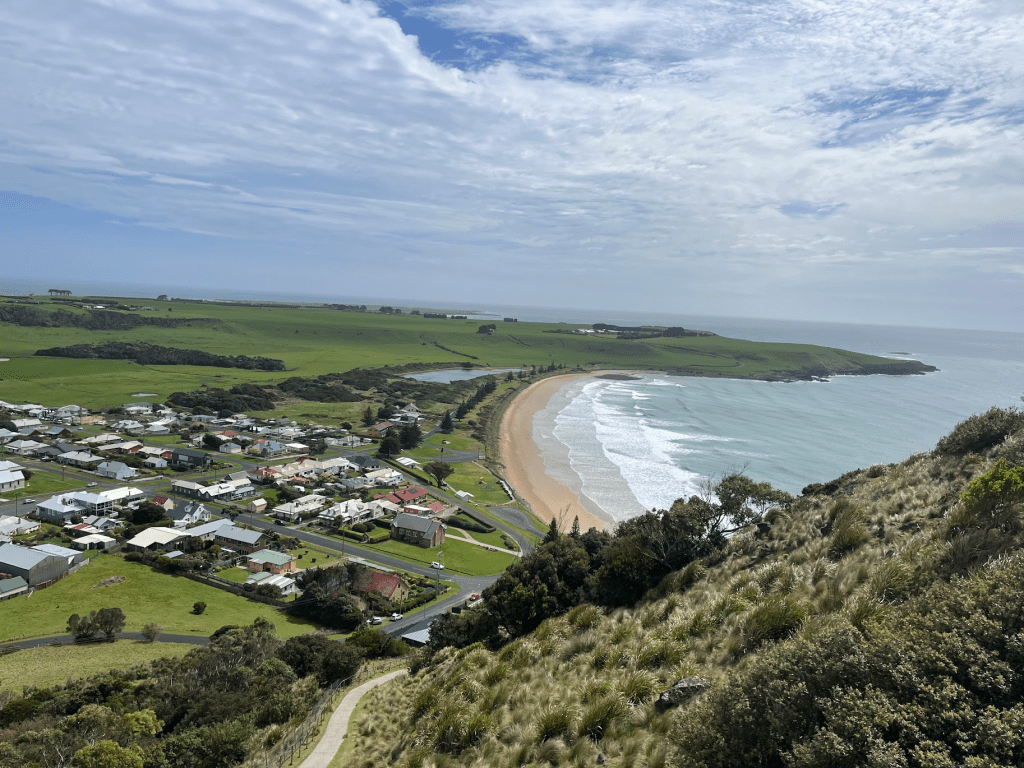
Sinking deeper into the warming bath water, I try to protect myself from the strong winds that rattle the wooden verandah my mini metal pool is sitting on: the Roaring Forties. Strong winds from the west that blow in this area most of the time. I close my eyes and in my mind I travel down the coastline: the Nut, Cape Grim – where in 1828 the Cape Grim massacre took place in which a group of Aboriginals gathering food were ambushed and shot by white workers, with the bodies of some of the victims then thrown from a 60-metre cliff.
“First arriving in Tasmania (then a peninsula of Australia) around 40,000 years ago, the ancestors of the Aboriginal Tasmanians (Tasmanian: Palawa or Pakana) were cut off from the Australian mainland by rising sea levels c. 6000 BC. They were entirely isolated from the rest of the human race for 8,000 years until European contact.
Before British colonization of Tasmania in 1803, there were an estimated 3,000–15,000 Palawa. The Palawa population suffered a drastic drop in numbers within three decades, so that by 1835 only some 400 full-blooded Tasmanian Aboriginal people survived, most of this remnant being incarcerated in camps where all but 47 died within the following 12 years.
For much of the 20th century, the Tasmanian Aboriginal people were widely, and erroneously, thought of as being an extinct cultural and ethnic group. Contemporary figures for the number of people of Tasmanian Aboriginal descent vary according to the criteria used to determine this identity, ranging from 6,000 to over 23,00.(https://www.ourtasmania.com.au/northwest/history-aboriginal-tas.html
Tomorrow’s Australia Day is a holiday and marks the first landing of British ships on Australia’s shores over 200 years ago. A day of mourning and survival for many Australians.
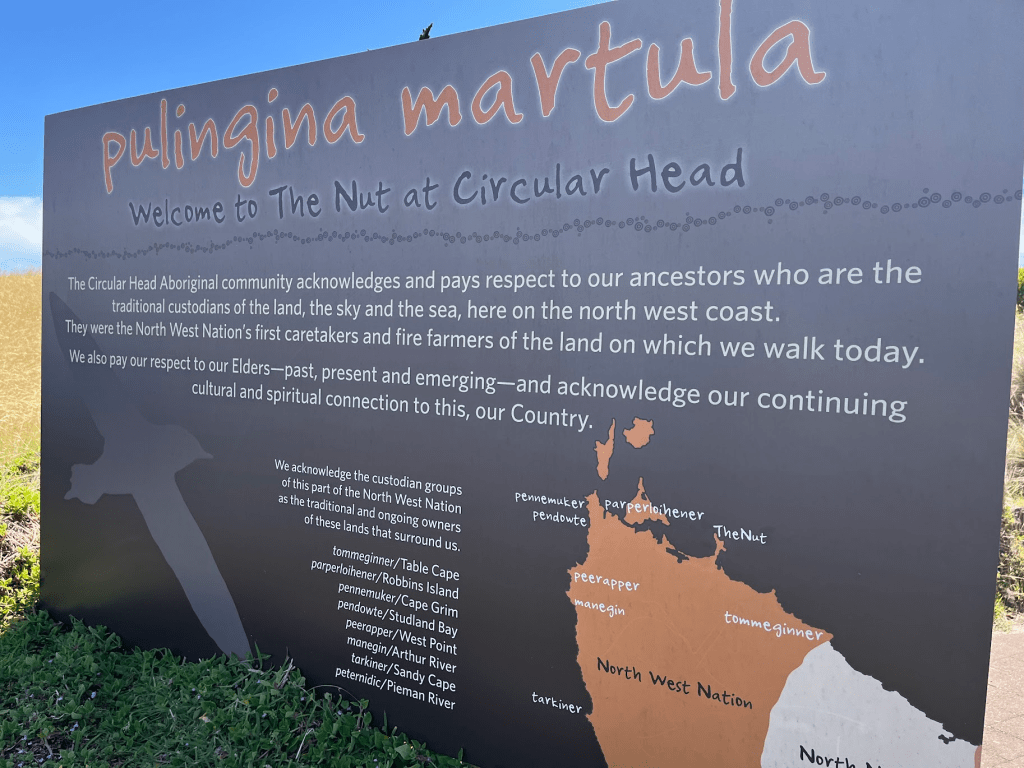
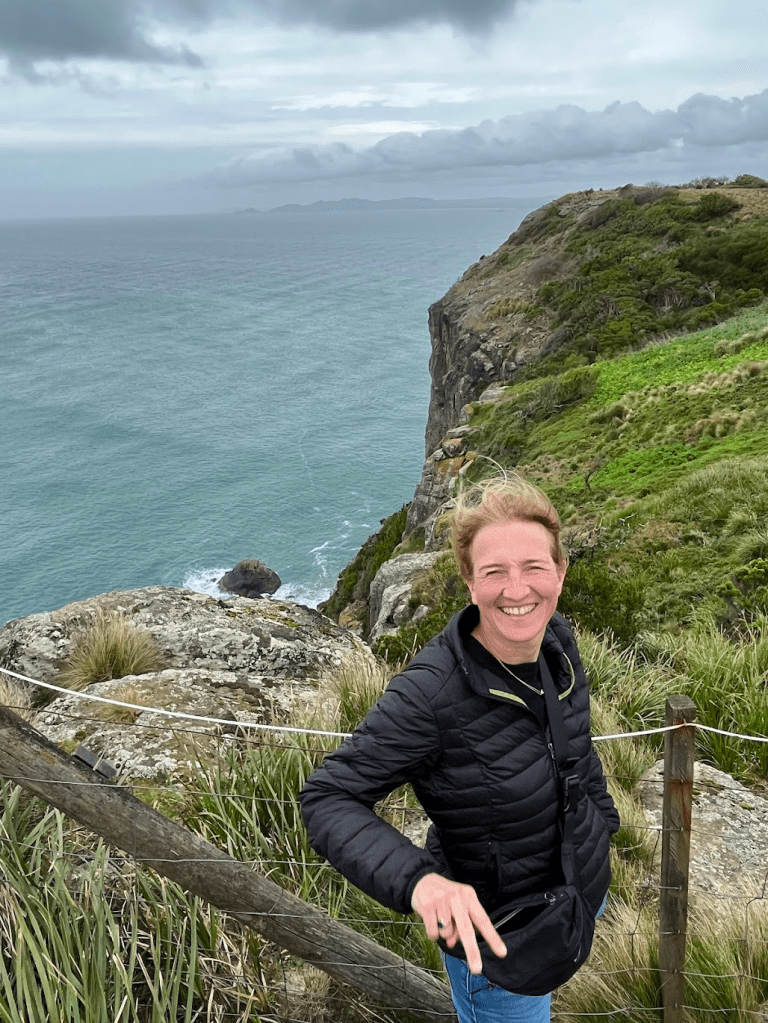
Further down the coastline, the nearly westernmost point of Tasmania, known as the Edge of the World. This rugged shoreline, battered by the gales of the Roaring Forties, is strewn with driftwood, logs, and uprooted tree trunks, each carrying its own unique story. Giant rocks and boulders, shaped by wind and water over millions of years, hold secrets locked within their formations. As I look directly west, my line of sight extended far beyond the horizon. This spot marks the furthest-reaching stretch of ocean on the globe, where, if our sight had no physical limits, we could eventually spot landfall on the eastern coast of Argentina, completing a journey around the globe! The vast expanse of sea before us made me feel as tiny as the pebbles scattered across the beach. The wind of the roaring forties tugged at my hair, blowing in all directions, and carrying away the worries of the past, present, and future.

With the wind threatening to whisk my underwear off the verandah, and into the cows’ grazing fields, I hastily exit the bathwater to prevent it from becoming part of the animals’ dinner.
There’s so much more I want to share – my Fun Fact Forties. Did you know that billions of years ago, Tasmania was connected to North America? That this tiny island produces more renewable energy than it consumes? That there is a Sisters Beach but not one for brothers? That Tasmania is referred to as lutruwita, by the Aboriginal people, meaning Great Island. That Tasmania is the same size as Ireland or Switzerland, and a week or two is not enough time to explore it all.
Well, I guess I have to come back soon, to write some more about Tasmania. And to take another bath with the cows. Cheers!
 Thoughts From the Upside Down
So much history!!! I always look forward reading your blogs! Keep writing!!!
LikeLiked by 1 person
Thank you dear Gina! And I always appreciate your feedback. 🙏🏼❤️
LikeLike
Liebe Gisela, ich freue mich wieder sehr über Deinen Bericht! Deine und viele weitere links haben meinen Horizont erweitert, nun können wir Europäer wieder etwas mehr über unseren Tellerrand blicken. Danke!
LikeLiked by 1 person
Sehr sehr gerne ! Danke fürs lesen und dein tolles Feedback.
LikeLike