
Stay with me. Let's just breathe.
(Pearl Jam)
Long before you see it, you can hear it. A distant roaring, rolling, crashing of huge waves against the shore.
Long before you see it, you can feel it. The gentle touch of spray and drizzle against your skin. A refreshing sea breeze.
Long before you see it, you see it. Rocky gum forest turning into scrubby bushland turning into sandy dunes. A teaser of what’s to come.
One last climb up a muddy hill from this week’s rain, fighting our way through thick ferns and gnarly tree branches – and there it was: South Cape Bay. Better known as the southernmost point of Australia. Its cliffs surprisingly black and hostile and barren. The panorama a breathtaking view of the Southern Ocean. Wild and dark and strong. Welcome to another Edge of the World. (Antartica was next)
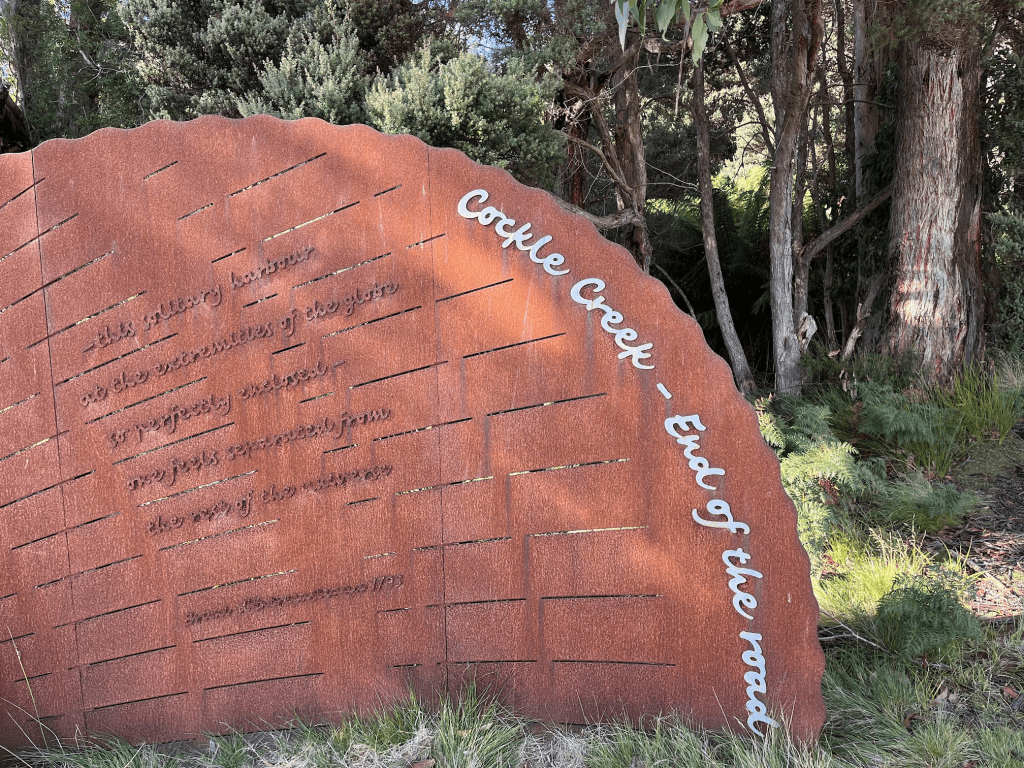
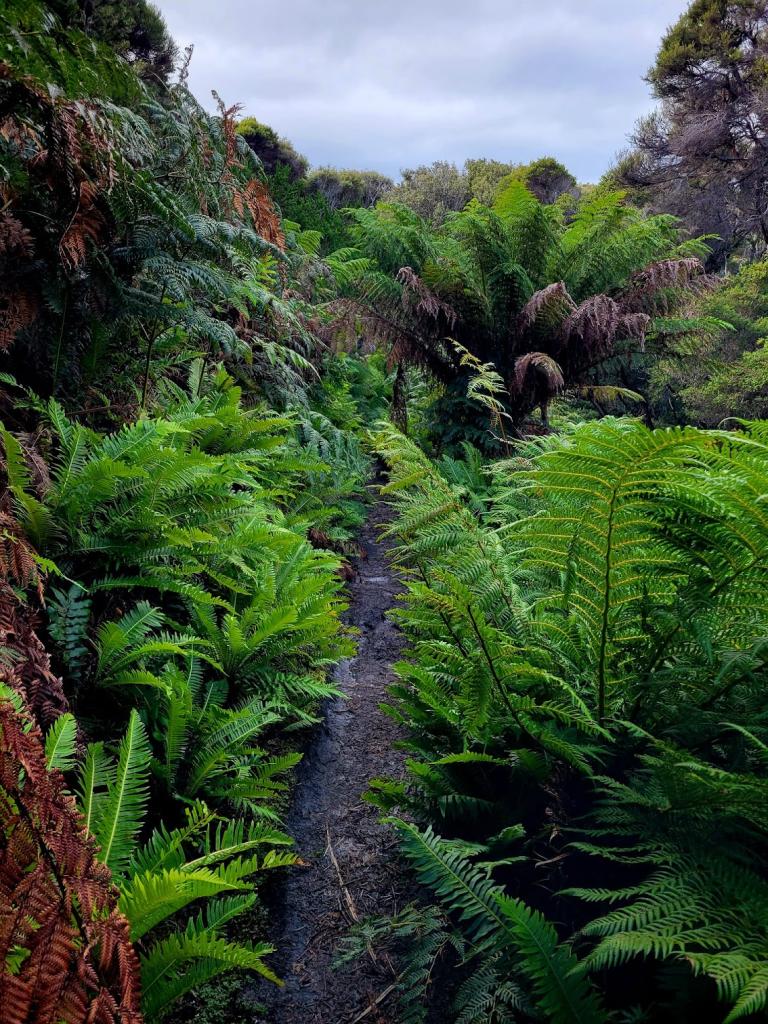
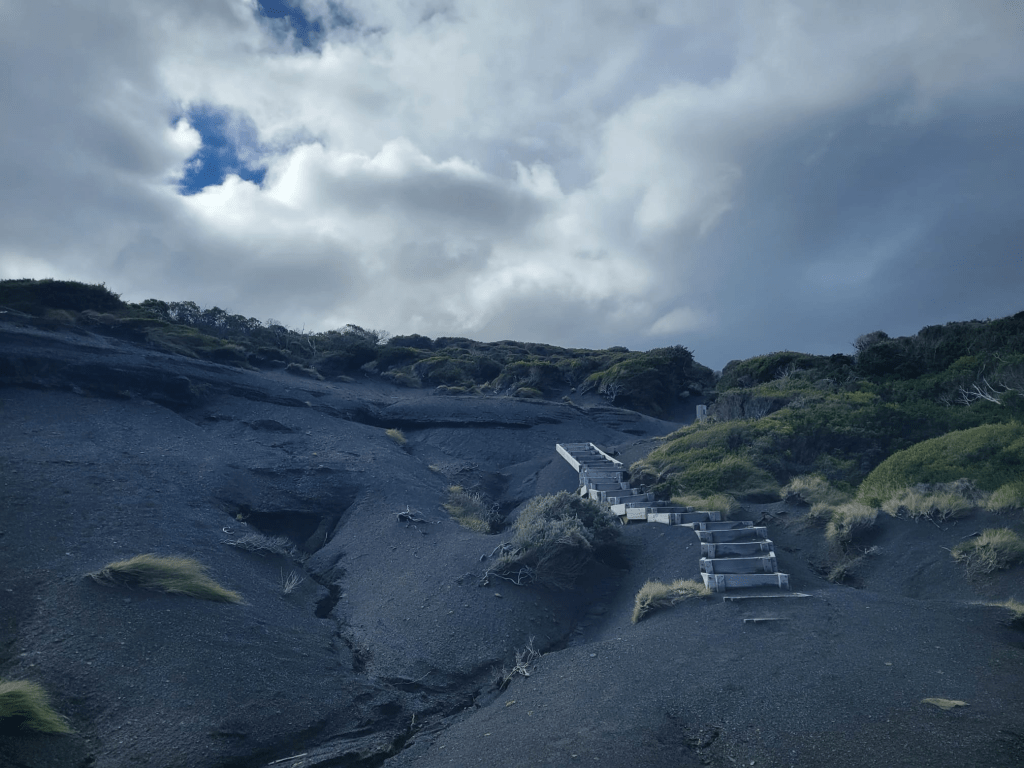
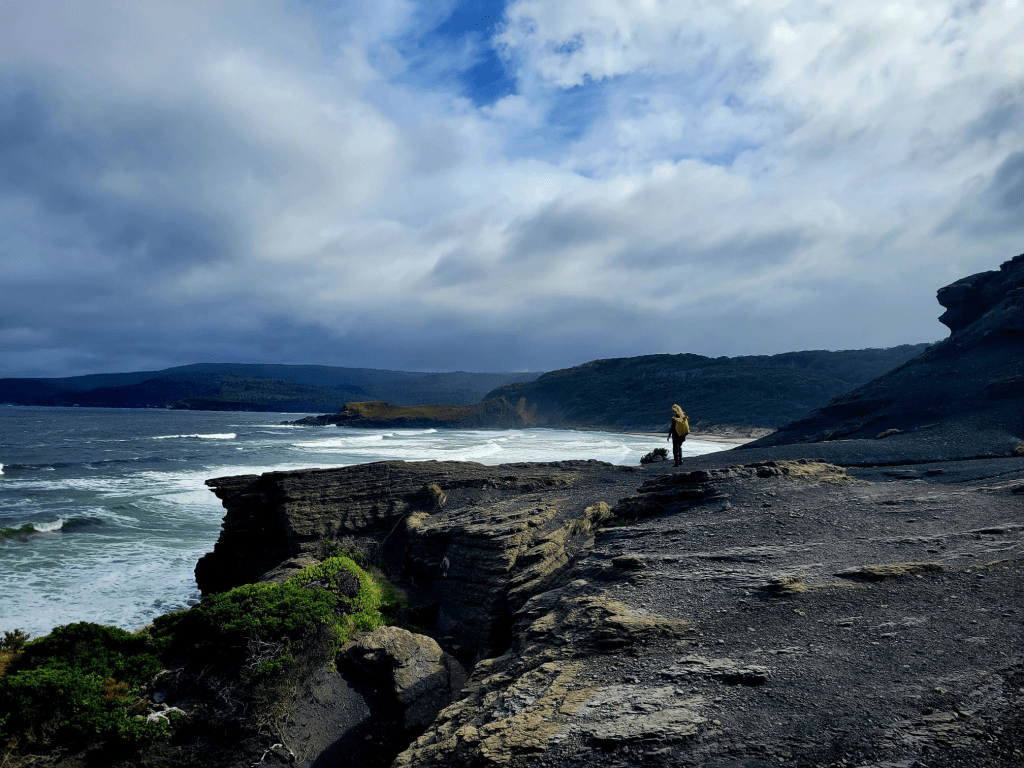
I am back in Tasmania. My third time. A little over a year ago, sitting on a weathered log at the westernmost point of Tasmania — also called The Edge of the World — I had promised myself I would return to this beautiful island. And here I was. For two weeks I had explored the southeast of Tasmania, and the day hike to South Cape Bay was supposed to be the highlight of this trip. And it definitely was, highlighted even more by a thousand smaller ones along the way.
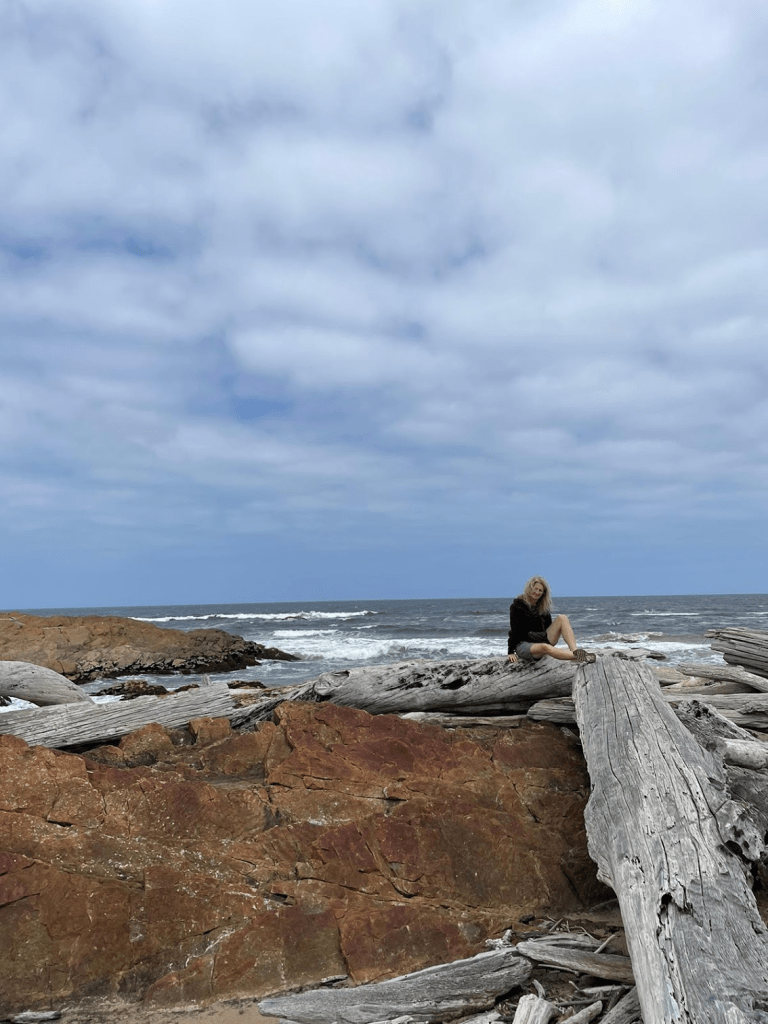
After an extremely challenging and exhausting first term at school, I had longed for nothing more than tranquility and solitude. For calm and quiet. For nothing much to do but read and eat and sleep. And repeat. Slow down. Breathe in. Dream deep. Tasmania’s own tourism tagline – and perfect for me.
A few other things I wanted to do on my trip through the Deep South: practise driving on the left side of the road, so wrong would finally feel right. Visit Maria Island – I loved the name – and maybe even spot some wombats, amongst other wildlife. Walk to South Cape Bay and be able to say I had visited all four extremities of Tasmania.
And read a book that had been waiting for me on my bookshelf in Sydney for months: In Tasmania by Nicholas Shakespeare.
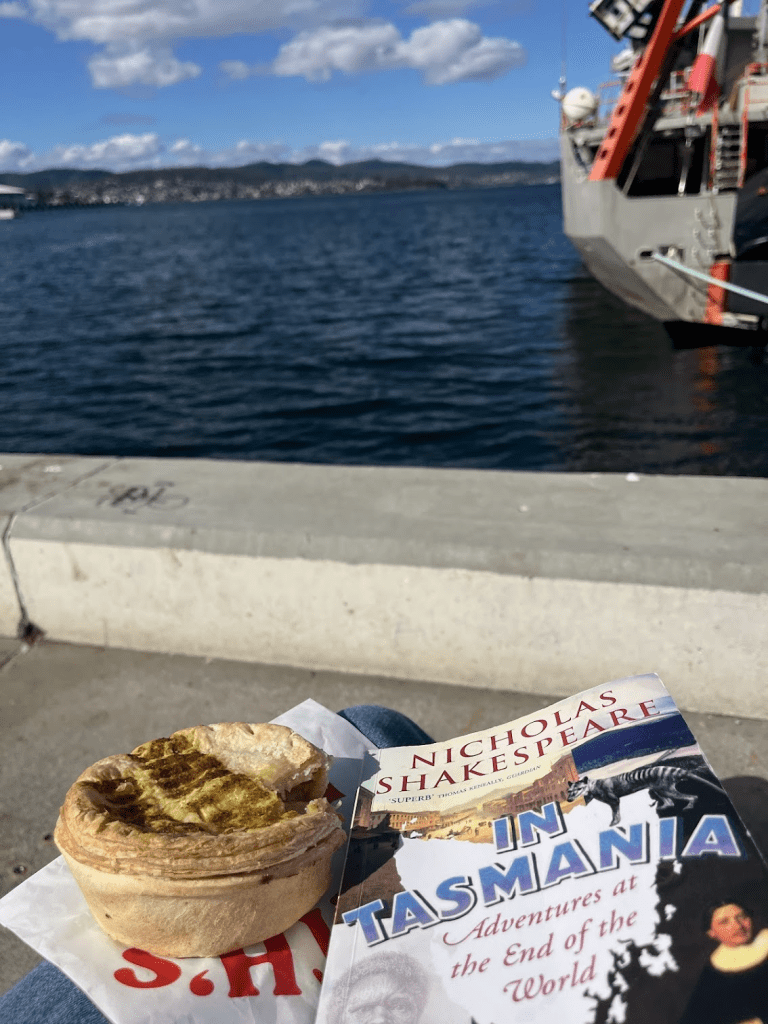
“We have thought for a long time that you don’t learn about things until you are meant to. ” (Nicholas Shakespeare)
Well, the same could be said about a book. I still believe that a book finds you, and not the other way around. And this one pretty much jumped into my carry-on suitcase.
“This is Tasmania, where there is no time and nothing matters.” (Nicholas Shakespeare)
Getting off the plane, the first thing I noticed was the air. Cold and crisp, none of that humid sticky stuff I had left behind in sunny Sydney. Don’t get me wrong – I love the warm weather back home. But it felt good to take a deep breath.
“The Roaring Forties, after blowing unimpeded from Cape Horn, smack a full tilt into the west coast. The result: Tasmania has the purest air in the world as well as some of its cleanest rainwater.” (Nicholas Shakespeare)
Coming back to Hobart felt like coming home. Not my home – but a home.
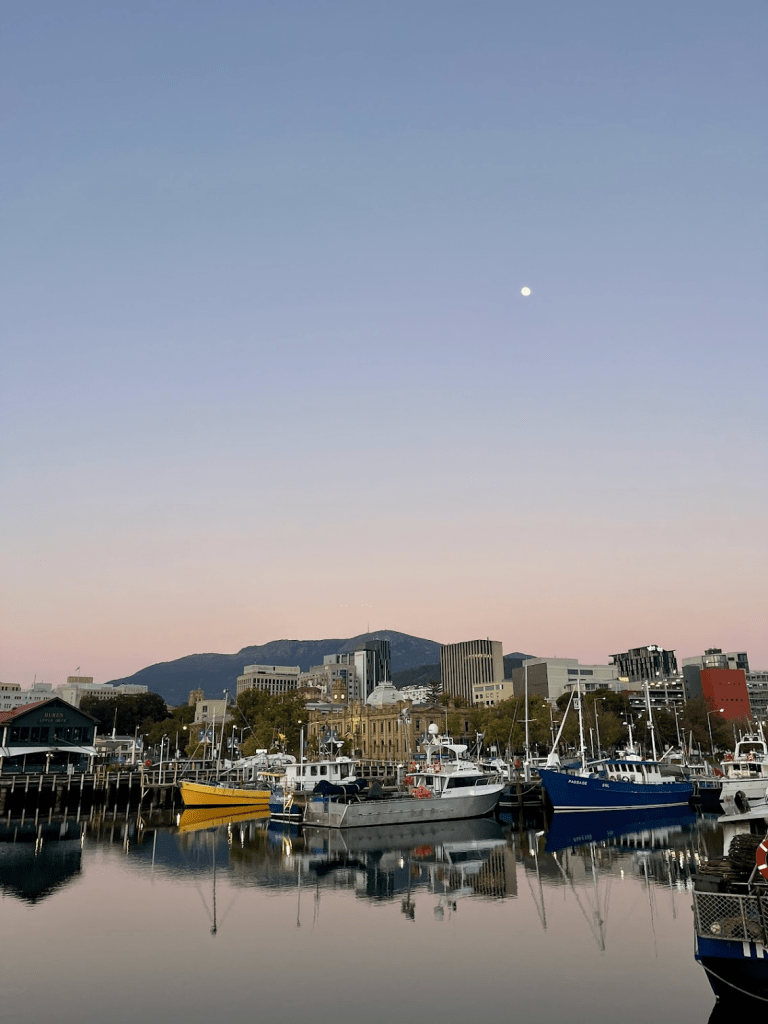
I parked on the waterfront at dusk and noticed the pub next door to my hotel: the Drunken Admiral. I didn’t go in. I didn’t know then that I should have. It was only later, reading page 80 of In Tasmania in bed, that I realised Nicholas Shakespeare had done exactly what I had just done: arrived at dusk, parked on the waterfront, had fish and chips in that very pub, on the site where his ancestor Anthony Fenn Kemp’s warehouse once stood.
I had stumbled into his book without knowing it.
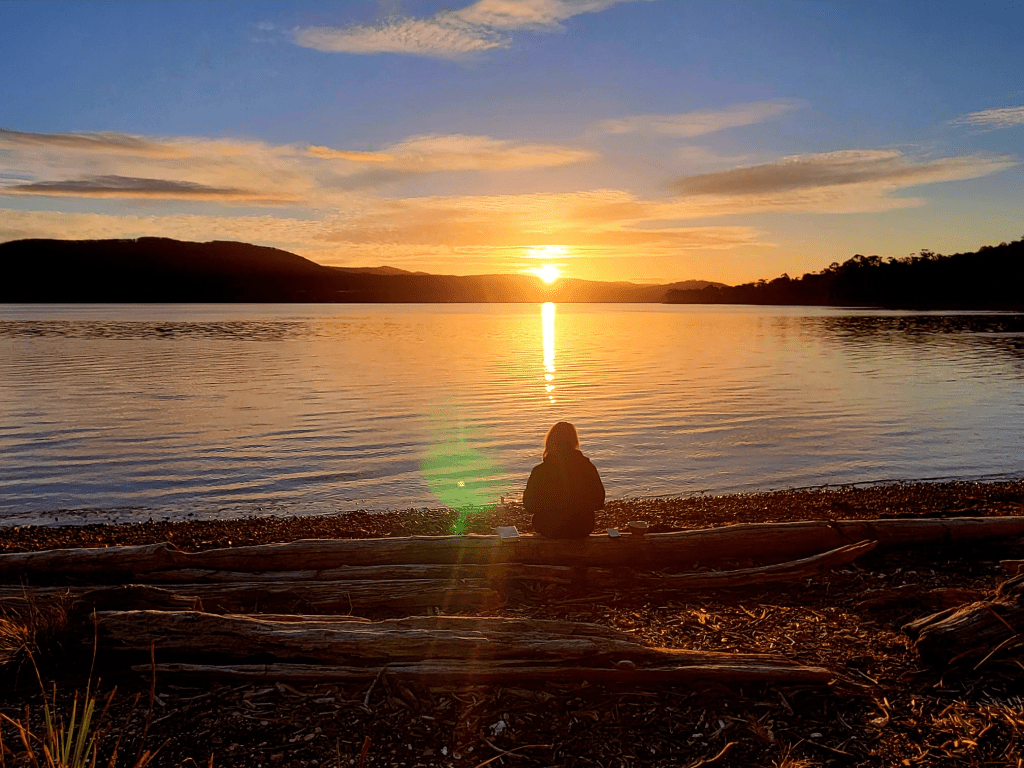
From Hobart I drove to Lymington in the beautiful Huon Valley, only an hour south. The view from my Airbnb left me speechless: crystal clear water, oyster shells and rocks and logs on the shore. Me sitting on one of those logs with a glass of red in my hand, contemplating life – and, I am not making this up – a seal swimming by. A seal. Right there. In front of my eyes. Rain and sun danced an endless dance those three days. The rainbow in the sky becoming a familiar sight.
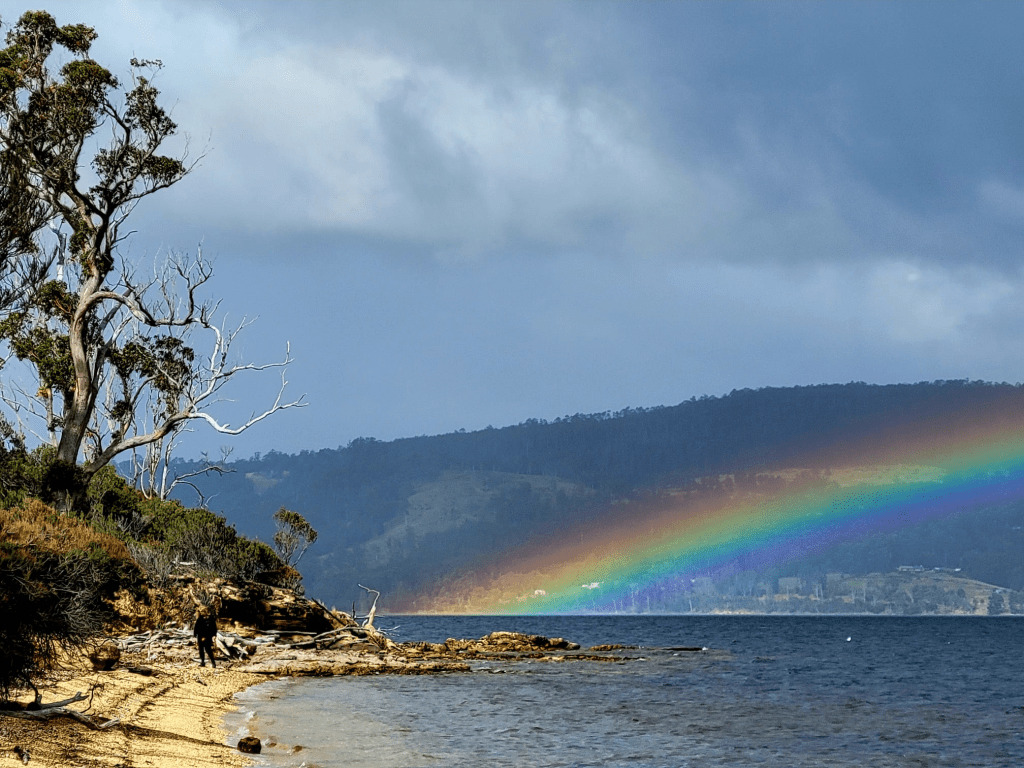
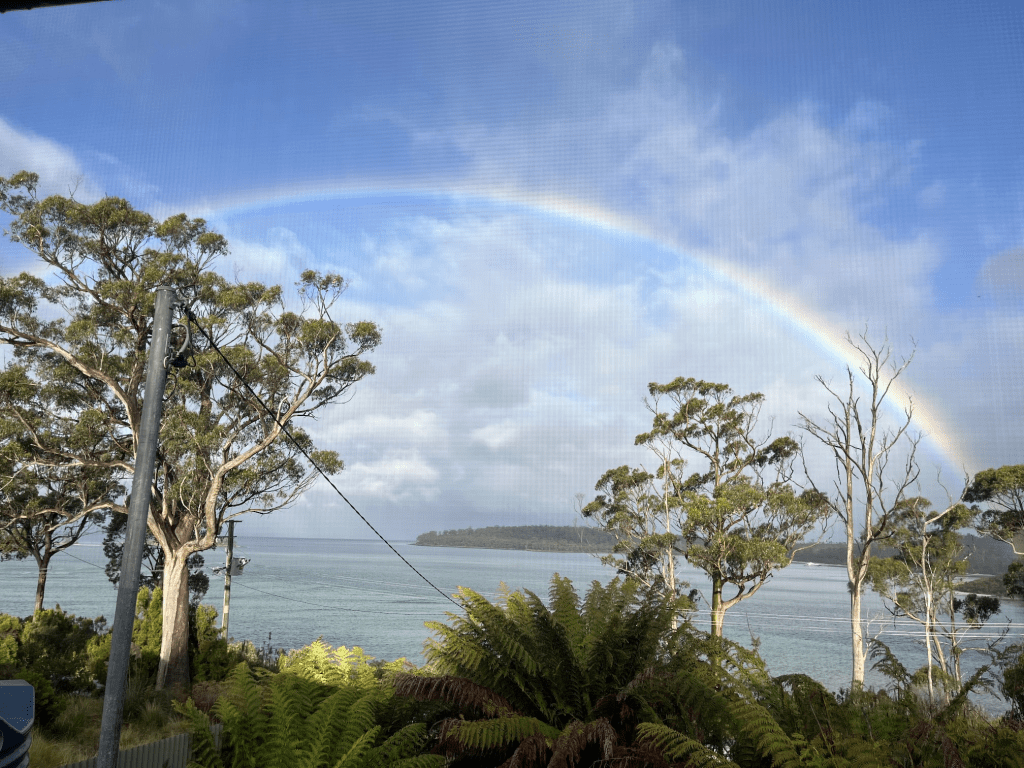
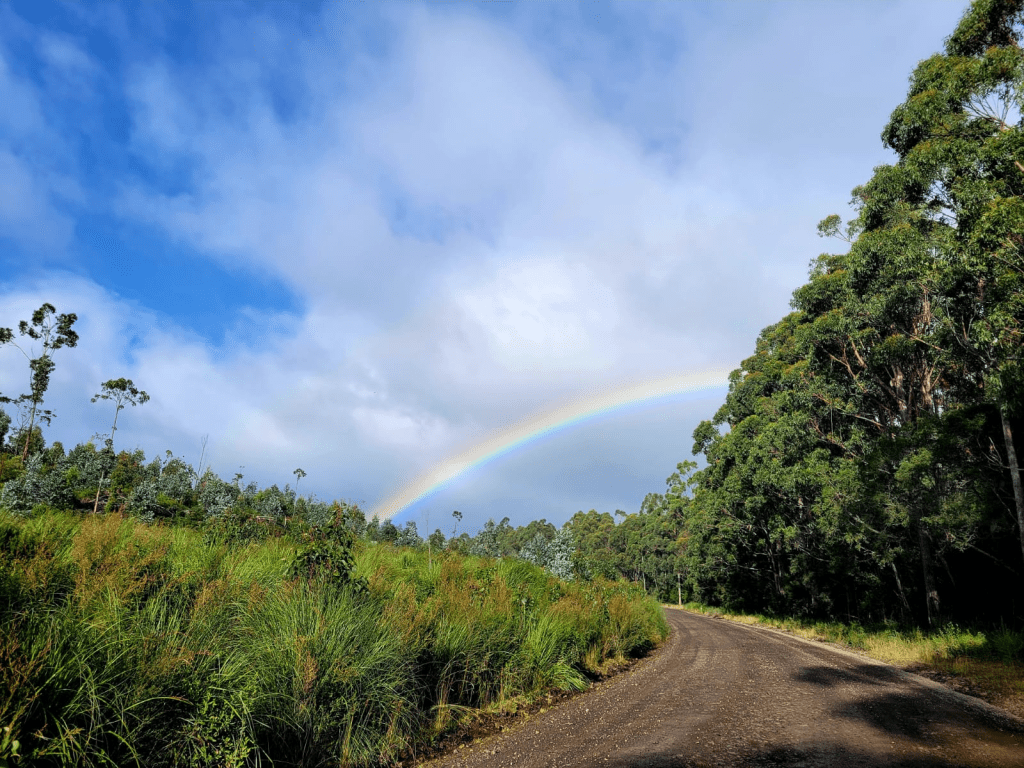
“The light in the sky is brilliant and intense. There is no haze or humidity and it produces in me a feeling I frequently experience in Tasmania, an absurd illusion that I can see an enormous distance, back almost to when this landscape was looked upon for the first time with human eyes.” (Nicholas Shakespeare)
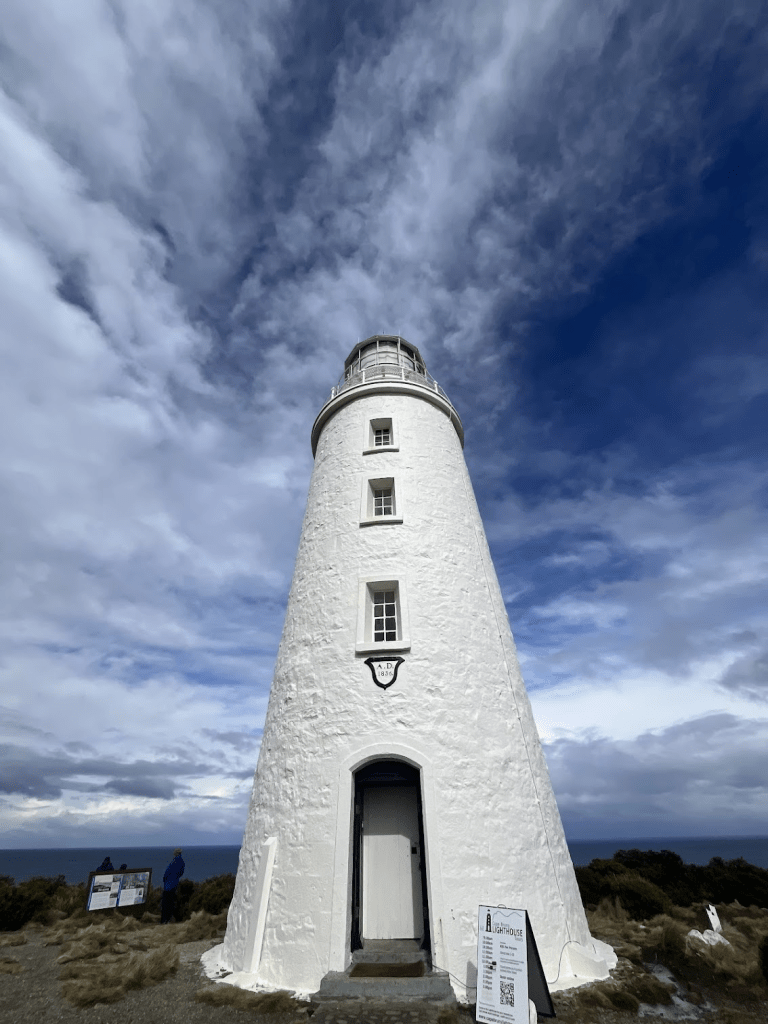
Bruny Island next. The gravel road to the lighthouse was slow and treacherous, pockmarked with potholes – the kind of road the car rental place had warned me about. A couple more rainbows appeared along the way. Rain and sunshine trading places every twenty minutes, quintessentially Tasmanian.
The lighthouse sat at the southern tip of Bruny Island, looking out over the Southern Ocean. When I finally reached the top, the wind was so strong we could barely push open the door to the outside platform. Standing there, hanging on, the tour guide told us about the convicts who built this tower with their bare hands in 1836. Twelve men, quarrying dolerite from the cliffs around them, stone by stone, in weather like this. Their reward – if they worked well enough – was freedom. Which they achieved.
From Bruny Island I made my way back through the Huon Valley and further south to Hastings Cave, located in Tasmania’s Wilderness World Heritage Area. Not big on caves, this one took my breath away. And let me breathe again. Two hundred and fifty steps down into the vast chambers of Newdegate Cave – with its stalactites and stalagmites, its Angel’s Wings and Cathedral Rocks, formations that began growing over 40 million years ago. Two hundred and fifty steps back up: from complete darkness, odourless coldness, to lush rainforest with smells of ferns and trees, sounds of water dripping and lyrebirds singing, sight of bushes in greens and browns and blues, the feeling of crisp clean air.
Breathe.
“We were weightless, freightless creatures and with each step the twentieth century receded behind us.” (Nicholas Shakespeare)
Visiting the southeast of Tasmania, it is hard not to stumble across its British past. At times, driving through the countryside felt very much like being somewhere in England. Lovely green pastures, sheep grazing, tea being prepared – there is morning tea, followed by dinner which is actually lunch, followed by afternoon tea, followed by tea which is actually dinner. Unless it’s Sunday, because then it is Sunday tea. I think.
It is also difficult not to come across Tasmania’s convict past. Maria Island, for instance – a former convict probation station. Convicts were sent here as a secondary punishment, meaning they had already misbehaved elsewhere. It’s now a national park with no cars, no shops, just wildlife and the ghostly ruins of the convict settlement at Darlington. And lots of wind! Wombats wandering about. The painted cliffs glowing orange in the afternoon light. Beauty and darkness side by side.
And then there is the history that is harder to see. Driving to Orford at the east coast, I passed the site of the Black Line – a moment in 1830 when Governor Arthur organised over two thousand soldiers, settlers and convicts to form a human chain across the entire island, attempting to drive the Aboriginal Tasmanian people into a corner and contain them. Except that I didn’t know I was passing it. I missed it. I only found out later. Which is perhaps the most telling thing of all. The site of one of the darkest moments in Australian history, and you can drive right past it without knowing. No sign. No memorial. Just a road.
I had planned this trip, just like all my trips, thoroughly and well in advance. Yet, Tasmania keeps making unexpected connections happen when you least expect it.. The island has a way of pulling things together without you planning it.
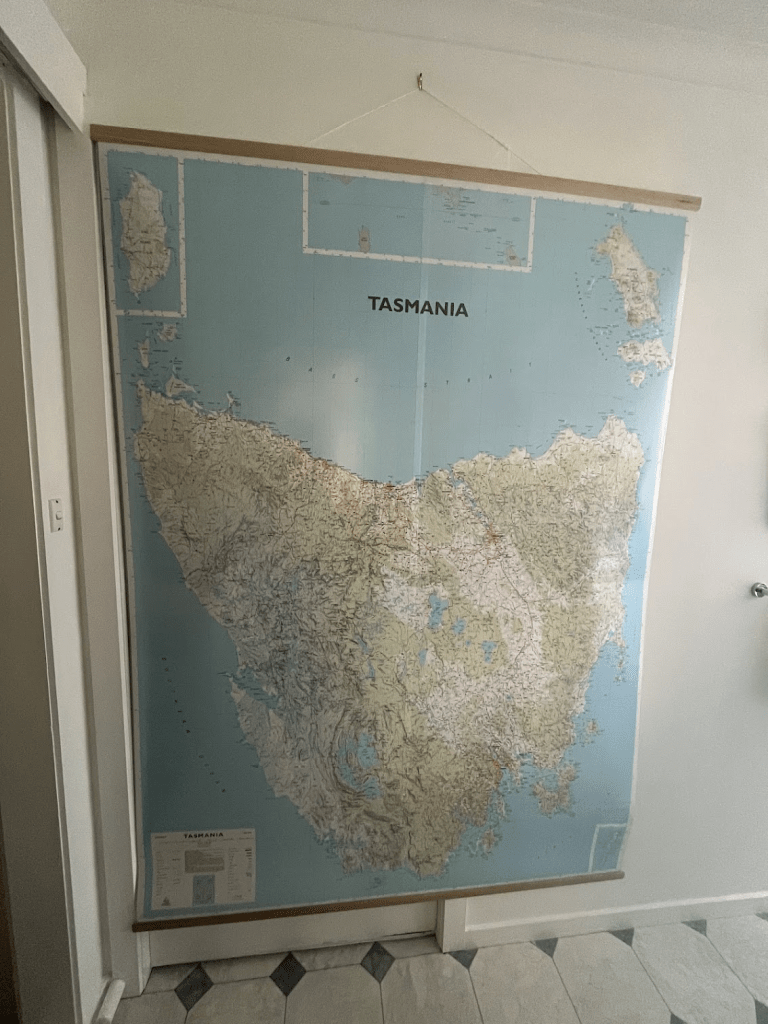
One morning, when I had finished reading the book, I did something I still can’t quite explain. I wrote to him. To the author himself. Told him how much I had enjoyed his writing, how it had inspired me to write about Tasmania myself. Mentioned that I was in the vicinity of his home in Swansea on the east coast, and asked — rather boldly — whether he might like to have a coffee. Or probably tea. I didn’t really expect an answer.
The same day, Nicholas Shakespeare wrote back. He thanked me for my kind words. He was indeed in town — just two days. And then he told me that his home – the one he had stumbled upon decades ago when on holiday in Tasmania, the one he had spent all his savings on and where he had raised his children – had burned down in a bushfire in December. He was here with his Canadian wife, to visit the ruins.
Two people on the same island at the same time. Both outsiders. He, a famous author, visiting the ruins of the home he loved. Me, a blogger, still looking for something I couldn’t name.
I didn’t plan any of it. None of it. That’s the thing about Tasmania.
“Supposed to be special isn’t it? We won’t tell them what it is, what it’s like, because too many will want to come.” — Nicholas Shakespeare, In Tasmania
Too late. I just did.
Cheers.
 Thoughts From the Upside Down